
TL;DR
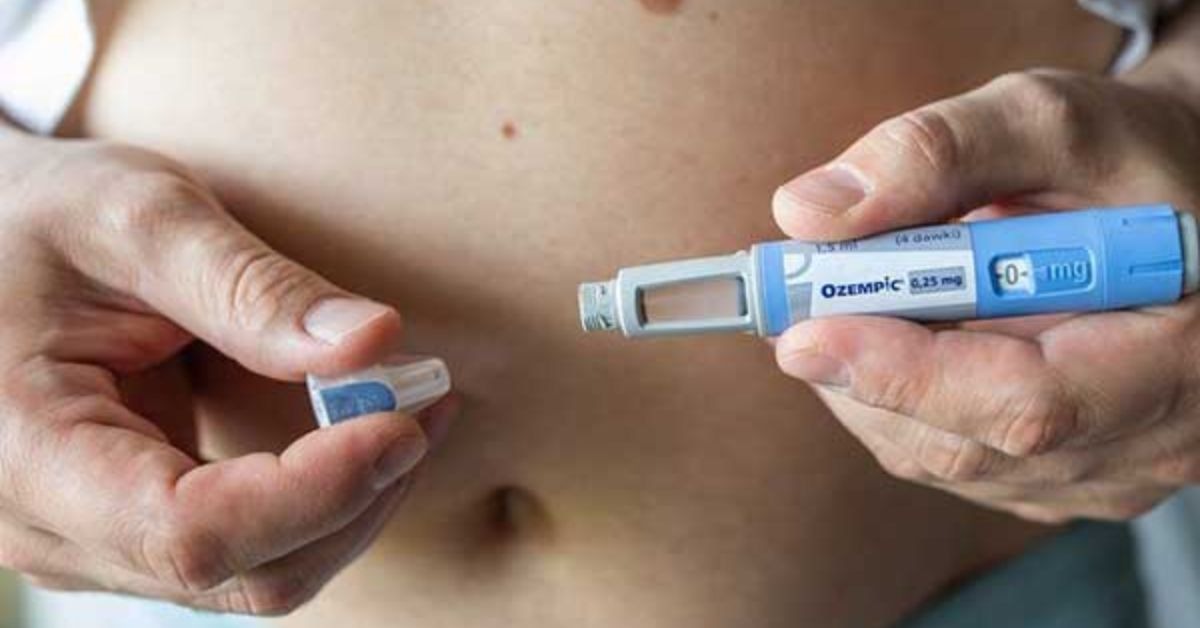
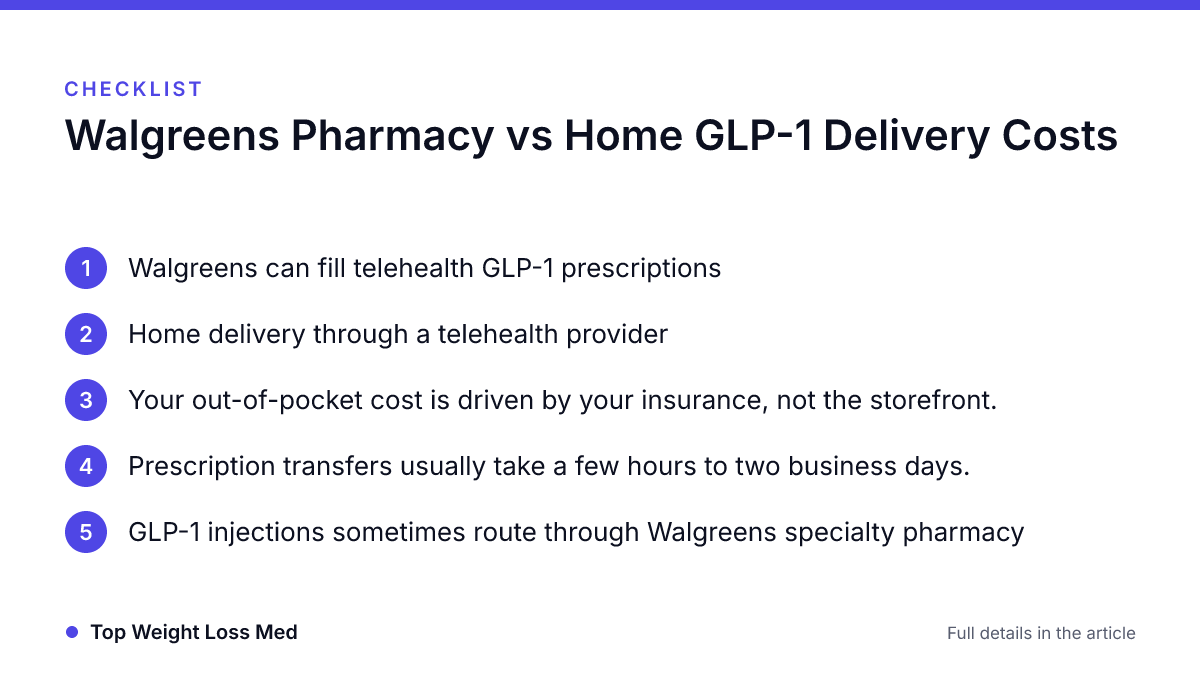
- Walgreens can fill telehealth GLP-1 prescriptions like Zepbound, Wegovy, and Ozempic the same day if that exact dose is on the shelf, but stock swings hard from store to store.
- Home delivery through a telehealth provider like TWL skips the counter entirely and ships to your door, which sidesteps the store-by-store stock lottery.
- Your out-of-pocket cost is driven by your insurance, not the storefront. A $25 copay at Walgreens becomes a four-figure cash price at the same counter if your plan denies the claim.
- Prescription transfers usually take a few hours to two business days. Calling both pharmacies yourself instead of waiting on the system typically saves a day.
- GLP-1 injections sometimes route through Walgreens specialty pharmacy instead of the retail counter, which adds a verification step and changes your timeline.
Maria, a nurse in Fayetteville, got her Zepbound prescription from a Tuesday afternoon telehealth visit. Her provider sent it electronically to the Walgreens two miles from her house. She drove over Wednesday morning planning to grab it on her lunch break.
It wasn't there. The pharmacist said they hadn't seen a 5mg pen in over a week and couldn't give her a date. She called three other Walgreens locations around town. One had it. One didn't. One wouldn't check over the phone. By Friday she'd burned two lunch breaks and a Saturday morning chasing a medication her telehealth provider could have shipped to her front door in the same week.
We hear some version of this story every week. It isn't a knock on Walgreens. It's just how GLP-1 supply works right now.
How does Walgreens actually fill a telehealth prescription?
Exactly the same way it fills one from your family doctor. The prescription goes out electronically into the pharmacy queue, gets checked against your insurance, gets reviewed by a pharmacist, and then sits in the "ready" bin. No paper, no fax, no special handling because the visit happened on video. According to Walgreens' own guidance on managing prescriptions, transfers, and refills, you can track status, request transfers, and manage refills through the app or your online account once the script is on file.
The friction with GLP-1s isn't the paperwork. It's inventory.
Zepbound, Wegovy, and Ozempic have all cycled through shortages on specific dose strengths, and individual stores don't get even allocations. Supply arrives through distribution centers, so two Walgreens locations twenty minutes apart can be on completely different stock rhythms in the same week. A telehealth provider working with delivery pharmacy partners isn't playing that lottery one store at a time. We walk through similar timing questions in our guide on whether CVS pharmacy fills telehealth prescriptions fast.
Pro tip: Before you drive anywhere, call and ask for your exact dose strength, not the drug name. "Do you have Zepbound?" is a useless question. A store can be stocked with 2.5mg starter pens and bone dry on 10mg maintenance. Ask the tech to read you what's physically in the fridge.
What does it actually cost at Walgreens versus home delivery?
Your insurance status decides this, not the pharmacy sign. If your plan covers GLP-1s for weight loss (plenty still don't, and many require prior authorization), your copay should land in roughly the same place whether you pick up at a Walgreens counter or have it shipped, because the benefit attaches to the drug and your plan.
Paying cash is where the two paths diverge.
Patients who call us after getting quoted a self-pay price at retail are usually quoting a number north of a thousand dollars a month for brand-name GLP-1s. Manufacturers also run savings cards and direct-ship programs that can cut that meaningfully, and it's worth asking your provider whether you qualify before you accept a list price as final.
Here's an illustrative scenario with round numbers so you can re-run it on your own:
- Retail cash price at the counter: $1,050/month
- Manufacturer savings card discount, if you're eligible: $550/month off
- Net cash cost with the card: $1,050 − $550 = $500/month
- Telehealth self-pay plan: typically bundles medication, provider visits, and coaching into one flat monthly fee
That $500 figure only applies if you qualify for the savings card. Savings cards commonly exclude anyone on Medicare, Medicaid, or TRICARE, and many require commercial insurance that at least partially covers the drug. So the two people who most need the discount, the uninsured patient and the denied-prior-auth patient, are frequently the two who can't use it. That's the case where a bundled self-pay plan usually wins.
Rule of thumb we give patients: if your net monthly cost at the counter is over about $600, price out a flat-fee telehealth plan before you refill again. Under $200, stay where you are.
| Cost factor | Walgreens pharmacy pickup | Home delivery through telehealth |
|---|---|---|
| Insured copay | Plan-dependent, same as any covered drug | Plan-dependent, same as any covered drug |
| Cash price, no insurance | Usually full list price unless a savings card applies | Often folded into one flat monthly fee |
| Prior authorization | Pharmacy tells you it was denied, then waits on your doctor | Provider team submits and appeals it directly |
| Time cost | Gas, parking, hold music, repeat trips when backordered | Shipped to your door |
| Stock risk | Varies store to store within the same city | Sourced across pharmacy partners |
| Best fit | Covered plan with a low copay and a reliably stocked store | Cash-pay, denied coverage, or chronic local backorders |
How long do transfers and refills really take?
Plan on a few hours to two business days for a routine transfer. GLP-1s can run longer if the original pharmacy drags on releasing the script or the receiving store has to re-verify insurance.
Walgreens pharmacy hours matter more than people expect here. A transfer request you submit at 7pm to a location closing at 9pm isn't getting touched until the next shift clocks in.
What speeds things up or stalls them:
- Calling both pharmacies yourself instead of waiting for the request to sync usually saves a full day.
- Specialty routing sends some GLP-1 injections to Walgreens specialty pharmacy instead of the retail counter. That adds a verification step, though specialty handles cold-chain shipping more carefully.
- Weekend requests sit until Monday, since transfer and refill processing runs on business days.
- Distribution center allocation means a store in one metro can be fully stocked while another an hour away has nothing, in the same supply week.
Pro tip: If your store is out, ask the pharmacist to look up inventory at nearby locations before you request a transfer. Pharmacy systems show sister-store counts. A same-day pickup across town beats a two-day transfer that ends in another backorder.
Does insurance treat Walgreens differently than telehealth home delivery?
No. Your insurer doesn't care which pharmacy fills it. It cares whether the drug and your documented diagnosis meet plan rules.
What changes is who fights the denial.
A retail pharmacist can tell you the claim rejected and read you a rejection code. That's the end of their involvement. They aren't calling your insurer, they aren't pulling your weight history, and they aren't drafting an appeal. That work belongs to the prescriber. A telehealth team that handles weight loss care full time, like the one behind our weight loss program, already knows what a given plan wants in the chart: documented BMI, a comorbidity if the plan requires one, and often a record of prior attempts at lifestyle change or an earlier medication. Missing that last piece is the most common reason we see a first submission bounce.
If your plan excludes GLP-1s for weight loss outright, no amount of paperwork changes that, and it's excluded at Walgreens, CVS pharmacy, and mail order alike. At that point you're choosing on price and convenience only.
What if the medication just isn't available anywhere nearby?
More patients hit this than any pricing problem. Prescription written, insurance approved, drug not on a shelf within twenty miles.
Three moves, in order:
- Call around with your exact dose strength, both Walgreens and CVS pharmacy locations, and ask the tech to check the fridge rather than the screen.
- Ask your provider about an alternative. A different GLP-1 or a dose adjustment can often be filled today when your first choice is weeks out.
- Switch to home delivery, where your provider sources through pharmacy partners instead of a single retail counter.
TWL patients in this spot message their coach or check the FAQs page, and we can usually pivot the prescription the same week instead of leaving someone calling stores for a month.
How does TWL fit into all of this?
We exist for the exact gap Maria fell into: the prescription is written and the pharmacy can't get it into her hands.
Signup is a short intake form, then a video visit with a licensed provider, then you choose home delivery or local pickup if pickup makes sense for you. If you're prescribed a GLP-1, you get unlimited messaging with a weight loss coach, which in practice gets used for three things: what to do about nausea in week two, whether to hold a dose after a missed week, and where your shipment is.
The same virtual visit-and-delivery model covers erectile dysfunction, hair loss, birth control, enclomiphene for testosterone support, and anxiety and depression. You can read how we run care on the about page, or use contact us if you have a sourcing question before booking.
Your next step
If you're on your second call to a third Walgreens looking for a dose that keeps not being there, stop dialing. Pull out your insurance card, run your real copay against the flat-fee math above, and book a telehealth visit if shipping wins. That takes less time than the call you were about to make.
Frequently asked questions
Can I check my Walgreens prescription status without calling the store?
Yes. The Walgreens app and online pharmacy login show prescription status, refill requests, and transfers without hold music. It's faster than calling during lunch hour or the after-school rush, which are the two worst windows to reach a pharmacy counter.
What's the fastest way to reach a specific Walgreens pharmacy by phone?
Look up the store in Google Maps and use the pharmacy line listed on the store page, not the main store number. The pharmacy line puts you with someone who can actually check inventory instead of transferring you.
Can I switch from Walgreens pickup to home delivery mid-treatment?
Usually, yes. Your telehealth provider can route a future refill to delivery without restarting your treatment plan. Timing depends on where you are in the prescription cycle and whether a new prior authorization has to be filed for the new fill location.