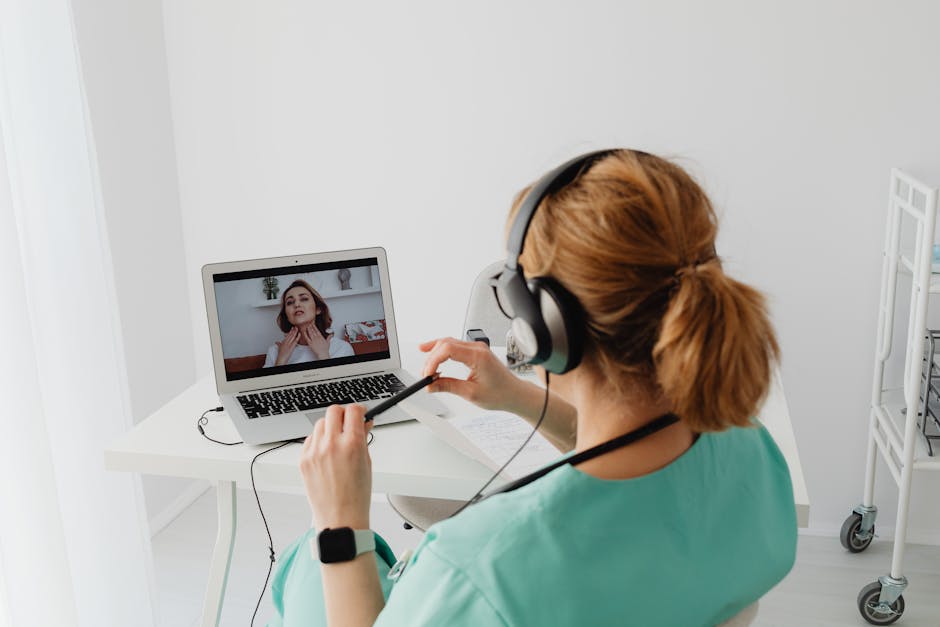
Yes, you can typically get telehealth care and prescriptions from a virtual clinic based in another state, but the answer changes fast once controlled substances enter the picture. Most noncontrolled medications, like weight-loss drugs, blood pressure prescriptions, or antidepressants, move through the system without much friction as long as the provider is authorized to treat you where you physically are. Controlled substances (think certain anxiety medications or stimulants) run into a much tighter net of DEA rules and state law that can require an in-person exam first.
Here’s the quick version:
- Who can prescribe: A provider authorized in the state where you are sitting during the visit, whether through a full license, telehealth registration, or interstate compact.
- What’s routinely allowed: Noncontrolled prescriptions, most primary care, mental health management, and weight-loss medication follow-ups.
- The main barrier: State licensure rules and stricter controlled-substance laws, checked against systems like PDMP / PMP InterConnect at the pharmacy counter.
Pro Tip: Before you book anything, confirm your exact physical location for the appointment and call your local pharmacy to ask if they’ve filled prescriptions from out-of-state telehealth providers before. Five minutes on the phone saves you a wasted visit.
Key Takeaways
Out-of-state telehealth works reliably for noncontrolled prescriptions when the provider is authorized in your current state, but controlled substances require extra verification through DEA rules and state law.
| Point | Details |
|---|---|
| Location during the visit matters most | Telehealth is legally treated as delivered where you physically are, not where you live. |
| Noncontrolled meds transfer easily | Weight-loss drugs, blood pressure medications, and similar prescriptions rarely hit licensing roadblocks. |
| Controlled substances face tighter rules | Expect possible in-person exam requirements and DEA registration checks before a first prescription. |
| Pharmacists check PDMP records | Systems like PMP InterConnect flag cross-state controlled-substance fills for extra scrutiny. |
| Topweightlossmed coordinates cross-state care | The platform verifies provider authorization, insurance, and pharmacy logistics for patients located outside their home state. |
This article is general information, not a substitute for advice from a qualified doctor. Consult a qualified healthcare professional about your own circumstances before acting on anything here.
What Determines Whether Telehealth Across State Lines Works for You
The single biggest factor is where your body is sitting when the video call starts, not where you live or where the clinic is headquartered. Telehealth is legally treated as delivered at the patient’s physical location, so a provider generally needs authorization to practice in that specific state, according to guidance from Telehealth. If you’re on a work trip in Ohio but your provider only holds a license in Texas, that appointment might not be valid, even if you’ve seen that same clinician for months.
States handle out-of-state providers through a patchwork of options, and none of them work the same way twice:
- Full state license: The provider holds an actual medical license in your state.
- Telehealth registration: A lighter-weight credential some states offer specifically for virtual-only practice.
- Interstate compacts: Agreements like the Interstate Medical Licensure Compact that speed up licensing across member states.
- Temporary or limited exceptions: Narrow carve-outs that rarely apply broadly and often exclude controlled substances.
Confirm three things before booking: the provider’s licensure status for your current state, whether they hold a telehealth registration there, and whether the platform itself operates in that state. State telehealth resource centers track out-of-state provider policies that vary widely, so what worked in Colorado won’t necessarily work in Georgia.
Pro Tip: Write down or screenshot the exact address where you’ll be during your appointment, and ask your provider’s intake team to confirm in writing which state they’re authorized to treat you in. If a dispute ever comes up with your insurer or pharmacy, that record is your proof.
Prescribing Rules for Noncontrolled vs. Controlled Medications
Noncontrolled medications move through cross-state telehealth with relatively few obstacles. If a provider is authorized to treat you in your current state, they can typically prescribe things like metformin, semaglutide, SSRIs, or blood pressure medications, provided they’ve done a proper clinical evaluation rather than relying on a quick online questionnaire. That distinction matters: CCHP’s guidance on online prescribing notes that clinicians need an actual history or telehealth exam to establish a valid provider-patient relationship, not just a checklist.
Controlled substances are a different animal entirely. The DEA’s 2025 rules made some pandemic-era telemedicine flexibilities permanent and created special registrations for prescribing certain controlled substances remotely, but states can still layer on stricter requirements. Some states require an in-person visit before a controlled substance prescription is valid, regardless of what federal rules allow.
Federal telemedicine flexibilities don’t override a stricter state law. When the two conflict, providers have to follow whichever rule is tougher, which is why the same medication might be easy to get in one state and impossible in the next.
That’s the core tension patients run into. A few other wrinkles worth knowing:
- Special DEA registrations exist for telehealth platforms and certain prescribers tele-prescribing controlled substances.
- Continuation of an existing controlled-substance prescription after an initial in-person visit is generally treated differently than a brand-new prescription started entirely online.
- The Department of Veterans Affairs, Indian Health Service, and Department of Defense operate under separate exceptions.
- Current federal flexibilities are scheduled to run through 2026, and rules could tighten or shift again after that date.
How Pharmacies Handle Out-of-State Prescriptions and Transfers
Getting a prescription from an out-of-state telehealth provider is only half the process. Your pharmacist runs their own checks before handing over medication, and those checks are where a lot of otherwise-valid prescriptions hit a wall.
- Prescriber license verification. The pharmacist confirms the prescribing provider is properly licensed for the state where you’re filling the prescription.
- DEA registration check. For controlled substances, the pharmacist verifies the prescriber’s DEA number is valid and appropriate for that drug schedule.
- PDMP query. Nearly every state participates in interstate prescription-monitoring data sharing through systems like PMP InterConnect, which flags unusual patterns and cross-state fills.
- Professional judgment call. Even after passing the first three checks, a pharmacist can still decline to fill a prescription based on their own clinical judgment.
Transferring an existing prescription between pharmacies in different states isn’t federally prohibited, but it’s governed by state-specific rules, e-prescribing requirements, and pharmacy-to-pharmacist recordkeeping standards. Some states allow short emergency fills of noncontrolled medications if you’re traveling and run out, though the allowed quantity and process vary widely by state.
Pro Tip: Keep your prescriber’s full name, their state of licensure, their DEA number if the medication is controlled, and your original pharmacy’s phone number saved on your phone. Handing the pharmacist that information upfront speeds up nearly every fill.
Does Insurance Cover Out-of-State Telehealth Visits?
Coverage depends heavily on which type of insurance you have, and the rules aren’t intuitive. Medicare generally requires your provider to be licensed in the state where you’re physically located in order to bill for the visit, according to CCHP’s out-of-state provider guidance. Medicaid rules vary by state and sometimes require the provider to be enrolled specifically in that state’s Medicaid program. Private insurance sits somewhere in between, often depending on your specific plan’s network rules.
Before booking, make three calls:
- Your insurance company’s member services line, to ask if out-of-state telehealth visits are covered and whether prior authorization applies.
- Your virtual clinic’s billing or verification team, to confirm they accept your specific plan.
- Your Medicaid or Medicare case worker if you’re on a government plan, since rules there are less flexible than commercial insurance.
Ask specifically about in-network status, telehealth billing codes, your cost-sharing amount, and whether an in-state provider requirement applies to your plan. Write down the representative’s name, the date, and any confirmation number. A comparison of payer differences for virtual care shows just how much coverage can shift between insurers for the exact same service, so don’t assume your neighbor’s plan behaves like yours.
Your Pre-Appointment Checklist for Cross-State Telehealth
A little prep work before your appointment prevents most of the headaches that come up later at the pharmacy counter. Gather these items first:
- A valid photo ID, plus the exact city and state where you’ll physically be during the appointment.
- Your local pharmacy’s name, address, and phone number.
- A current list of medications you’re taking, including dosages.
- Your insurance card, photographed or scanned if your visit requires it.
You’ll also need to sign a telehealth consent form before your visit, which spells out how your records and messages get handled. Review a clinic’s telehealth consent terms ahead of time so nothing catches you off guard mid-appointment. Test your camera, microphone, and internet connection beforehand, and make sure you’re logged into the patient portal with time to spare.
Pro Tip: If you know you’ll be out of state for your appointment, message your provider’s intake team a day ahead and flag it. Clinics that handle cross-state care regularly, like Topweightlossmed, can often confirm eligibility before you ever sit down for the visit.
How Topweightlossmed Supports Patients in a Different State
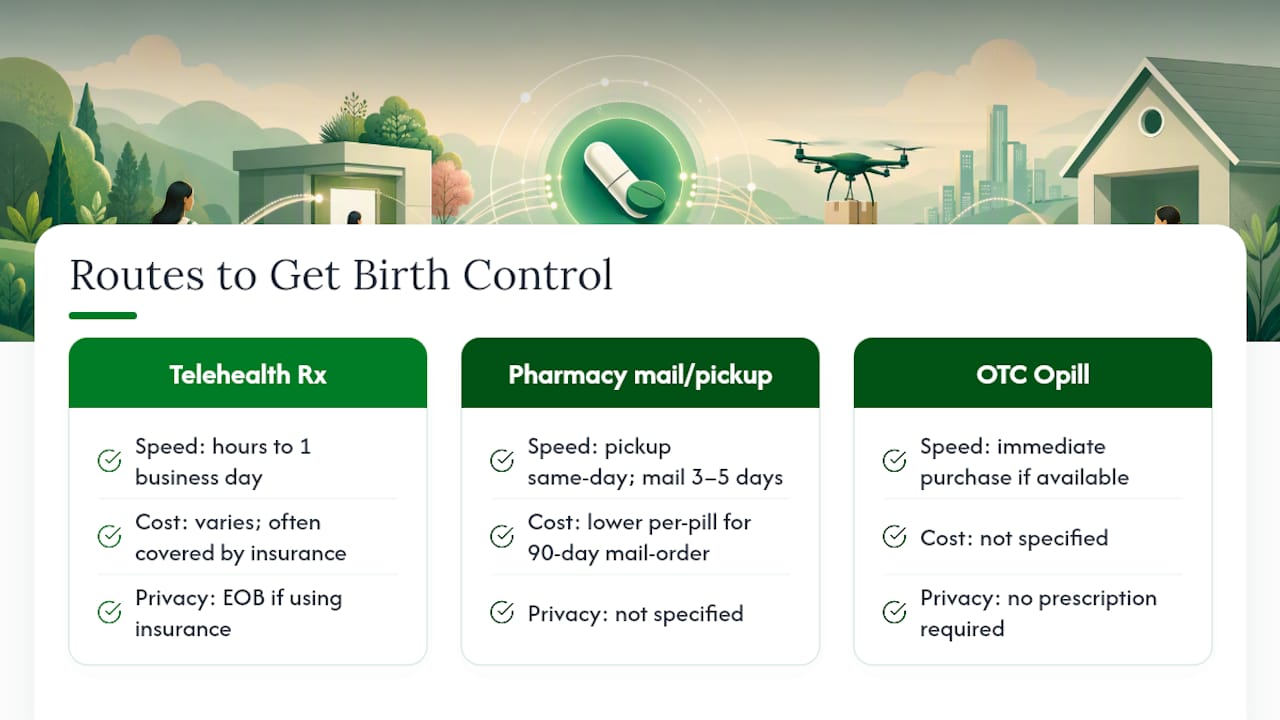
Topweightlossmed built its intake process around exactly this scenario: patients who travel, split time between homes, or simply live somewhere different from where they first signed up. The platform offers virtual consults, medication delivery or local pharmacy pickup, telehealth consent handled through a dedicated consent process, and insurance verification before your visit gets scheduled.
Signing up when you’re located in another state follows a straightforward path:
- Check eligibility. Confirm your provider is authorized to treat patients in your current state.
- Verify clinician authorization. Topweightlossmed’s intake team confirms which providers can see you based on your location.
- Complete intake and consent. Fill out your health history and sign the telehealth consent form.
- Schedule and attend your visit. Same-day appointments are often available.
- Choose your pharmacy option. Select home delivery or pickup at a local pharmacy near you.
Topweightlossmed observes the same controlled-substance restrictions and state registration limits that apply industry-wide. That means some medications simply won’t be available for a first-time out-of-state prescription without an in-person exam, no matter which clinic you use. Where the platform helps most is coordination: connecting you with the right pharmacy, verifying insurance ahead of time, and confirming provider qualifications before you ever pick up the phone.
| Point | Details |
|---|---|
| Verify clinician authorization first | Confirm your provider can treat patients in the exact state you’ll be in during the visit. |
| Noncontrolled meds move easily | Most standard prescriptions, including weight-loss medications, transfer across state lines without added restrictions. |
| Controlled substances need extra steps | Expect possible in-person exam requirements and DEA registration checks for controlled prescriptions. |
| Topweightlossmed coordinates the details | The platform verifies insurance, confirms provider authorization, and arranges medication delivery or pharmacy pickup for out-of-state patients. |
What to Do If a Prescription Gets Denied or You Run Out of Medication
A denied fill isn’t the end of the road, but acting fast matters. Follow these steps in order:
- Ask the pharmacist exactly why it was denied. Get the specific reason, whether it’s a licensing mismatch, a PDMP flag, or missing documentation.
- Request the exact documentation needed. Pharmacists are usually more helpful when you ask what would fix the problem rather than pushing back on the decision itself.
- Contact your telehealth provider immediately. Ask them to correct the prescription or reissue it with the missing information.
- Ask your home pharmacy about a transfer. If you have refills remaining at your regular pharmacy, they may be able to transfer the prescription electronically.
If you’re completely out of medication while traveling, ask the pharmacist about an emergency short-term supply for noncontrolled medications, since rules on this vary heavily by state. Contact your provider about a bridge prescription, or ask whether courier delivery is an option in your situation. Write down the pharmacist’s name and the exact denial reason in case you need to appeal later.
Pro Tip: If you travel often, set up an active e-prescription or enrollment with a mail-order pharmacy ahead of time. It removes most of the guesswork the next time you’re away from home and running low.

Balancing access and safety across state lines
Getting frustrated with controlled-substance rules is understandable, but those restrictions exist because prescription drug monitoring genuinely catches misuse. Don’t let that frustration talk you out of virtual care for routine needs like weight management, blood pressure, or mental health check-ins, where cross-state telehealth works well the vast majority of the time. A little preparation, confirming your location, checking your pharmacy, and reading your consent form, resolves most of the friction before it ever starts.
Ready to Book Care From Wherever You Are
Topweightlossmed makes cross-state care simple for the medications most patients actually need: weight-loss treatment, primary care follow-ups, and ongoing prescription management, all without requiring you to find a new provider every time you cross state lines.
Booking takes three steps. First, check your eligibility based on your current state. Second, complete your intake and sign the telehealth consent form. Third, schedule your visit and choose between medication delivery or pickup at a pharmacy near you. If weight loss is what brought you here, start with the weight loss program page to see which treatment options fit your situation, then let the intake team handle the state-specific details on their end.
Sources
- DEA Announces Three New Telemedicine Rules that Continue to Open Access to Telehealth Treatment while Protecting Patients
- Telehealth
- Telehealth
- Out-of-State Telehealth Provider Policies (Telehealth Resource Center)
FAQ
Can an out-of-state telehealth provider legally treat me?
Yes, if the provider holds a license, telehealth registration, or compact authorization for the state where you’re physically located during the visit.
Can I get controlled substances prescribed across state lines?
Sometimes, but it’s far more restricted than noncontrolled medications and may require an in-person exam depending on your state’s laws.
Why did my pharmacy deny an out-of-state prescription?
Pharmacists check prescriber licensing, DEA registration, and PDMP records, and can decline a fill based on professional judgment even when documentation looks correct.
Does Medicare cover telehealth visits with an out-of-state provider?
Medicare generally requires the provider to be licensed in the state where you’re located at the time of the visit, so coverage depends on that match.
How does Topweightlossmed handle patients traveling out of state?
Topweightlossmed verifies provider authorization for your current state, confirms insurance, and coordinates medication delivery or local pharmacy pickup before your visit.