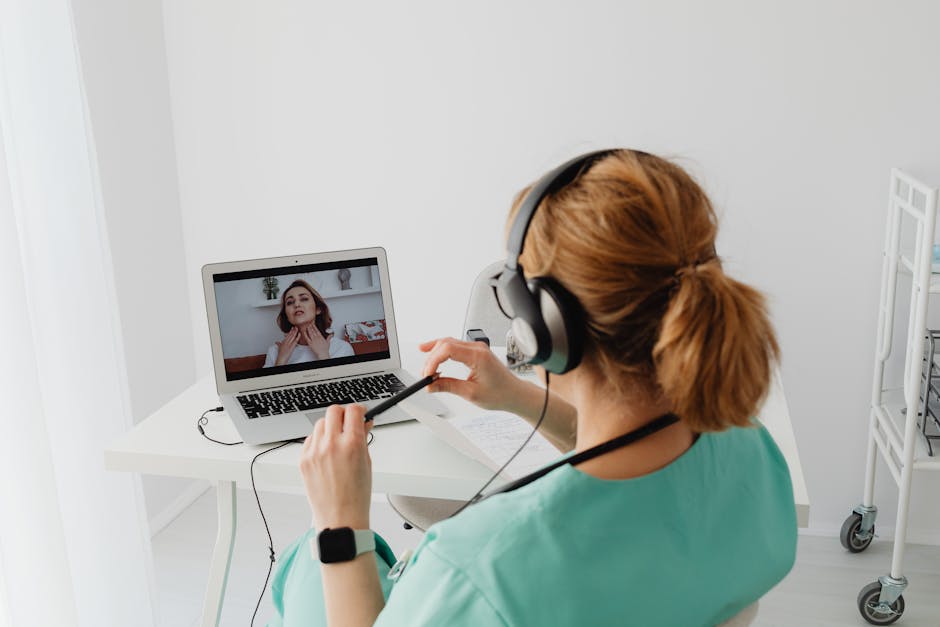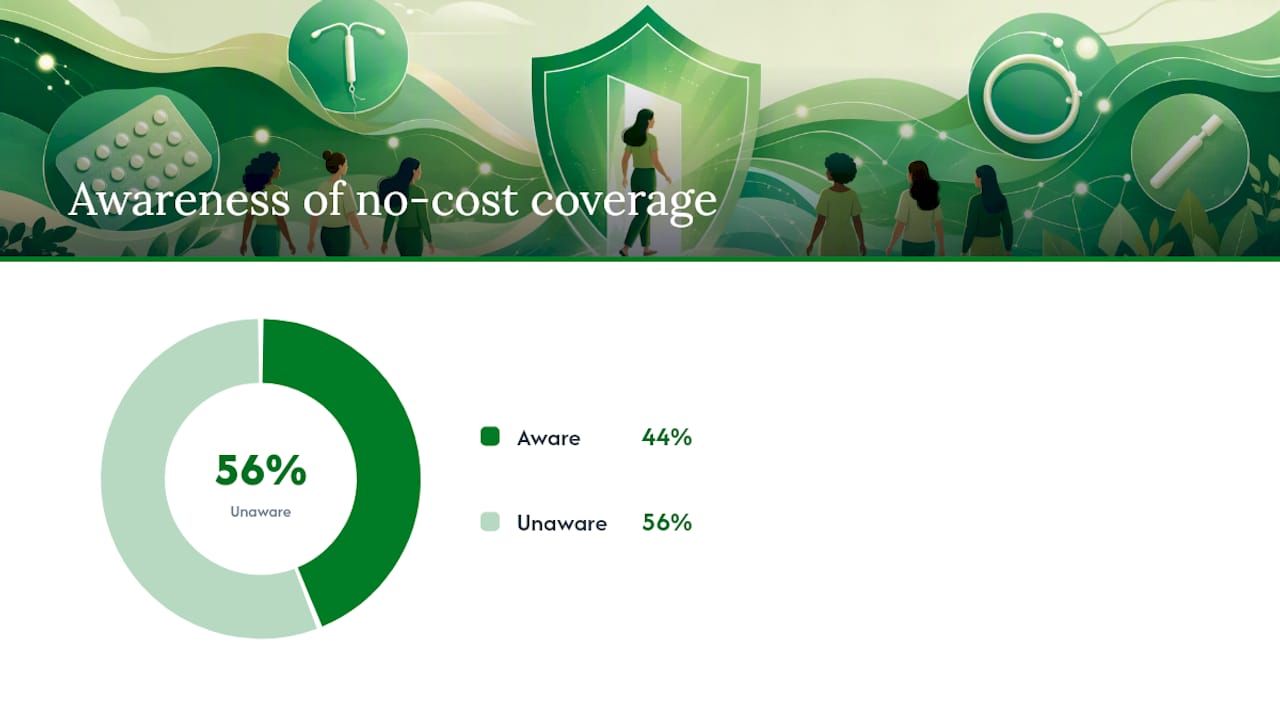
You can get birth control online in the U.S. through three routes: a telehealth prescription sent to your pharmacy or delivered to your door, a pharmacy mail-order or pickup using an existing prescription, or buying Opill over the counter without any prescription at all. The fastest next step is to check whether your insurance covers contraceptives under preventive care, then decide which route fits your timeline.
Your three options at a glance:
- Telehealth prescription — complete an online intake form, get a clinician review, receive a prescription electronically (often within hours)
- Pharmacy mail-order or pickup — use an existing prescription at a retail or mail-order pharmacy for home delivery or same-day pickup
- OTC purchase (Opill) — buy the progestin-only pill directly from a retailer or online, no prescription needed, though stock varies
Pro Tip: If you need a refill today, call your pharmacy first — many can dispense an emergency supply while a telehealth prescription is being processed.
What are the main routes to get birth control online?
Each route has a different speed, cost profile, and privacy footprint. Knowing the tradeoff upfront saves time.
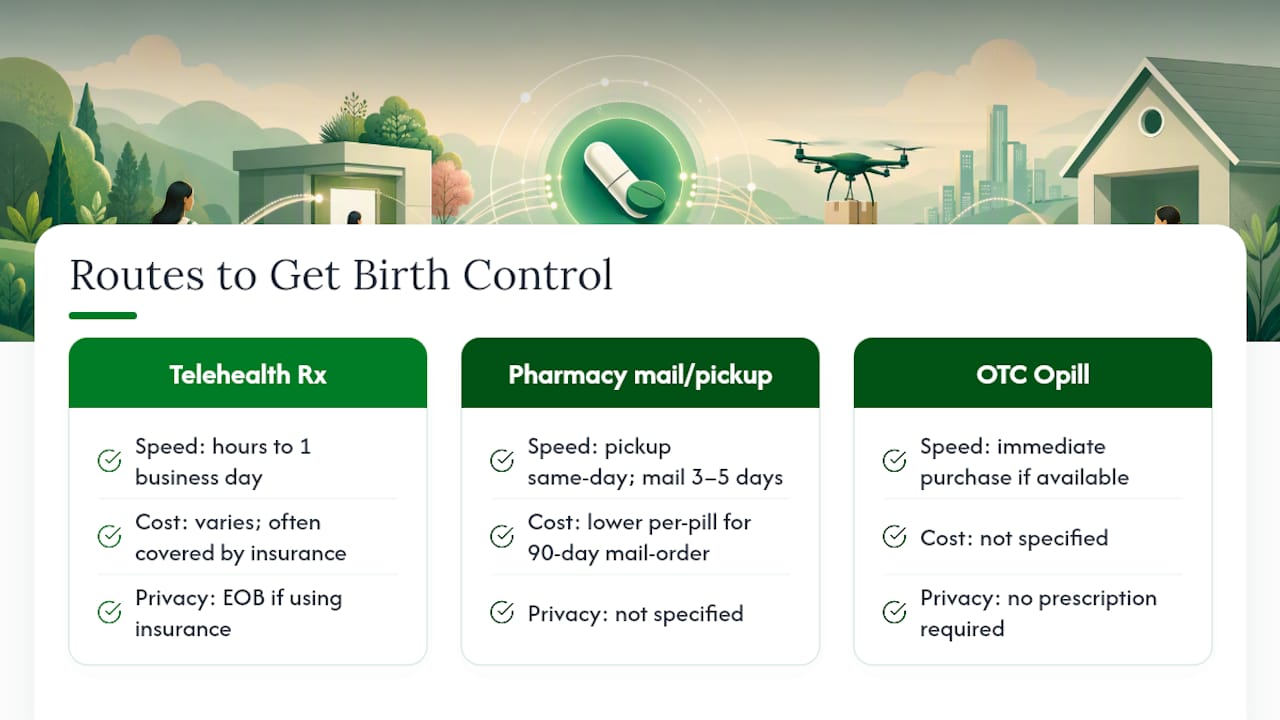
Telehealth prescription A licensed clinician reviews your medical history online, asks follow-up questions, and sends a prescription electronically. Most platforms complete this in a few hours to one business day. You can have the medication shipped to your home or routed to a local pharmacy for same-day pickup. Cost varies by platform and insurance, but many plans cover the visit under preventive care. Privacy note: using insurance generates an Explanation of Benefits (EOB) that a plan policyholder may see.
Pharmacy mail-order or pickup If you already have a valid prescription, mail-order pharmacies can ship a 90-day supply, often at a lower per-pill cost than a 30-day retail fill. Standard shipping typically takes 3–5 business days; expedited options can cut that to 1–2 days. Pickup at a retail pharmacy is same-day once the prescription is on file.
OTC purchase (Opill) No visit, no prescription, no waiting room. Opill is the first FDA-approved OTC daily progestin-only pill, available online and in many retail stores. Stock varies by state and retailer, so check availability before counting on it.
Pro Tip: Urgent refill? Choose pharmacy pickup. Starting a new method? Telehealth gives you a clinician screen and a prescription in one step.
Which birth control methods can you actually get online?
Not every method travels through a browser. Here is a clear breakdown.
| Method | Available online? | Notes |
|---|---|---|
| Combined pill (estrogen + progestin) | Yes, via telehealth | Requires BP screening and medical history review |
| Progestin-only pill (mini-pill / Opill) | Yes — Rx or OTC | Opill available without prescription; others need Rx |
| Patch | Yes, via telehealth | Ships to home or pharmacy; state availability varies |
| Vaginal ring (NuvaRing, Annovera) | Yes, via telehealth | Prescription required; some platforms ship directly |
| Emergency contraception (Plan B, ella) | Yes, OTC or Rx | Plan B is OTC; ella requires a prescription |
| IUD (hormonal or copper) | No | Requires in-office insertion by a clinician |
| Implant (Nexplanon) | No | Requires in-office procedure |
| Injectable (Depo-Provera) | Partially | Some clinics offer self-injection training; initial visit often required |
Methods that need in-person care and why:
- IUDs and implants require a sterile insertion procedure that cannot be replicated remotely
- Injectables often need at least one in-person visit to confirm placement technique and rule out contraindications
- Sterilization procedures (tubal ligation, vasectomy) are surgical and always in-person
For pills, the patch, and the ring, telehealth handles the full workflow. State rules can limit which methods a specific platform offers, so confirm availability when you sign up.
How does a telehealth visit for birth control actually work?
A telehealth visit delivers a medical screening and, if appropriate, a prescription — all without leaving home. Here is the typical sequence:
- Complete the intake form — enter your medical history, current medications, smoking status, and pregnancy status. Most platforms take 10–15 minutes.
- Submit a blood pressure reading — many platforms require a BP reading from the past 12 months. A photo of a clinic record or a home monitor display is usually accepted.
- Clinician review — a licensed prescriber (MD, NP, or PA) reviews your form and may send follow-up questions through the platform’s messaging system.
- Prescription issued — if appropriate, the prescription is sent electronically to your chosen pharmacy or the platform’s fulfillment partner.
- Medication delivered or picked up — choose home delivery or same-day pickup at a local pharmacy.
What to have ready before you start:
- List of current medications and supplements
- BP reading (home monitor photo or recent clinic record)
- Smoking status (current, former, or never)
- Date of last menstrual period
- Insurance card, if you plan to bill insurance
GoodRx outlines a similar five-step process for getting birth control without an in-person visit, confirming that the intake form and BP check are the two steps most likely to slow things down.
Pro Tip: Take your BP at a grocery store kiosk or pharmacy machine, photograph the screen, and upload it with your intake form. Most platforms accept this and it eliminates the most common delay.
What does birth control online cost, and does insurance cover it?
Under the Affordable Care Act, many insurance plans cover FDA-approved contraceptive methods as preventive care with no cost sharing — meaning $0 copay for the medication itself. The catch: grandfathered plans, some employer self-insured plans, and certain religious exemptions may not follow the same rules, so confirm with your insurer before assuming full coverage.
Typical out-of-pocket ranges when paying without insurance:
- Birth control pills: roughly $20–$50 per month at retail pharmacies, depending on the brand
- Vaginal ring: can run $50–$200 per month without coverage
- Patch: similar range to the ring
- Emergency contraception (Plan B): typically $40–$60 OTC; ella (prescription) may cost more without coverage
- Telehealth consultation fee: varies by platform; some charge $0 with insurance, others charge a flat fee of $15–$75
Cost callout: FSA and HSA funds can pay for prescription contraceptives and, in many cases, the telehealth consultation fee. Check your plan documents to confirm eligible expenses before your visit.
Ways to reduce cost:
- Use your insurance’s preferred pharmacy network for the lowest copay
- Apply a GoodRx coupon at checkout — prices at some pharmacies drop significantly compared to the cash price
- Ask the platform whether they offer a manufacturer coupon or patient assistance program
- A 90-day mail-order supply often costs less per pill than three separate 30-day fills
Privacy note: when you use insurance, an EOB goes to the policyholder on the plan. A policy brief from the Center for Health Law and Policy Innovation explains that paying out of pocket or requesting confidential communications from your insurer are two practical ways to limit what appears on that document.
Pro Tip: Mail-order pharmacies often dispense a 90-day supply for the price of two 30-day fills. If your plan allows it, switch to mail-order after your first fill.
What is Opill, and can you buy it without a prescription?
Opill is the first daily birth control pill approved by the FDA for over-the-counter sale in the United States, no prescription required. It contains norgestrel, a progestin-only hormone, and is taken once daily at the same time each day.
Regulatory status: Opill received FDA OTC approval, making it the first daily oral contraceptive available without a clinician visit in U.S. history.
What you need to know about availability:
- Opill is sold online (the brand’s own site, major retailers) and in many drugstores and grocery chains
- Stock varies by state and individual retailer — a product page may show “available” nationally while a specific store is out
- Some states have been slower to stock it on physical shelves; online ordering from the brand’s site or a major retailer is often the most reliable option
- It does not protect against STIs
When to consider a telehealth prescription instead of Opill:
- You want a combined pill (estrogen + progestin), which is not available OTC
- You have a health condition that warrants clinician guidance on method selection
- You want insurance to cover the cost (OTC Opill is not always covered the same way as prescription contraceptives)
- Your preferred retailer is out of stock and you need medication quickly
How long does birth control delivery take, and how do refills work?
Timeline depends entirely on which route you choose.
Delivery and pickup timelines:
- Same-day pharmacy pickup: available once a prescription is on file and the pharmacy has filled it, usually within a few hours of the telehealth visit
- Standard home delivery: typically 3–5 business days from the time the prescription is sent
- Expedited shipping: some platforms offer 1–2 day delivery for an additional fee
- OTC Opill (online order): standard retail shipping, usually 2–5 business days
Setting up automatic refills:
Most telehealth platforms and mail-order pharmacies offer automatic refill enrollment. Before you sign up, confirm:
- How many months the prescription authorizes (some platforms send 1 month at a time; others authorize 3 or 6)
- Whether the platform sends a refill reminder or ships automatically
- Which pharmacy the prescription is routed to, and whether you can change it
- Whether a follow-up check-in is required before each refill cycle
Emergency contraception timing:
Plan B (levonorgestrel) is most effective within 72 hours of unprotected sex and can be ordered online for same-day pickup at most pharmacies. ella (ulipristal acetate) requires a prescription and is effective up to 120 hours, but shipping time matters — if you need it fast, pharmacy pickup beats home delivery.
Pro Tip: Order your next pack before you finish the current one. Most platforms and pharmacies allow refill requests 7–10 days before you run out. Set a phone reminder on the day you open your last week of pills.
How do you choose a safe telehealth provider for birth control?
The top three things to verify before you hand over your health information: licensed prescribers in your state, transparent pricing with no hidden fees, and a clear privacy policy that explains how your data is stored and shared.
Questions to ask any platform before signing up:
- Are your prescribers licensed in my state?
- Do you require a blood pressure reading, and what formats do you accept?
- What is your refill policy — automatic or request-based?
- Which pharmacies do you work with, and can I use my local pharmacy?
- What is the consultation fee, and is it billed to insurance?
- How is my health data stored, and is it shared with third parties?
Red flags to watch for:
- No clinician review — any platform that issues a prescription without a medical history review is not practicing safe medicine
- Surprise fees that appear after you complete the intake form
- Vague or missing privacy policy
- No clear pharmacy partner or fulfillment process explained before checkout
- Customer reviews that consistently mention shipment errors or unresponsive support
Topweightlossmed’s birth control service includes licensed prescriber review, insurance integration, and clear delivery options — worth checking if you want a platform that handles the full workflow in one place.
Before your first visit, review the telehealth consent process so you know exactly what you’re agreeing to and what your rights are during a virtual visit.
Is online birth control safe, and when do you need in-person care?
Telehealth can safely prescribe most hormonal birth control pills after standard screening, but certain health conditions require an in-person evaluation before any prescription is appropriate.
Common side effects to expect with hormonal methods:
- Nausea, especially in the first 1–3 months
- Spotting or irregular bleeding between periods
- Breast tenderness
- Mood changes or headaches
- Decreased libido (less common)
Most side effects ease after 2–3 cycles. A follow-up message through the platform’s portal is usually enough to address them; a full new visit is rarely needed.
Conditions that often require in-person evaluation first:
- Blood pressure consistently above 140/90 mmHg — combined hormonal methods carry added cardiovascular risk at elevated BP
- Personal or family history of blood clots, stroke, or certain clotting disorders
- Active migraines with aura (combined pills are generally contraindicated)
- Liver disease or certain hormone-sensitive cancers
Seek emergency care immediately if you develop: sudden severe headache, chest pain, shortness of breath, vision changes, or leg pain and swelling after starting hormonal birth control. These can signal rare but serious clotting events.
If any of these symptoms develop after starting a new method, stop taking it and contact a clinician or go to an emergency room. Do not wait for a telehealth callback for symptoms that feel urgent.
This article is general health information, not medical advice. Confirm your specific situation with a licensed clinician or your primary care provider.
Key Takeaways
Getting birth control online is practical and fast when you match the right route to your situation — telehealth for new prescriptions, mail-order for refills, and Opill OTC when you need no prescription at all.
| Point | Details |
|---|---|
| Three routes exist | Telehealth prescription, pharmacy mail-order/pickup, and OTC Opill cover most needs. |
| Insurance often covers $0 | Many ACA-compliant plans cover FDA-approved contraceptives with no copay — confirm with your insurer. |
| BP reading speeds things up | Have a blood pressure reading from the past 12 months ready before your telehealth intake form. |
| Opill needs a stock check | FDA-approved OTC availability varies by retailer and state; order online if local shelves are out. |
| Topweightlossmed covers the full workflow | Licensed prescribers, insurance integration, and delivery or pharmacy pickup in one platform. |
The part most people skip when ordering birth control online
There is a gap between what telehealth platforms advertise and what actually slows people down. The intake form is not the bottleneck. The blood pressure reading is. Platforms that require a recent BP check — and most responsible ones do for combined hormonal methods — will pause your prescription until you submit one. People who do not have a recent reading on hand wait days for a clinic appointment when a pharmacy kiosk photo would have worked just fine.
The second thing people underestimate is the EOB problem. Using insurance is almost always the right financial move, but if you share a plan with a parent or partner and privacy matters to you, the EOB that lands in the policyholder’s mailbox will list the service. Paying out of pocket for a $20–$50 pill pack, or requesting confidential communications from your insurer, is a real option — not a paranoid one. The CHLPI issue brief on EOBs lays out exactly which strategies work and which ones are more complicated than they sound.
The third overlooked point: Opill is a genuine option for many people, but it is a progestin-only pill. If you want a combined pill for cycle regulation, acne management, or other reasons beyond contraception alone, you still need a prescription. OTC does not mean every pill is now available without a visit.
Topweightlossmed makes getting a birth control prescription online straightforward
Same-day appointments, licensed prescribers, and insurance billing in one place — that is the practical difference Topweightlossmed offers compared to piecing together a telehealth visit, a pharmacy, and a refill reminder on your own.
Topweightlossmed’s birth control service connects you with a licensed clinician who reviews your medical history, accepts BP readings from home monitors or clinic records, and sends your prescription to your preferred pharmacy or arranges home delivery. Insurance is billed directly when your plan covers it, and the platform supports automatic refills so you do not have to remember to reorder. For patients managing more than one health concern, the same platform covers primary care, mental health, weight management, and more — no separate apps or portals.
Ready to get started? Book a same-day appointment at Topweightlossmed and have your insurance card and a recent BP reading on hand.
Useful sources
These are the primary references to verify current availability, coverage rules, and safety guidance:
- healthcare.gov — Birth control benefits
- chlpi.org — Confidentiality and Explanation of Benefits (issue brief)
- Opill®: The First FDA-Approved OTC Daily Birth Control Pill …
- GoodRx — 5 Steps to Getting Birth Control Without Seeing a Doctor
FAQ
Does insurance cover birth control ordered online?
Many ACA-compliant plans cover FDA-approved contraceptives as preventive care with no copay, including prescriptions written through telehealth. Confirm your specific plan’s rules at Healthcare.gov, since grandfathered and certain employer plans may differ.
How long does it take to get birth control delivered?
Same-day pharmacy pickup is possible once a telehealth prescription is issued, usually within a few hours. Standard home delivery from a mail-order pharmacy typically takes 3–5 business days; expedited options can arrive in 1–2 days.
Can I get birth control online without a prescription?
Yes, if you want Opill — the FDA-approved OTC progestin-only pill. All other hormonal methods (combined pills, patch, ring) require a prescription from a licensed clinician, which you can get through a telehealth visit.
Is it safe to get a birth control prescription through telehealth?
Telehealth is safe for prescribing most hormonal birth control after standard screening, including a blood pressure check and medical history review. Conditions like very high blood pressure, migraines with aura, or a clotting history may require an in-person evaluation before a prescription is appropriate.
What should I have ready before a telehealth birth control visit?
Have your current medication list, a blood pressure reading from the past 12 months (a home monitor photo works), your smoking status, your last menstrual period date, and your insurance card if you plan to bill your plan.