Yes. Most people on hormonal birth control can safely skip or delay their period by skipping the placebo pills and moving straight into the next pack of active pills. This works because withdrawal bleeding on the pill isn’t a biological necessity, just a side effect of the pill’s design. If you have migraines with aura, a history of blood clots, or uncontrolled high blood pressure, talk to a clinician before switching, and expect some breakthrough spotting as your body adjusts.
TL;DR:
- Most people can skip or delay their period safely by moving directly from active pills into a new pack without the placebo week, unless they have specific health risks like migraines with aura or blood clots.
- Combining oral pills or vaginal rings provide the most predictable control, allowing planned scheduling of bleeding or elimination, unlike progestin-only methods, which vary widely in bleeding patterns.
- Breakthrough bleeding is common during the first three to six months of continuous use, but severe symptoms like heavy bleeding or pain require medical evaluation and potentially a short hormone-free break.
- Prescriptions for continuous use should specify this regimen to avoid gaps, with insurance policies sometimes restricting the supply to monthly packs, so advance planning is necessary.
- Telehealth consultations streamline the process, allowing customized, safe, and convenient management of skipping periods without in-person visits.
How to Skip a Period With the Pill: Step by Step
The mechanics are simpler than most people expect, but the details of your specific pack matter.
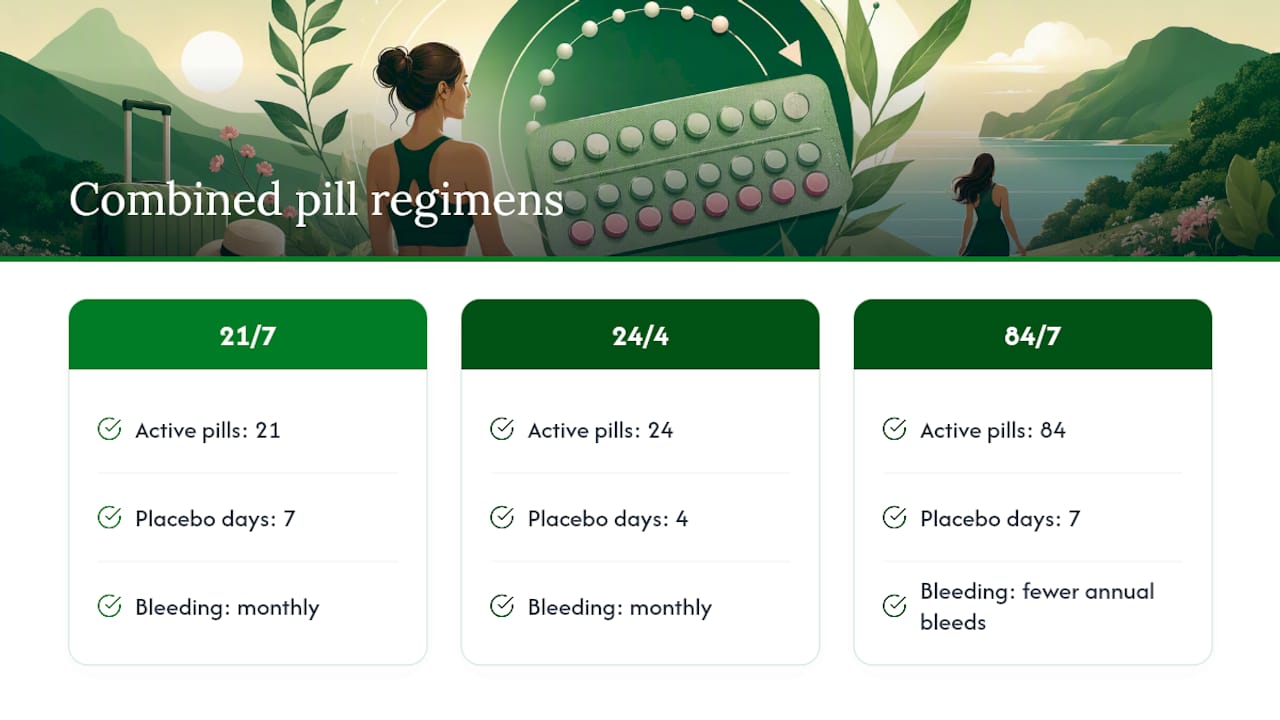
1. Find out what pack you’re using. Most combined pills come in a 21/7 format (21 active pills, 7 placebo or none) or a 24/4 format (24 active, 4 placebo). Some newer regimens ship as 84/7, giving you 84 active pills followed by one placebo week, which reduces the annual number of bleed days.

2. Skip the inactive week. If you’re on a 21/7 pack, throw away the placebo pills (or skip that week entirely) and start the first active pill of your next pack the following day. On a 24/4 pack, do the same after the 24 active pills. The goal is to never let hormone levels drop long enough to trigger withdrawal bleeding.
3. Decide if you want a modified break instead of full continuous use. Some official patient guidance describes a shortened hormone-free interval of a few days rather than the standard week, which still resets the cycle but reduces bleed duration. This is a reasonable middle ground if you’re new to skipping periods and want a gentler transition.
4. Use backup contraception if you’re restarting pills mid-cycle or missed doses. Starting active pills more than 24 hours late, or resuming after a gap, can reduce contraceptive protection for about seven days. Condoms cover that gap.
5. Order ahead. Continuous use burns through packs faster than a standard monthly cycle, so you’ll need refills more often than your pharmacy’s default cadence assumes.
Pro Tip: Set a recurring phone reminder for the day you’d normally start placebo pills, and label it “skip week, start new pack” so you never accidentally break the streak by grabbing the wrong pack from the shelf.
If you’re using the vaginal ring instead of pills, the same logic applies: insert a new ring immediately after removing the old one instead of taking the usual one-week break. Extended-cycle and continuous-year regimens work on this same principle, just stretched across a full year with maybe one or two planned breaks if bleeding becomes bothersome.
Which Birth Control Methods Let You Skip or Schedule Your Period?
Not every method gives you the same level of control over bleeding, and that matters when you’re choosing what to start or switch to.
- Combined oral pills and the vaginal ring offer the most predictable, adjustable control. You decide when to bleed and when not to, and you can plan around a wedding, a vacation, or a marathon with real precision. ACOG’s clinical guidance points to these two as the primary tools for anyone specifically trying to schedule or eliminate bleeding.
- Progestin-only pills, the implant, and the hormonal IUD produce far less predictable results. Some users stop bleeding entirely within months; others get irregular spotting that never fully settles. There’s no dial to turn here, your body decides.
- The Depo-Provera injection frequently stops periods altogether after several months of use, but it comes with its own tradeoffs: a longer return-to-fertility window after stopping, and side effects like bone density changes with long-term use that a clinician should walk you through.
- The contraceptive patch has thinner evidence behind continuous use. Clinicians sometimes allow it off-label, but ACOG treats it as a secondary option rather than a first-line choice for period suppression.
If your main goal is reliable scheduling, combined pills or the ring are the practical starting point. If you’re more interested in eventually not thinking about contraception at all, the implant or IUD might serve you better, even though the bleeding pattern is less predictable in the short term.
What Happens After You Start Skipping Periods
Breakthrough bleeding is the most common complaint in the first few months, and it’s rarely a sign that something’s wrong.
Spotting between expected bleed dates typically shows up hardest in the first three to six months of continuous use, then tapers off as your uterine lining adjusts to a steadier hormone level. On combined pills, this usually means light, unpredictable spotting rather than a full period. On progestin-only methods, the pattern is messier and harder to forecast, some people go months without any bleeding at all, others spot on and off for a year before it settles.
A few signs mean it’s time to check in with a clinician rather than wait it out:
- Bleeding heavy enough to soak through a pad or tampon hourly for several hours
- Bleeding that lasts more than two weeks straight
- Severe pelvic pain, especially one-sided
- A missed expected withdrawal bleed paired with nausea, breast tenderness, or other pregnancy signs
For garden-variety spotting, the standard advice is to keep taking your active pills on schedule rather than stopping, since interrupting the regimen often triggers more bleeding, not less. Track it on a calendar or app. A pattern that’s improving month over month is normal; one that’s getting worse is not.
When Continuous Birth Control Isn’t Safe (And When to Call a Doctor)
Estrogen-containing methods aren’t right for everyone, and this is where a real screening conversation matters more than a Google search.
Continuous combined pills or the ring generally aren’t appropriate if you have a personal or strong family history of blood clots, migraines with aura, uncontrolled hypertension, or if you smoke and are over 35. These aren’t absolute bans in every case, but they’re exactly the kind of history a clinician needs before greenlighting continuous use.
- A missed expected bleed combined with any pregnancy symptom warrants a home pregnancy test before you assume it’s just adaptation.
- Sudden, severe headache, leg swelling or pain, or chest pain and shortness of breath are urgent, not “wait and see” symptoms.
- Persistent breakthrough bleeding that doesn’t improve after several months is worth a follow-up visit, not just patience.
Pro Tip: If spotting becomes genuinely annoying rather than dangerous, a short, clinician-guided three to four day hormone-free break can act as a reset, letting the uterine lining clear before you resume continuous active pills. That’s a planned tactic, not a sign you’ve failed at this.
Getting Your Prescription and Refills Right
Continuous use changes the math on your prescription, and most pharmacies default to the standard cycle unless you say otherwise.
- Ask specifically for a prescription written for continuous or extended-cycle use, not just “the pill,” so your provider prescribes enough active pills to avoid gaps between refills.
- Confirm with your insurance whether it covers a full year of active-only packs upfront, since some plans still process claims on a strict 28-day cadence.
- Tell your clinician your full medical history, your current regimen, and your specific reason for wanting fewer periods, whether that’s convenience, migraines, endometriosis symptoms, or heavy bleeding. That context shapes which method they’ll recommend.
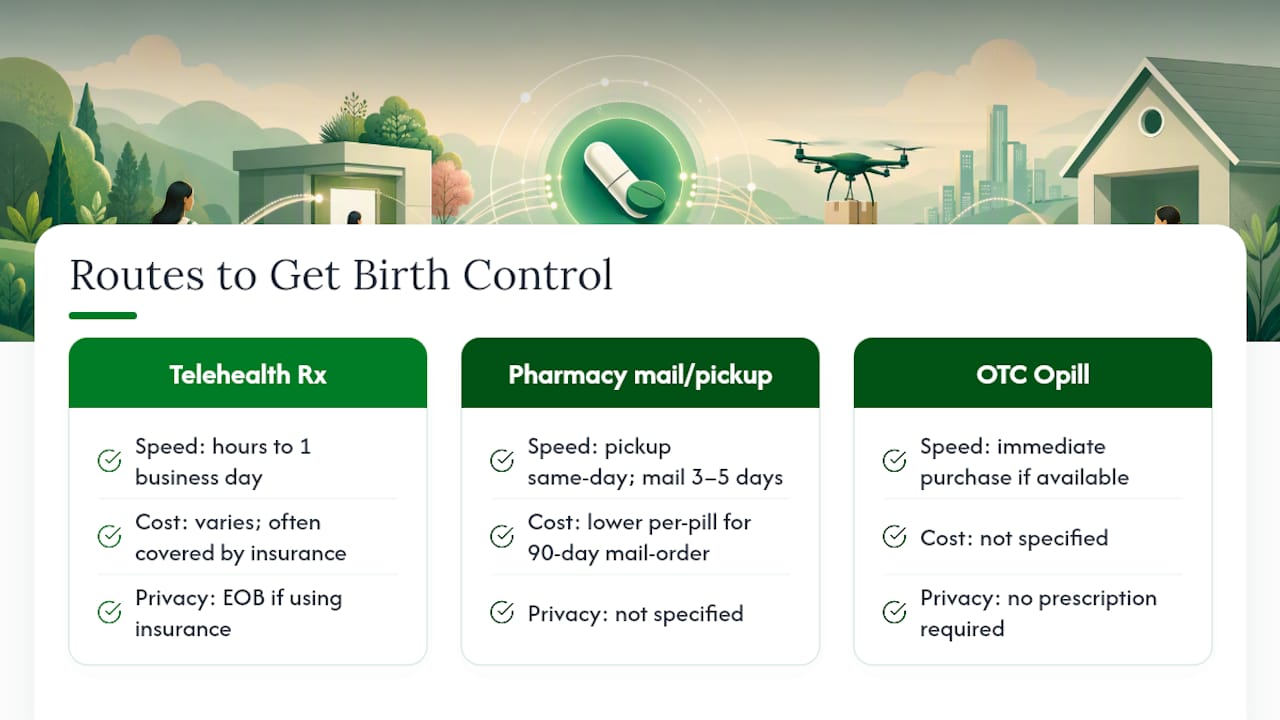
Requesting birth control guidance through a telehealth visit is often faster than waiting for the next in-person opening, and it gives you a documented plan your pharmacy can follow without confusion.
Clinical Support for Managing Continuous Birth Control
A telehealth visit can screen for contraindications, review your bleeding history, and write a prescription matched to a continuous or extended schedule, all without an in-person office wait. Providers can also arrange delivery or pharmacy pickup so refill timing doesn’t become a barrier. Individualized screening matters here more than a one-size-fits-all recommendation, since the right method depends on your specific health history, not just your preference for fewer periods.
What I Tell Patients Who Want Fewer Periods
I generally recommend starting with combined pills or the ring, since they give the most predictable control, and reserving progestin-only methods for people who’ve already decided they’re fine with unpredictable bleeding in exchange for less daily maintenance. The real work isn’t picking a method, it’s having an honest conversation about your personal risk factors before you start. Most people adjust within a few months, and the ones who stick with it rarely regret the decision.
— Bryan
Skip Your Period Without the Guesswork: Topweightlossmed’s Telehealth Option
Getting a continuous birth control regimen right takes an actual screening conversation, not a guess based on a pharmacy shelf. Topweightlossmed connects you with a licensed provider who reviews your health history, checks for contraindications like clotting risk or uncontrolled blood pressure, and writes a prescription sized for continuous use instead of the standard monthly cycle.
Visits happen remotely, and once your plan is set, medication ships to your door or gets sent to a local pharmacy for pickup, so you’re not stuck negotiating refill timing with a front-desk scheduler. If you’re managing other health goals alongside this, from weight management to primary care, having it under one platform means your provider sees the full picture rather than a fragment of it. Start by reviewing the birth control page and booking a consult to get a regimen tailored to your actual medical history.
Sources
These are the clinical references behind the guidance in this article, useful if you want the full detail straight from the source.
- What to know about skipping periods with birth control — ACOG
- Breakthrough bleeding on the pill — Healthline
This article is general information, not a substitute for advice from a qualified doctor. Consult a qualified healthcare professional about your own circumstances before acting on anything here.
FAQ
Is It Bad to Skip Your Period With the Pill?
No, skipping periods with hormonal birth control is safe for most people without contraindications like a history of blood clots or migraines with aura, and it can even reduce cramps and anemia from heavy bleeding.
Can You Skip a Period on the Pill but Still Bleed?
Yes, breakthrough bleeding or spotting is common when you first switch to continuous use, especially in the first three to six months, and it usually decreases as your body adjusts.
How Long Does It Take to Skip Your Period on the Pill Safely?
You can start skipping immediately by moving from active pills straight into your next pack, but expect your body to take three to six months to fully adapt to a low-spotting continuous schedule.
How Can I Delay My Period for a Trip Without Extra Medication?
Timing your existing pill pack so you skip the placebo week before travel is the most reliable option; there’s no proven natural method that delays bleeding as consistently as adjusting your hormonal regimen.