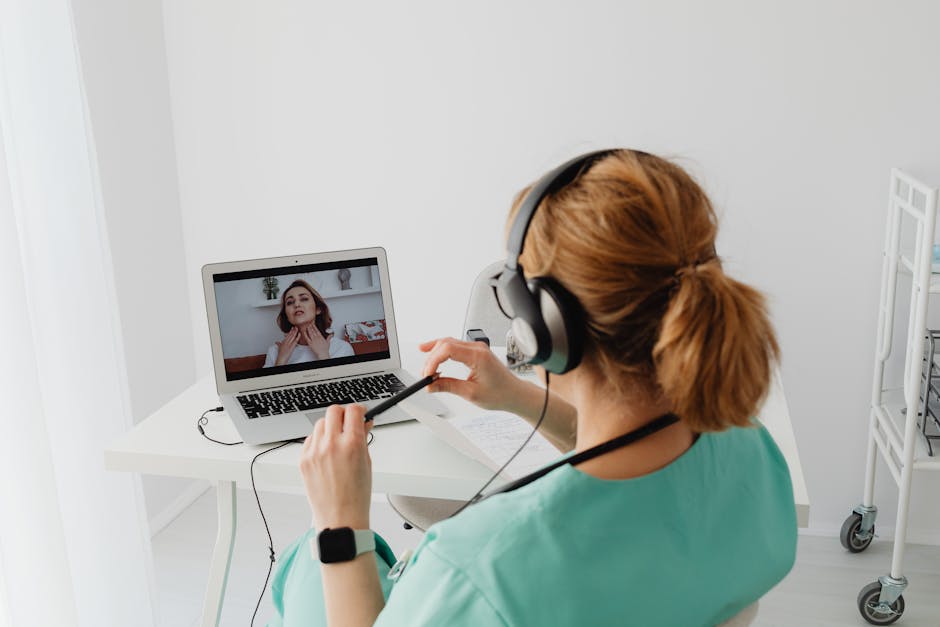
Yes. Telepsychiatry can deliver safe, effective medication management for most psychiatric conditions, including depression, anxiety, and many mood disorders, when the care includes a board-certified prescriber, a regular follow-up schedule, and real monitoring. A narrative review of telepsychiatry practice backs this up for legitimate, physician-led care, though it flags real concerns about digital mental health startups that prescribe fast and follow up rarely.
Before you book anything, know the caveats:
- Controlled substances are restricted. Stimulants and many benzodiazepines face extra rules or outright limits depending on the state and platform.
- Follow-up isn’t optional. Safe remote prescribing depends on scheduled check-ins, not a one-time video call and an auto-refill.
- The platform and prescriber both need credentials. Licensure in your state, HIPAA-compliant video, and a real prescription monitoring program check are the baseline, not a bonus.
The rest of this guide walks through exactly how the process works, what’s off the table, and how to pick a provider that does it right.
Key Takeaways
Telepsychiatry medication management works best when it pairs a licensed, board-certified prescriber with structured follow-ups and real lab and vitals monitoring, not just a video call and a refill.
| Point | Details |
|---|---|
| Most medications are fair game | SSRIs, SNRIs, mood stabilizers, and non-stimulant ADHD medications are routinely managed remotely. |
| Controlled substances need extra steps | Stimulants and many benzodiazepines require added verification or in-person evaluation in most states. |
| Follow-up cadence signals quality | Frequent early check-ins that space out over time indicate safe, attentive prescribing. |
| Labs still happen | Lithium, valproate, and metabolic panels get coordinated through local draw centers or your PCP. |
| Topweightlossmed offers integrated care | Same-day telepsychiatry appointments with credentialed providers, e-prescribing, and consent-based privacy protections. |
How Telepsychiatry Medication Management Actually Works
Remote psychiatric care follows a structured sequence, and skipping steps is usually the sign of a weak provider rather than an efficient one.
- Comprehensive intake evaluation. Expect a session that covers psychiatric history, current symptoms, past medications and their side effects, family history, and any substance use. Bring a written med list and prior records if you have them; it speeds things up and reduces errors.
- Collaborative treatment planning. A good prescriber walks you through medication options, expected timelines, and side effects, then lets you weigh in before anything is prescribed. This is standard practice at established telepsychiatry clinics, according to service descriptions from telepsychiatry networks.
- E-prescribing to your pharmacy. Once a plan is set, the prescription routes electronically to a local pharmacy or, in some setups, to a delivery service.
- Structured follow-ups. Visits happen more often when you’re starting a new medication or adjusting a dose, typically every few weeks, then space out to monthly or quarterly once things stabilize, per clinical guidance on telehealth medication management.
- Coordination with your primary care doctor. Labs, vitals, and any physical health flags get shared with your PCP so nobody is treating you in a vacuum.
Pro Tip: Keep a running symptom and side-effect log between visits. Even three bullet points a week gives your prescriber far more to work with than “I’ve been okay, I guess” during a 15-minute follow-up.
The pace surprises people who expect telehealth to mean less oversight. It’s often the opposite. Because the prescriber can’t physically examine you, they tend to lean harder on structured check-ins and patient-reported detail to catch problems early.
Which Medications Can Telepsychiatry Prescribe?
Most standard psychiatric medications are fair game. What isn’t is a shorter, more tightly regulated list, and knowing the difference saves you a frustrating first appointment.
Telepsychiatry routinely manages:
- SSRIs and SNRIs for depression and anxiety (sertraline, escitalopram, venlafaxine, and similar)
- Non-habit-forming sleep aids for insomnia tied to a psychiatric condition
- Most mood stabilizers, including lithium and valproate, with lab monitoring built in
- Non-stimulant ADHD medications like atomoxetine or viloxazine
Stimulants (Adderall, Vyvanse, Ritalin) and many benzodiazepines (Xanax, Ativan) sit in a different category. These are Schedule II and Schedule IV controlled substances, and federal and state rules put extra requirements around prescribing them remotely, particularly for a first-time patient the prescriber has never seen in person. Every state runs a prescription monitoring program, and legitimate telepsychiatry providers check it before prescribing anything with abuse potential.
A 2023 review of the digital mental health market found that some unregulated startups moved fast on stimulant and controlled-substance prescriptions with little follow-up structure, which is precisely the pattern regulators have targeted with tighter enforcement. That’s the core safety warning worth remembering when a service seems to skip the usual friction.
If you genuinely need a controlled medication, your realistic paths are an in-person evaluation first, a hybrid model where your telepsychiatrist coordinates with a local prescriber for that specific medication, or periodic in-person visits layered on top of ongoing telehealth care. None of these are dealbreakers. They’re just the honest version of how this works.
How Are Labs and Vitals Handled Remotely?
Medication safety monitoring doesn’t disappear just because the visit happens on a screen. It moves.
Certain medications carry specific monitoring requirements regardless of delivery method:
- Lithium and valproate require periodic blood levels to stay in a safe therapeutic range
- Some antipsychotics call for basic metabolic panels and weight tracking
- Blood pressure checks matter for several classes, including some antidepressants and stimulant alternatives
- Baseline and periodic bloodwork is standard before and during many mood stabilizer regimens
None of this requires an in-person psychiatric visit. Providers typically direct patients to a local lab draw center, coordinate results through your primary care provider, or have you self-report vitals from a home blood pressure cuff or scale, a pattern well documented in telemedicine monitoring practice guidance. Between visits, track weight, blood pressure if relevant to your medication, sleep quality, and any new physical symptoms.
Tell your prescriber about every over-the-counter drug and supplement you take, not just prescriptions. St. John’s Wort and even high-dose fish oil can interact with psychiatric medications in ways that surprise people.
Pro Tip: Screenshot your pharmacy’s medication list before every telepsychiatry visit. It’s the fastest way to catch a duplicate or an interaction your prescriber might not otherwise see.
Telepsychiatry has real limits here. Active suicidal crisis, severe psychosis, or any situation requiring restraint or hospitalization needs in-person emergency care immediately, not a scheduled video visit.
What Should You Ask Before Booking a Provider?
Picking a telepsychiatry provider is closer to vetting a surgeon than choosing a streaming service. A few minutes of due diligence up front prevents months of frustration later.
- Confirm the prescriber is licensed in your state and board-certified in psychiatry.
- Ask whether you’ll see the same prescriber consistently or a rotating pool.
- Ask directly about their controlled-substance policy and how they handle stimulants or benzodiazepines.
- Confirm the platform is HIPAA-compliant and ask how they handle lab orders and referrals.
- Ask what happens if you have a mental health emergency outside office hours.
Red flags that should send you elsewhere:
- Prescribing on the first call with no follow-up plan mentioned
- Automated refills with no periodic check-in required
- Refusal to coordinate with your primary care doctor or local pharmacy
- Vague or evasive answers about data privacy and HIPAA compliance
What Happens at Your First Medication Visit?
First appointments run 30 to 60 minutes and follow a predictable structure once you know what to expect.
- Complete intake forms covering symptoms, history, and current medications before the visit.
- Have your pharmacy name and address ready, plus any prior psychiatric records if available.
- Expect a focused clinical interview, followed by a discussion of medication options and consent to a plan.
- Walk away with one of a few outcomes: a new prescription sent electronically, labs ordered before starting, a referral to in-person care, or a plan that holds off on medication for now.
- Refills and questions between visits typically route through a secure messaging portal rather than a phone tag.
Top Weight Loss Med’s Approach to Remote Medication Management
Topweightlossmed builds medication management into its broader mental health service rather than treating it as a bolt-on. Patients get same-day appointments with providers who prescribe, monitor, and follow up on a set schedule, plus e-prescribing that routes straight to a pharmacy or delivery option.
Provider credentials are listed directly, including Thomas Geracioti, giving patients a clear picture of who they’re actually seeing. Every visit runs through a documented telehealth consent process that spells out privacy protections in line with HIPAA expectations.
Where controlled substances require extra caution, Topweightlossmed’s prescribers follow the same safeguards outlined earlier in this guide: prescription monitoring checks, conservative prescribing, and coordination with local care when a medication falls outside what’s appropriate for a purely remote relationship.
The Overlooked Problem With “Fast” Telepsychiatry
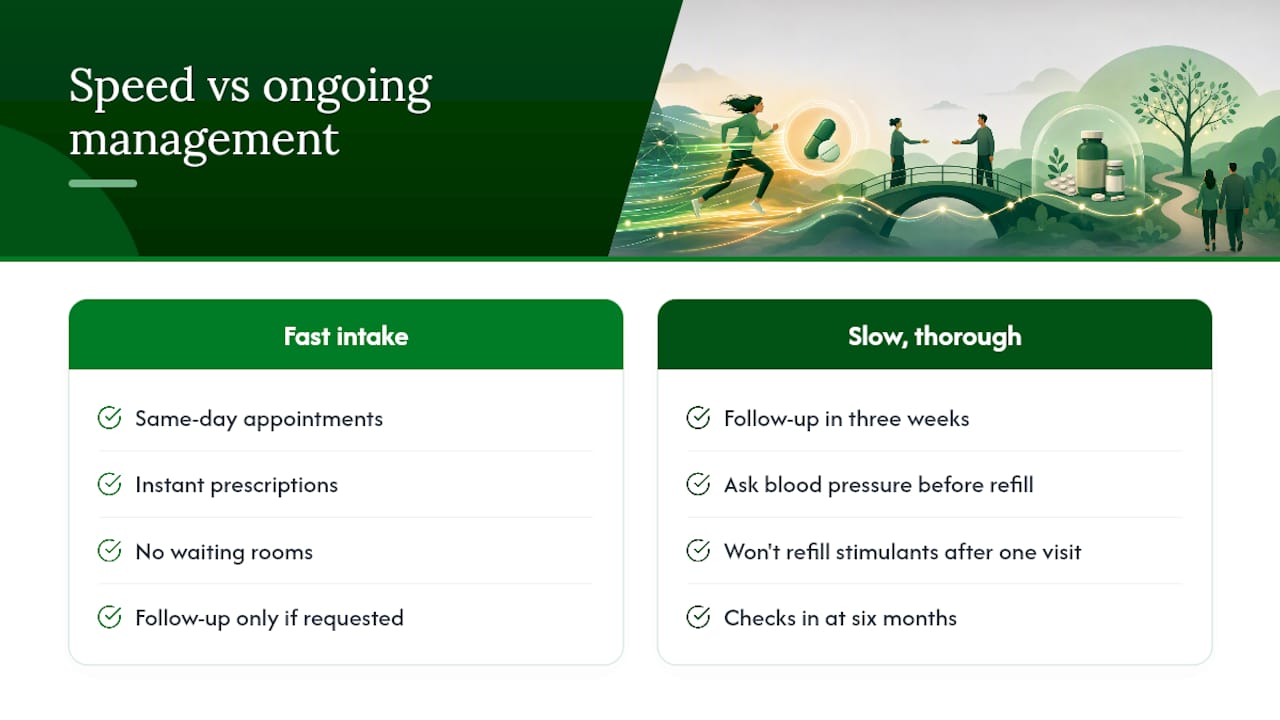
The conventional pitch for telepsychiatry sells speed: same-day appointments, instant prescriptions, no waiting rooms. That’s real, and it matters for someone who’s been putting off care for months. But speed at intake is not the same thing as quality of ongoing management, and I think that distinction gets lost in most coverage of this topic.
The providers worth choosing are the slow ones after the first visit; the ones who insist on a follow-up in three weeks instead of three months, who ask about your blood pressure before renewing a refill, who won’t touch a stimulant prescription without seeing you more than once. That friction is a feature, not a flaw. A prescriber willing to say “not yet” or “let’s check labs first” is doing the job correctly, even when it’s less convenient in the moment.
What patients should prioritize first isn’t finding the fastest appointment. It’s finding a prescriber who will still be checking in on you six months from now.
Get Medication Management Without the Wait
Finding a psychiatric prescriber willing to see you this week, follow up consistently, and coordinate with the rest of your care shouldn’t take weeks of phone calls. Topweightlossmed cuts that down to a same-day booking, with mental health folded into the same platform as primary care, so your prescriber isn’t working blind if you’re also managing a physical health condition.

That integration is the practical difference: one login, one care team, one place where your medication history actually follows you between visits instead of getting lost between separate providers. If you’re ready to talk to a board-certified prescriber about medication management, book an appointment through Topweightlossmed’s mental health services and get a same-day evaluation started.
Sources
- Telepsychiatry in an Era of Digital Mental Health Startups - PMC
- Telehealth Medication Management: Follow-Ups, Labs, Refills, Safety — The Care Clinic
This article is general information, not a substitute for advice from a qualified doctor. Consult a qualified healthcare professional about your own circumstances before acting on anything here.
FAQ
Will a telehealth psychiatrist prescribe medication?
Yes, licensed telepsychiatrists can prescribe most psychiatric medications, including antidepressants, mood stabilizers, and non-stimulant ADHD medications, following a full evaluation.
Can I get a Xanax prescription through telehealth?
Benzodiazepines like Xanax are controlled substances with added restrictions, and many telepsychiatry providers limit or decline prescribing them remotely without an in-person evaluation first.
What is medication management telehealth?
It’s ongoing psychiatric care delivered by video, covering evaluation, prescribing, dosage adjustments, and scheduled follow-ups to monitor how a medication is working.
What does a medication management psychiatrist do?
They evaluate symptoms, prescribe or adjust medications, order relevant labs, and schedule regular follow-ups to track effectiveness and side effects over time. Topweightlossmed’s prescribers, including Thomas Geracioti, follow this same structure for mental health patients.