Most people on an SSRI deal with nausea, headache, sleep changes, or sexual dysfunction, and most of that fades within a couple of weeks. The rare stuff is what deserves your attention: the FDA requires a boxed warning about increased suicidal thinking in people under 25, serotonin syndrome can turn dangerous within hours, and citalopram carries a specific heart-rhythm risk at higher doses. Sexual side effects are the most underreported complaint, with multiple clinical sources putting the prevalence at roughly 30 to 40% of patients.
If you notice a high fever, severe agitation, confusion, muscle twitching, fainting, or new/worsening suicidal thoughts, that’s not a “wait it out” situation. Call your prescriber immediately or go to an emergency room.
- Common and usually temporary: nausea, headache, GI upset, sweating, dizziness, sleep disturbance
- Common and often persistent: sexual dysfunction, appetite/weight changes
- Rare but serious: serotonin syndrome, QT prolongation (citalopram), suicidal ideation risk in young people
Quick fact: StatPearls’ clinical reference on SSRIs lists sexual dysfunction, sleep disturbance, weight changes, dizziness, dry mouth, headache, and GI distress as the core adverse-effect profile clinicians watch for.
Key Takeaways
Most SSRI side effects are transient and manageable, but sexual dysfunction, serotonin syndrome, citalopram’s QT risk, and suicidal ideation risk in people under 25 require specific attention and prompt communication with your prescriber.
| Point | Details |
|---|---|
| Common effects fade fast | Nausea, headache, and GI upset typically resolve within one to two weeks. |
| Sexual side effects persist | They affect an estimated 30 to 40% of patients and often don’t resolve without intervention. |
| Watch the first two weeks | Activation and suicidal ideation risk are highest early in treatment or after dose changes. |
| Citalopram has a dose ceiling | Cap at 40 mg/day for most adults, 20 mg/day for people over 60, due to QT prolongation risk. |
| Coordinated follow-up matters | Topweightlossmed pairs virtual mental health visits with primary care for faster side-effect management. |
This article is general information, not a substitute for advice from a qualified doctor. Consult a qualified healthcare professional about your own circumstances before acting on anything here.
Common SSRI Side Effects: What’s Normal and What Sticks Around
Nausea, headache, GI upset, sweating, and dizziness are the classic starter pack. They typically show up within hours to a few days of the first dose and calm down over the first one to two weeks as your body adjusts to the shift in serotonin signaling. Harvard Health’s rundown of antidepressant risks confirms this same cluster shows up across nearly every SSRI on the market.
Some effects don’t follow that script. Sexual dysfunction and weight change are the two most likely to stick around for the duration of treatment instead of resolving on their own. Real-world patient data consistently ranks sexual side effects, sleepiness, and weight gain as the most bothersome complaints people report months into treatment, not just week one.
| Side Effect | Typical Onset | Typical Duration |
|---|---|---|
| Nausea, GI upset | Hours to 3 days | a couple of weeks |
| Headache, dizziness | First few days | a couple of weeks |
| Sleep changes | First a couple of weeks | Variable, sometimes persistent |
| Sexual dysfunction | Within first weeks | Often persists through treatment |
| Weight change | Weeks to months | Often persists, gradual |
- Take note of anything that hasn’t budged by week three. That’s your cue to call your prescriber, not to just push through.
Sexual Side Effects: How Common They Are and What You Can Do
Roughly 30 to 40% of people on an SSRI report some form of sexual dysfunction, according to pooled clinical research, and it’s the side effect most people never bring up with their doctor. The umbrella covers decreased libido, delayed orgasm, erectile dysfunction, and anorgasmia (the inability to reach orgasm at all), and any one of these can show up alone or in combination.

The good news: there are actual levers to pull. A prescriber can lower the dose, switch you to a different SSRI or a non-SSRI antidepressant with a lower sexual side-effect profile, adjust timing around sexual activity, or add a supplemental medication targeting the specific problem. Persistent erectile dysfunction sometimes warrants its own dedicated treatment rather than waiting on the antidepressant to resolve it.
Bring these questions to your next appointment:
- Is this dose related, or should we try a different SSRI entirely?
- Are there add-on options for delayed orgasm or low libido?
- Would timing my dose differently help?
- At what point should we consider switching strategies for sexual health specifically?
Does Starting an SSRI Make Anxiety Worse at First?
Yes, for some people it does, and it’s called activation. It’s an early spike in anxiety, restlessness, or jitteriness that tends to hit in the first one to two weeks of treatment or after a dose increase, before the calming effect kicks in. It’s usually temporary as your brain adjusts to the new serotonin activity, but it’s also the exact window where the FDA’s warning matters most.
The FDA requires a boxed warning on all antidepressants noting a possible increased risk of suicidal thinking and behavior in children, adolescents, and young adults up to age 25, particularly in the early weeks of treatment or after dose changes.
A UK regulatory review reached a similar conclusion and pushed for closer monitoring in this age group.
- Schedule a follow-up within the first one to two weeks of starting or changing dose, especially for anyone under 25.
- Have a specific person and crisis line ready to call if mood shifts sharply.
- Don’t dismiss new agitation as “just anxiety.” Tell your prescriber the same day it starts.
- Expect your prescriber to ask directly about suicidal thoughts. That’s standard monitoring, not overreaction.
Serotonin Syndrome: What It Looks Like and Why Speed Matters
Serotonin syndrome happens when serotonin activity in the body climbs too high, usually from combining an SSRI with another serotonergic drug, an accidental overdose, or an interaction with a supplement like St. John’s Wort. It can develop within hours of the triggering event.
Recognize the pattern: mental status changes (confusion, agitation), autonomic dysfunction (rapid heart rate, high fever, sweating), and neuromuscular abnormalities like tremor, clonus, or hyperreflexia. All three together is the red flag.
- Stop the suspected offending medication immediately and get emergency care. Don’t wait to see if it passes.
- Mild cases often resolve with supportive care once the drug is stopped.
- In stubborn cases, clinical guidance notes cyproheptadine is sometimes used, though the evidence backing it comes from case reports rather than large trials.
- Severe fever or muscle rigidity means you call 911, not urgent care.
Citalopram and Heart Rhythm: The QT Prolongation Warning
Citalopram carries a dose-dependent risk of QT prolongation, a change in the heart’s electrical cycle that can trigger dangerous arrhythmias. Mayo Clinic’s guidance recommends capping the dose at 40 mg per day for most adults and 20 mg per day for anyone over 60.
This isn’t a theoretical caution. It’s a specific dosing ceiling built into how citalopram gets prescribed for older adults.
- Extra caution applies if you have a history of arrhythmia, take other QT-prolonging medications, or have low potassium or magnesium.
- A baseline ECG is reasonable before starting citalopram in anyone with existing cardiac risk factors.
- Electrolyte panels matter more here than with most other SSRIs. Ask your prescriber if you’re due for one.
Bleeding Risk and Hyponatremia: The Lab Checks Nobody Talks About
SSRIs interfere with serotonin’s role in platelet function, which modestly raises bleeding risk, especially when you’re also taking an anticoagulant, aspirin, or an NSAID like ibuprofen. Unusual bruising, nosebleeds, or blood in stool while on that combination is worth a call.
Older adults face a documented, higher risk of hyponatremia, a drop in blood sodium, when starting an SSRI, and symptoms like confusion, headache, and muscle pain can be mistaken for something else entirely.
Research on SSRIs and sodium levels backs up why sodium checks matter more in this population than in younger patients.
- Anyone on an anticoagulant starting an SSRI should flag it to both prescribers, not just one.
- A sodium panel within the first few weeks makes sense for older adults, especially those on diuretics too.
- Persistent bruising or confusion after starting treatment deserves lab work, not a wait-and-see approach.
SSRIs and Weight Gain: What Actually Happens Over Time
Weight change with SSRIs runs in two directions. Some people lose a little weight in the first few weeks as nausea suppresses appetite, then gain it back and sometimes more as treatment continues past the six-month mark. Modest, gradual weight gain is the more common long-term pattern.
- Review your full medication list. Other prescriptions can compound appetite changes.
- Simple timing adjustments and consistent activity levels help more than most people expect.
- If weight gain is clinically significant, ask about switching to an SSRI or antidepressant class with a lower metabolic footprint.
- Bring it up early. Waiting a year to mention 15 pounds of gain limits your options.
Insomnia or Sedation: Figuring Out Which One Your SSRI Is Causing
Some SSRIs tend to be more activating, like fluoxetine and sertraline, which can leave you wired at night if taken late in the day. Others, like paroxetine, run more sedating for a portion of patients. The fix often comes down to when you take the pill, not switching drugs entirely.
- Activating SSRI keeping you up? Move the dose to the morning.
- Sedating SSRI dragging you down all day? Move it to bedtime instead.
- Basic sleep hygiene, consistent bedtime, no screens, no late caffeine, still applies and helps more than people assume.
- Severe insomnia with daytime impairment lasting more than two to three weeks warrants a dose or medication conversation, not more coffee.
SSRI Withdrawal Symptoms and How to Stop Safely
Stopping an SSRI abruptly can trigger discontinuation syndrome: dizziness, flu-like symptoms, irritability, and the infamous “brain zaps,” brief electric-shock sensations in the head. This is a reaction to rapid dose reduction, not addiction, and it’s entirely avoidable with the right approach.
- Never stop cold turkey. Mayo Clinic’s guidance on tapering emphasizes small, stepwise dose reductions over weeks.
- Paroxetine is more likely to cause withdrawal symptoms than most other SSRIs due to its shorter half-life.
- Fluoxetine’s long half-life makes it comparatively gentler to taper, which is one reason clinicians sometimes bridge patients through it.
- Any taper plan should come from your prescriber, tailored to the specific drug and dose you’re on.
Drug Interactions: MAOIs, Anticoagulants, and Other Risky Combinations
The most dangerous interaction is combining an SSRI with an MAOI. This pairing can trigger life-threatening serotonin syndrome and generally requires a washout period of at least two weeks between switching, longer for fluoxetine due to its long half-life. Other serotonergic drugs like tramadol, certain triptans, and other antidepressants raise the same risk in smaller doses.
- MAOIs plus SSRIs: avoid combining without direct specialist guidance on washout timing.
- Anticoagulants or NSAIDs plus SSRIs: increased bleeding risk, watch for unusual bruising.
- Bring your complete medication and supplement list, including St. John’s Wort, to every single appointment.
- Ask your pharmacist to run an interaction check whenever a new prescription is added, not just at your annual visit.
Who Faces Higher Risk From SSRIs?
Age and life stage change the risk calculus considerably. Older adults carry a higher hyponatremia and fall risk; younger patients carry the suicidal ideation warning; pregnancy adds a separate layer of fetal and newborn considerations that need direct discussion with your provider.
| Population | Primary Risk | Typical Approach |
|---|---|---|
| Older adults | Hyponatremia, fall/fracture risk | Lower starting doses, sodium monitoring |
| Adolescents/young adults (under 25) | Increased suicidal ideation | Frequent follow-up, safety planning |
| Pregnancy | Neonatal adaptation issues, PPHN | Individualized risk-benefit discussion |
| Breastfeeding | Limited infant exposure via milk | Case-by-case monitoring with pediatrician |
- Pregnant patients continuing an SSRI into late pregnancy should expect a conversation about newborn observation after delivery, per UK regulatory guidance.
- None of these risk categories mean SSRIs are off the table. They mean the monitoring plan looks different.
When Should You Seek Emergency Help?
Most SSRI side effects are annoying, not dangerous. A short list crosses the line into urgent.
New or worsening suicidal thoughts, severe agitation or panic, signs of serotonin syndrome, seizures, very high fever, fainting, chest pain, or a severe allergic reaction all warrant immediate action, not a wait-and-see approach.
- Suicidal thoughts or severe agitation: call your prescriber immediately or a crisis line; go to the ER if there’s any immediate danger.
- Fever, confusion, muscle rigidity: emergency room, don’t drive yourself if symptoms are severe.
- Fainting or chest pain: call 911.
How Clinicians Actually Manage SSRI Side Effects
Most side-effect management follows a predictable order. For mild, early effects like nausea or headache, the first move is usually reassurance and monitoring, since these often resolve on their own within two weeks. If something persists past that window, dose or timing adjustments come next, followed by switching to a different SSRI or drug class if the problem doesn’t budge.
Adjunct medications get added for specific stubborn symptoms, an antiemetic for ongoing nausea, for example, and referrals go out for sexual dysfunction or sleep issues that need specialist input.
Pro Tip: Write down every side effect with a date and severity rating before your appointment. A two-line log (“Day 3, nausea, moderate, gone by Day 10”) gives your prescriber far more to work with than “I’ve felt kind of off.”
- Ask directly: “Is this a wait-it-out symptom or a change-something symptom?”
- Request a specific follow-up date, not an open-ended “call if it gets worse.”
How Long Does It Take for SSRIs to Start Working?
Side effects usually show up first, often within days, while the mood benefit lags behind. Clinical guidance on antidepressant timelines puts meaningful mood improvement at around two to six weeks, with fuller benefit often by weeks four to six.
- Missing doses in these early weeks resets the adjustment clock and can prolong side effects.
- Track mood changes weekly, not daily. Day-to-day swings are normal and not a reliable signal either way.
- Don’t judge whether the medication “works” before the four-week mark unless something urgent comes up.
What the Research Says About SSRI Safety
The clinical picture on SSRI side effects is well documented. StatPearls’ clinical reference lays out the standard adverse-effect profile and flags serotonin syndrome and citalopram’s QT risk as the two safety issues that demand the fastest response.
Sexual dysfunction is a common side effect among patients on SSRIs, making it one of the most frequent reasons people quietly stop treatment without telling their prescriber why.
Regulatory bodies back specific pieces of this picture too: the FDA’s boxed warning on suicidal ideation risk in people under 25, and citalopram’s dose-capping guidance from cardiac-safety reviews. None of this is a reason to avoid treatment. It’s a reason to have a real conversation with whoever is prescribing it.
A Publisher’s Note on SSRI Safety and Follow-Up
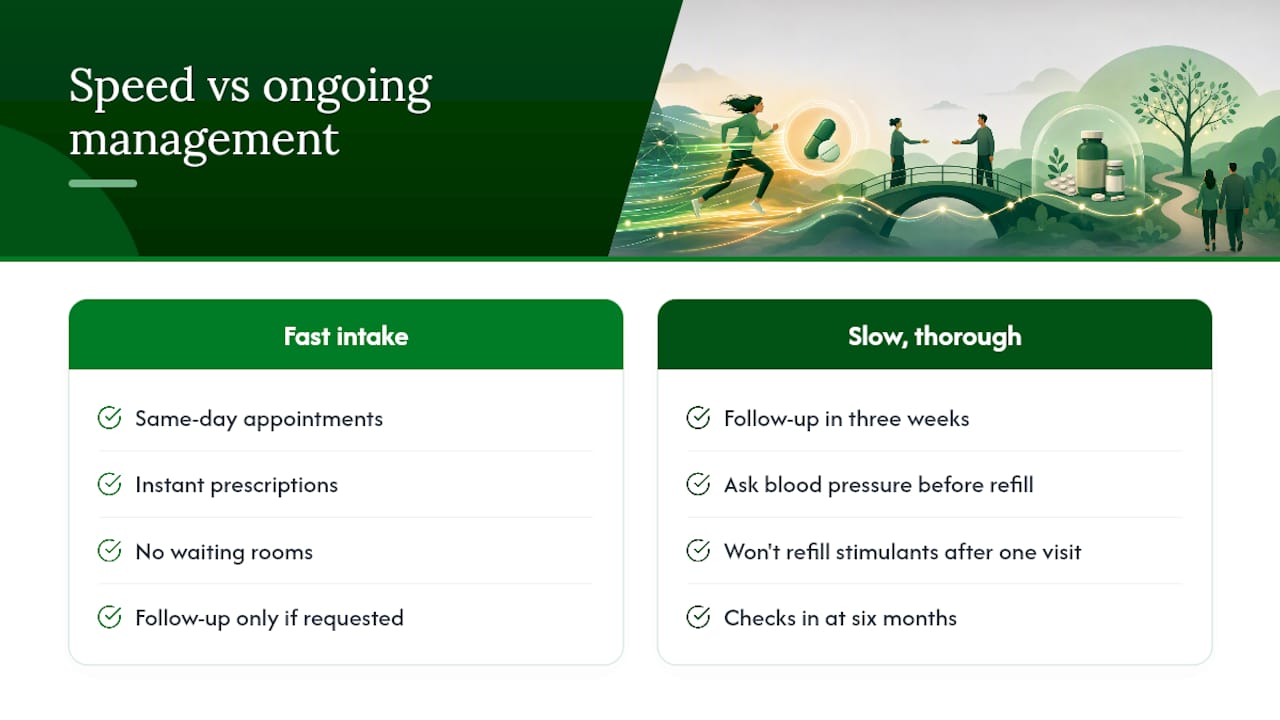
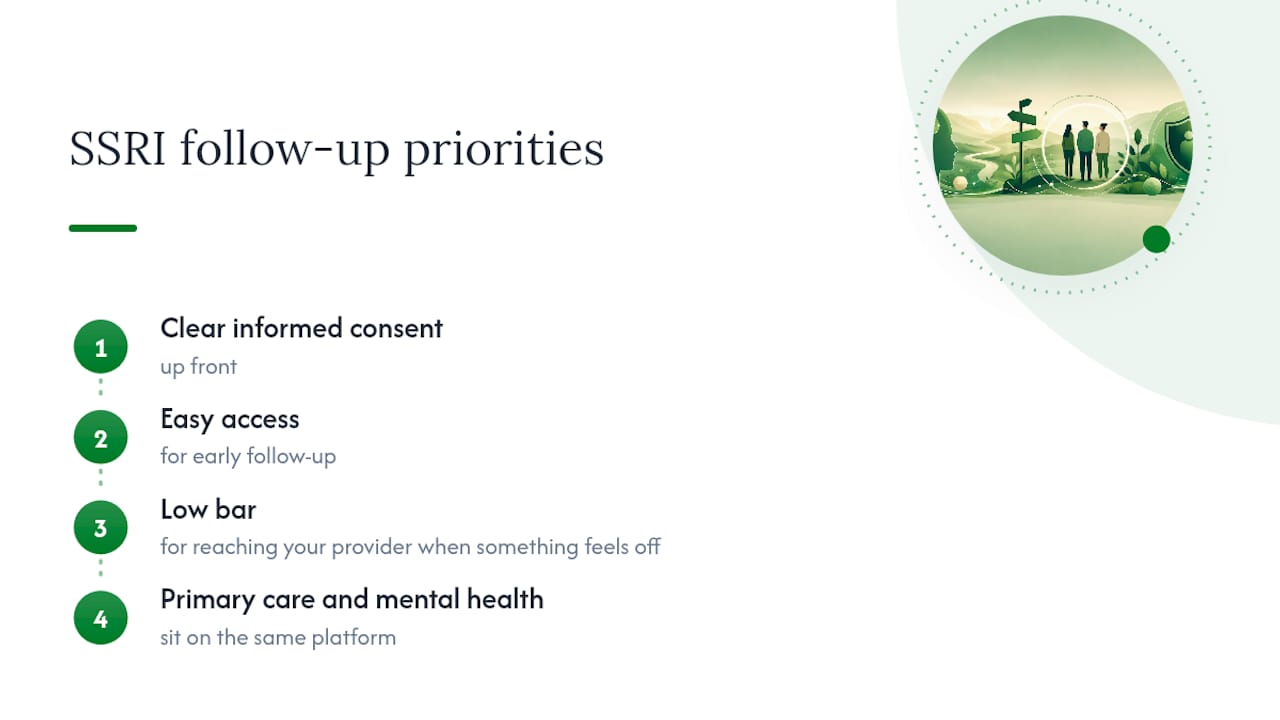
We built our approach around the idea that side-effect monitoring shouldn’t be an afterthought bolted onto a five-minute prescription refill. Clear informed consent up front, easy access for early follow-up, and a low bar for reaching your provider when something feels off matter more than people realize until they need it.
Because primary care and mental health services sit on the same platform, side effects that touch both, weight change, sexual dysfunction, sleep, don’t fall into a gap between two separate providers who never talk to each other.
Get Discreet, Coordinated Care for SSRI Side Effects
If nausea, sexual side effects, or sleep disruption from an SSRI have you wondering whether to switch, adjust, or just push through, you don’t need to figure that out alone or wait weeks for an appointment. Topweightlossmed connects you with a licensed provider for a same-day virtual visit, so a side-effect problem gets addressed in days, not whenever the next opening on a crowded psychiatry schedule happens to be.

Bring your current medication list and a quick log of what you’ve noticed, and your provider can talk through dose timing, switching options, or adjunct treatment on that same call. Because mental health care sits alongside primary care, weight management, and ED treatment on one platform, a side effect that touches more than one area, like sexual dysfunction or weight change, gets handled by providers who can see the whole picture rather than working in isolation. Schedule a visit through Topweightlossmed’s mental health service to get a side-effect management plan built around what you’re actually experiencing.
Sources
- Sexual side effects of antidepressants (PMC)
- Mayo Clinic overview on SSRIs
- Selective Serotonin Reuptake Inhibitors - StatPearls - NCBI Bookshelf
- Gov
FAQ
What are the worst side effects of SSRIs?
The most serious risks are serotonin syndrome, citalopram-linked QT prolongation, and increased suicidal ideation in people under 25, all of which require prompt medical attention.
How do SSRIs help with anxiety?
SSRIs increase available serotonin in the brain over several weeks, which tends to reduce anxious rumination and physical anxiety symptoms, though many people notice a temporary increase in anxiety during the first one to two weeks.
How long do SSRIs take to work?
Mood improvement typically takes two to six weeks, with fuller benefits often appearing by weeks four to six, while side effects tend to show up within the first few days.
Do SSRIs make anxiety worse at first?
Yes, this is called activation, an early increase in anxiety or restlessness in the first one to two weeks, and it’s usually temporary as the body adjusts.
When should I contact a doctor about SSRI side effects?
Contact your prescriber right away for new or worsening suicidal thoughts, signs of serotonin syndrome, severe agitation, or symptoms that haven’t improved after two to three weeks. A same-day virtual visit can address most non-emergency concerns quickly.