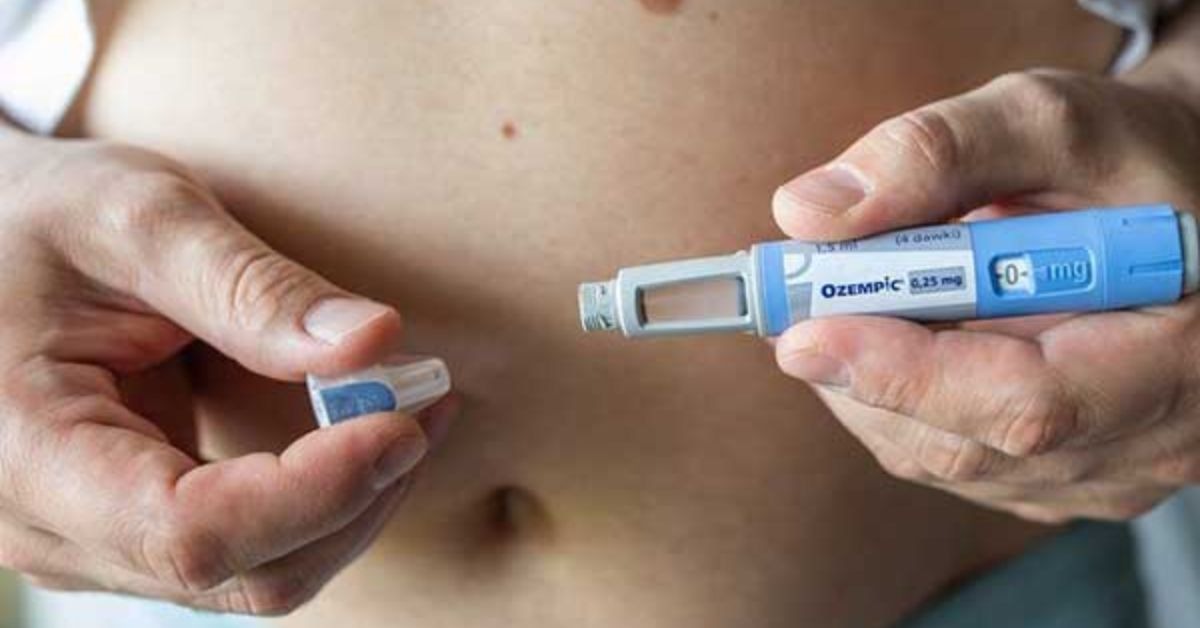
With commercial insurance and a manufacturer savings card, patients may pay as little as $25 per fill for tirzepatide. Without either, the retail cash price runs over $1,000 per month. That gap is the whole story.
Here is what drives your specific number:
- Formulary tier: If your plan puts tirzepatide on a specialty tier, your copay before any savings card is often several hundred dollars per fill.
- Deductible status: Until your deductible is met, you may owe the full negotiated rate, not just a copay.
- Indication: Mounjaro (diabetes) and Zepbound (weight management) are covered differently. Many commercial plans cover Mounjaro more readily than Zepbound.
- Medicare/Medicaid: Manufacturer savings cards are not available to Medicare or Medicaid beneficiaries; therefore, those patients face a different cost path entirely.
Pro Tip: Call the member services number on the back of your insurance card before you fill your first prescription. Ask: “Is tirzepatide (Mounjaro or Zepbound) on my formulary? What tier? Is prior authorization required? What is my estimated copay?” Write down the rep’s name and the reference number. That call takes 10 minutes and can save you hundreds.
How much does tirzepatide actually cost in the U.S.?
The number you see at the pharmacy counter without insurance is the manufacturer list price, which is the starting point before any plan negotiation, rebate, or savings program applies. For a 28-day supply, Zepbound lists at approximately $1,086.37 and Mounjaro in a similar $1,070–$1,112 range. Neither figure is what most commercially insured patients pay, but both matter because your deductible contributions are usually calculated against the negotiated rate, which tracks close to list.

Retail cash prices at major pharmacies typically run over $1,000 per month without any discount program. GoodRx and similar coupon platforms can shave some of that, but the savings are modest compared to manufacturer programs.
LillyDirect is the option that changes the math for cash-pay patients. It is a manufacturer-run, regulated self-pay channel that ships single-dose vials directly. Prices run $299 at lower doses to $499 at higher doses, which is roughly one-third to one-half the retail pen price. The catch: vials require reconstitution (drawing up the dose yourself), and you cannot bill LillyDirect fills to insurance.
One important context note: compounded tirzepatide availability narrowed significantly after FDA shortage exceptions ended in early 2025. LillyDirect and insured pharmacy fills are now the primary regulated access routes for most patients.
| Option | Approximate monthly cost | Notes |
|---|---|---|
| Retail list price (pen) | ~$1,086–$1,112 | Before insurance or discounts |
| Retail cash (pharmacy) | $1,000–$1,300 | Varies by pharmacy and region |
| LillyDirect vials (self-pay) | $299–$499 | Cannot bill to insurance; requires reconstitution |
| Commercial insurance + savings card | As low as $25 | Eligibility and annual caps apply |
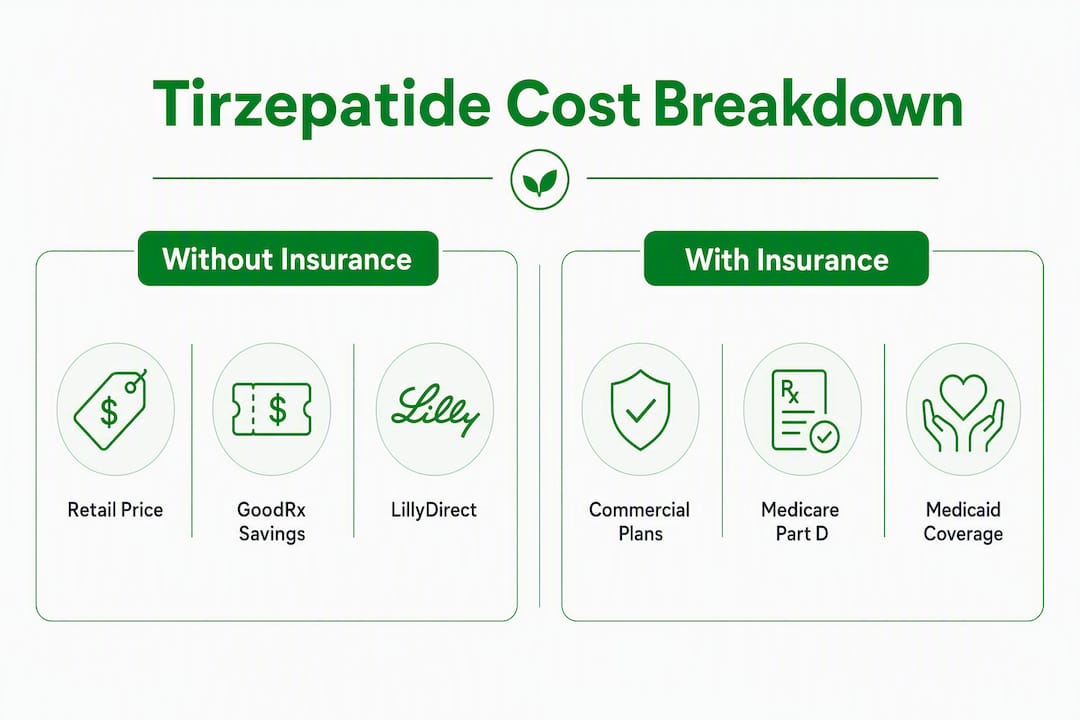
Does your insurance actually cover tirzepatide?
Coverage depends on four interlocking factors: your plan’s formulary, the pharmacy benefit manager (PBM) running the drug benefit, whether prior authorization (PA) is required, and the diagnosis on the prescription.
Formulary and PBM: Every commercial plan publishes a formulary, a tiered list of covered drugs. PBMs like Express Scripts, CVS Caremark, and OptumRx negotiate which drugs land on which tier. Tirzepatide often sits on Tier 3 or Tier 4 (specialty), meaning higher copays before any savings card.
Prior authorization: Most plans require PA for tirzepatide. Your prescriber submits clinical notes documenting your diagnosis, any prior treatments tried, and medical necessity. Starting fills before PA is approved is a real risk: if the insurer later denies coverage, you may owe the full cost of those fills.
Indication matters: Mounjaro is FDA-approved for type 2 diabetes; Zepbound is approved for chronic weight management. Commercial plans that cover both often apply different criteria. Many require a BMI threshold (typically 30+, or 27+ with a weight-related comorbidity) for Zepbound.
Step therapy: Some plans require you to try and fail a cheaper GLP-1 first before approving tirzepatide. This is common and worth asking about during your formulary check.
| Plan type | Typical OOP range | Common requirements | Savings options | PA timeline |
|---|---|---|---|---|
| Commercial (covered, savings card eligible) | As low as $25 per fill | PA, step therapy possible | Manufacturer savings card | A few days |
| Commercial (specialty tier, deductible not met) | Several hundred dollars first months | PA, step therapy | Savings card after deductible | A few days |
| Medicare Part D (diabetes indication) | Varies by plan design | PA, formulary coverage varies | No manufacturer card; Extra Help available | A few days |
| Medicaid | Coverage varies by state | PA; diagnosis-specific | State pharmaceutical assistance | Varies |
| Uninsured | $1,000–$1,300 (pen) or $299–$499 (LillyDirect) | None | LillyDirect, GoodRx | Immediate |
Medicare specifics: Part D plans may cover Mounjaro for type 2 diabetes, but manufacturer copay cards are not permitted for Medicare beneficiaries. The Inflation Reduction Act’s $2,000 annual out-of-pocket cap for Part D took effect in 2025, which helps patients on high-cost specialty drugs. Zepbound for weight management is generally not covered under standard Medicare Part D.
Medicaid: Coverage varies by state. Most state Medicaid programs cover Mounjaro for diabetes but exclude Zepbound for weight management only. Check your state’s preferred drug list directly.
Pro Tip: Ask your pharmacist to run the claim through your insurance before you pay anything. They can see the exact copay your plan will charge that day, which is more current than any online formulary tool.
What you might actually pay: four realistic scenarios
These examples use sourced price points to show how costs stack up month by month.
| Scenario | Month 1 | Month 2–3 | Notes |
|---|---|---|---|
| A: Commercial + savings card (deductible met) | As low as $25 | As low as $25 | Card caps at an annual maximum; after cap, revert to plan copay |
| B: Commercial, specialty tier, deductible not met | Several hundred dollars | Decreases after deductible met | Savings card applies once deductible is met on most plans |
| C: Medicare Part D, Mounjaro for diabetes | Varies by plan | Varies by plan | No manufacturer card; Extra Help lowers cost for eligible beneficiaries |
| D: Uninsured, LillyDirect vials | $299–$499 | $299–$499 | Cannot bill insurance; vials require reconstitution |
Scenario A is the best-case outcome most commercially insured patients aim for. Savings cards can reduce covered patients’ copay to as low as $25 for a 1–3 month supply, but the annual cap means you will not pay $25 forever. The Mounjaro card’s annual maximum is cited at $1,950, meaning once the card has covered that amount in savings, you revert to your plan’s standard copay.
Scenario B is the painful first-month reality for patients on high-deductible health plans. The savings card often cannot reduce your cost below your deductible obligation, so early months can be expensive. Once the deductible clears, the card kicks in more effectively.
Scenario D is the clearest argument for LillyDirect when insurance is not an option. At $299–$499 per month versus $1,000–$1,300 at retail, the savings are substantial, though the vial format requires some comfort with self-injection preparation.
Every practical way to lower your out-of-pocket cost
1. Manufacturer savings cards (commercial insurance only) Lilly offers savings cards for both Mounjaro and Zepbound. Eligible commercially insured patients may pay as little as $25 per fill. Eligibility requires commercial insurance coverage; Medicare and Medicaid patients do not qualify. Cards carry annual maximums, so track your usage. Enroll directly through Lilly’s program pages.
2. LillyDirect self-pay vials At $299–$499 per month, this is the most affordable regulated cash option. It works best when your insurance does not cover tirzepatide, your deductible is very high, or you want a predictable monthly cost without insurance complexity. You cannot bill these fills to insurance, and you cannot use a manufacturer savings card on top of LillyDirect pricing.
3. GoodRx and prescription coupon platforms These help most in true cash-pay situations at retail pharmacies. GoodRx prices for tirzepatide pens are still well above $1,000 in most markets, so the savings are real but limited. They are not a substitute for the manufacturer savings card when you have commercial coverage.
4. Lilly Cares patient assistance program Lilly Cares is Lilly’s patient assistance program for uninsured or underinsured patients who meet income eligibility requirements. It can provide medication at low or no cost. Documentation of income and lack of coverage is typically required. Apply through Lilly’s official program page.
5. State pharmaceutical assistance programs Several states run their own drug assistance programs, particularly for Medicare beneficiaries who do not qualify for federal Extra Help. Eligibility and benefit levels vary by state. Your state’s department of health or aging services is the starting point.
6. HSA/FSA accounts Tirzepatide is typically HSA/FSA-eligible when prescribed for a diagnosed medical condition, but documentation matters. Keep your prescription, your diagnosis code, and your explanation of benefits. Off-label or undocumented use risks reimbursement denial during an audit. Using pre-tax dollars effectively reduces your real cost by your marginal tax rate.
Pro Tip: If your commercial plan covers tirzepatide and you qualify for the savings card, use the card with insurance rather than switching to LillyDirect. The card brings your copay to $25, which also counts toward your deductible and out-of-pocket maximum. LillyDirect cash pays do not accumulate toward those plan limits.
Your step-by-step checklist for the next 14 days
Follow these steps in order to verify coverage, start prior authorization, and get the lowest possible cost at the pharmacy.
- Enroll in the manufacturer savings card (Day 1–2) — Visit Lilly’s savings program page and enroll before your first fill. Have your insurance information ready. Confirm you meet eligibility (commercial insurance, not Medicare/Medicaid).
Tips from pharmacists and financial planners worth knowing
Pharmacists consistently recommend calling your insurer directly for a formulary check rather than relying on online price estimators. Formulary tiers change at the start of each plan year, and a tool that showed a $50 copay in January may be outdated by March. A five-minute call to member services gets you the current, plan-specific figure.
Financial planners flag one documentation habit that most patients skip: keep a folder with your prescription, your diagnosis code (from your visit summary or explanation of benefits), and your receipts. HSA/FSA reimbursement can be denied without documentation tying the prescription to a diagnosed condition. One denied reimbursement on a $400 fill is a painful lesson.
Two more habits worth building: log your monthly out-of-pocket spending in a simple spreadsheet as you titrate doses (costs often shift as your dose increases), and save the reference number from every insurer call. If a claim is processed incorrectly, that reference number is your fastest path to a correction.
Pro Tip: Set a calendar reminder 60 days before your plan year renews. Formulary changes take effect January 1 for most plans. A drug covered this year may move to a higher tier or require new PA next year. Catching that early gives you time to appeal or switch plans during open enrollment.
Key Takeaways
With commercial insurance and a manufacturer savings card, tirzepatide typically costs as little as $25 per month, but Medicare patients, those with unmet deductibles, and uninsured patients face a very different cost picture.
| Point | Details |
|---|---|
| Best-case commercial OOP | Commercially insured patients with a savings card can pay as little as $25 per fill, subject to annual card caps. |
| Annual savings card cap | Manufacturer cards carry annual maximums (Mounjaro example: $1,950); after the cap, you revert to your plan copay. |
| Medicare/Medicaid limits | Manufacturer savings cards are not available to Medicare or Medicaid beneficiaries; alternative assistance programs apply. |
| LillyDirect cash option | Self-pay vials through LillyDirect cost $299–$499 per month, roughly one-third the retail pen price, but cannot be billed to insurance. |
| Topweightlossmed support | Topweightlossmed handles insurance verification, PA paperwork, and savings program enrollment so patients access tirzepatide faster and at lower cost. |
What I see working for patients navigating tirzepatide coverage
The patients who get tirzepatide at the lowest cost fastest are not the ones who know the most about insurance. They are the ones who ask for help early. The prior authorization process looks intimidating on paper, but most commercial denials are overturned on first appeal when the prescriber submits thorough clinical documentation. The problem is that most patients do not know to push back, and most providers are too busy to initiate the appeal without a patient asking directly.
The Medicare situation is genuinely harder. Without access to manufacturer savings cards, Part D beneficiaries prescribed Mounjaro for diabetes are navigating a cost structure that depends heavily on which plan they chose during open enrollment. The $2,000 annual out-of-pocket cap under Part D helps, but it does not make tirzepatide cheap in the early months of the plan year.
What I find underappreciated: the LillyDirect vial program is not a workaround or a gray-market option. It is a regulated, manufacturer-run channel, and for patients whose insurance does not cover tirzepatide or whose deductible makes the first few months prohibitively expensive, it is often the most financially rational choice. The vial format is a minor inconvenience compared to paying $1,100 at a retail pharmacy.
The savings card and insurance combination remains the strongest option for commercially insured patients, but only if you use it correctly. Applying the card at the pharmacy, confirming it is being processed against your insurance (not as a cash transaction), and tracking your annual cap are the three steps most patients miss.
Topweightlossmed makes tirzepatide access faster and less expensive
Navigating formulary checks, prior authorization paperwork, and manufacturer savings program enrollment on your own takes time most patients do not have. Topweightlossmed handles that work for you.
When you start with Topweightlossmed, your provider verifies your insurance coverage before your first fill, submits PA documentation with the clinical detail insurers require, and enrolls you in the Lilly savings program if you qualify. For patients whose insurance denies coverage or whose deductible makes early fills expensive, Topweightlossmed can walk you through the LillyDirect self-pay option and help you decide which route lowers your actual cost. Virtual visits are available same-day, and medication can be delivered directly to your door.
Find out if weight-loss injections are right for you and get a coverage check as part of your first visit.
Useful sources for pricing and savings programs
Use these primary sources to verify current eligibility, pricing, and program terms before enrolling. Program details change, so check each page directly.
- Lilly’s Zepbound savings and patient assistance information — FDA approval page confirming Zepbound’s approved indication for chronic weight management
- Forbes Health: Tirzepatide costs and savings — savings card eligibility, annual caps, and commercial coverage overview
- Forbes Health: Mounjaro costs — Mounjaro-specific savings card limits and Medicare/Medicaid exclusions
- Medical News Today: Mounjaro cost and savings — pharmacist guidance on formulary checks and PA risks
- Topweightlossmed weight-loss program — TWL’s program page for insurance verification, PA support, and medication delivery enrollment
- Healthcare.gov: High-deductible health plan glossary — official definition and cost-sharing rules for HDHPs relevant to first-month tirzepatide costs
Verify eligibility dates and annual cap amounts directly on each manufacturer program page, since these figures update at the start of each calendar year.
FAQ
How much is tirzepatide per month with insurance?
With commercial insurance and a manufacturer savings card, tirzepatide typically costs as little as $25 per month. Without a savings card or before your deductible is met, monthly costs can be several hundred dollars depending on your plan’s formulary tier.
Does Medicare cover tirzepatide?
Some Medicare Part D plans cover Mounjaro for type 2 diabetes, but manufacturer savings cards are not permitted for Medicare beneficiaries. Zepbound for weight management is generally not covered under standard Medicare Part D.
Who should not take tirzepatide?
Tirzepatide is not recommended for patients with a personal or family history of medullary thyroid carcinoma or multiple endocrine neoplasia syndrome type 2. Your prescriber will review your full medical history before prescribing. See GLP-1 safety information for a complete list of contraindications.
What happens if you stop taking tirzepatide?
Most patients regain a significant portion of lost weight after stopping tirzepatide, as the medication’s appetite-suppressing effects are not permanent. Ongoing treatment is generally required to maintain results, which makes understanding your long-term insurance coverage and cost structure especially important.
Can I use my HSA or FSA for tirzepatide?
Yes, tirzepatide is typically HSA/FSA-eligible when prescribed for a diagnosed medical condition. Keep your prescription and diagnosis documentation on file, since reimbursement can be denied without documentation linking the prescription to a specific diagnosis.
This article provides general information about tirzepatide costs and insurance coverage in the United States. It is not medical or financial advice. Confirm current formulary status, program eligibility, and coverage rules with your insurer, pharmacist, or a qualified healthcare provider.