Telehealth follow up works well for most routine post-visit and post-discharge needs, but it isn’t interchangeable across formats. Video and audio-only visits carry higher return-visit rates than in-person care, and seeing your own primary care provider matters more than the format itself. The biggest failure point isn’t the technology. It’s scheduling: rushed or unstructured follow-up windows drive unnecessary repeat visits, so timing and triage decide whether virtual follow-up saves a trip or just delays one.
TL;DR:
- Continuity with your own healthcare provider significantly reduces the likelihood of needing repeat visits, more than the visit format itself.
- Telehealth follow-up is most effective for early post-discharge checks, medication management, chronic disease monitoring, and wound assessments.
- Scheduling follow-ups before discharge and confirming clear escalation protocols are crucial for ensuring timely and effective virtual care.
- Reimbursement policies and licensure rules vary by payer and state, which can impact the modality available and its legal compliance.
- Robust technology systems, including remote monitoring and secure messaging, support proactive care and improve follow-up outcomes.
Table of Contents
- What Are the Real Benefits of Telehealth Follow Up?
- How Strong Is the Evidence on Telehealth Follow-Up Outcomes?
- Which Telehealth Modality Fits Your Follow-Up Need?
- When Should Telehealth Follow-Up Happen After a Visit?
- What Should You Expect From a Telehealth Follow-Up Visit?
- What Clinical Best Practices Support Effective Telehealth Follow-Up?
- What Technology Do You Need for Reliable Telehealth Follow-Up?
- How Does Insurance and Regulation Affect Telehealth Follow-Up?
- Why Continuity Should Drive Telehealth Follow-Up Design
- Get Ongoing Virtual Follow-Up Without Starting Over Every Time
- Sources
- FAQ
What Are the Real Benefits of Telehealth Follow Up?
The case for virtual follow-up isn’t theoretical. It shows up in fewer missed appointments, faster access after discharge, and, for the right conditions, measurably better continuity.
Patients skip the drive, the waiting room, and the half-day off work. For someone managing a chronic condition or recovering from an ED visit, that convenience translates into follow-up that actually happens instead of getting postponed indefinitely. A remote check-in can also catch a problem early. A clinician reviewing a wound photo, a blood pressure log, or a medication side effect over video can flag a complication before it turns into an ER visit.
Telehealth for follow-up care is widely used after acute care and emergency department discharge specifically because it shortens the gap between “you’re discharged” and “someone checks on you.” That gap is where complications often surface.
Where telehealth follow-up tends to perform best:
- Post-ED discharge check-ins within the first week
- Medication adjustment and side-effect reviews
- Chronic disease monitoring (blood pressure, diabetes, weight management)
- Routine check-ins with an established mental health provider
- Wound checks and post-procedure status updates that don’t require hands-on exams
Pro Tip: If you’re managing a chronic condition, ask your clinic whether your virtual follow-up will be with the provider who already knows your history. That single detail affects outcomes more than whether the visit happens by video or phone.
Telehealth interventions have also been shown to improve medication adherence and outpatient follow-up for chronic disease when clinics build the program correctly, meaning clear escalation paths and consistent scheduling, not just a video link and a hope.
The pattern across the research is consistent: telehealth follow-up performs best for established relationships and defined clinical questions, not for open-ended new problems that need a physical exam.
How Strong Is the Evidence on Telehealth Follow-Up Outcomes?
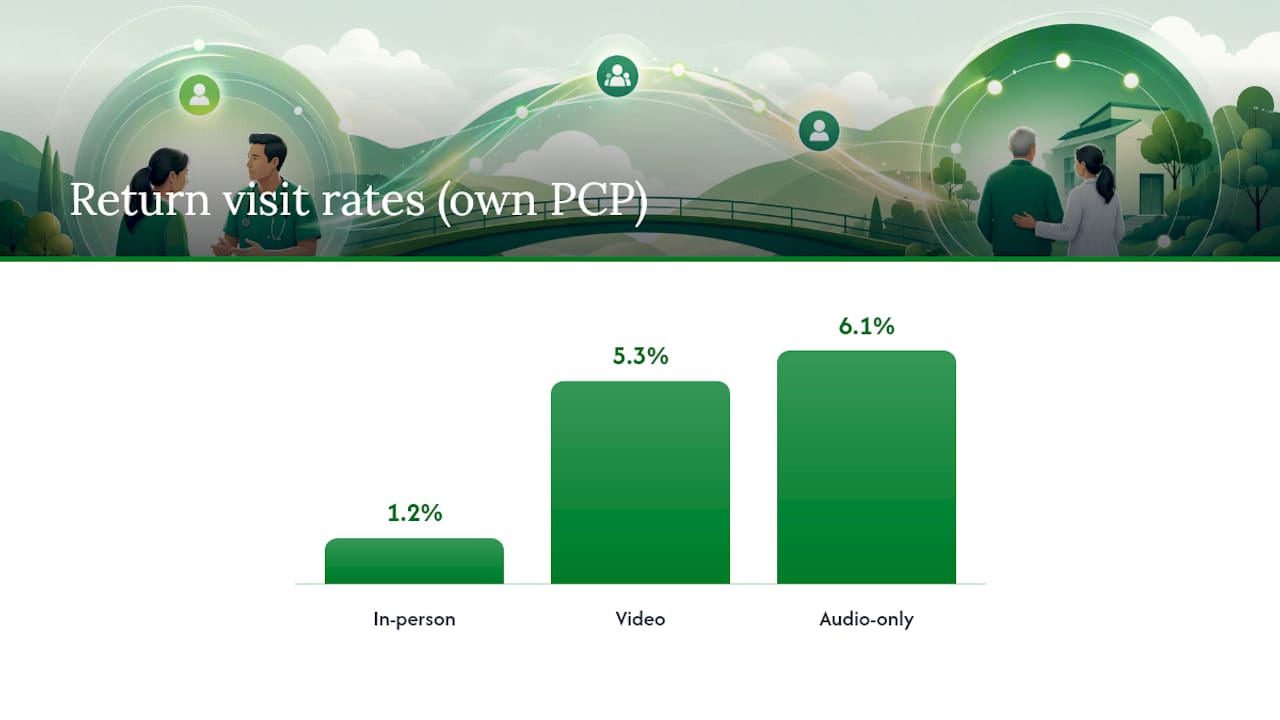
The most detailed data on this comes from an analysis of 4,817,317 primary care visits inside a large integrated health system, and the numbers are worth sitting with.
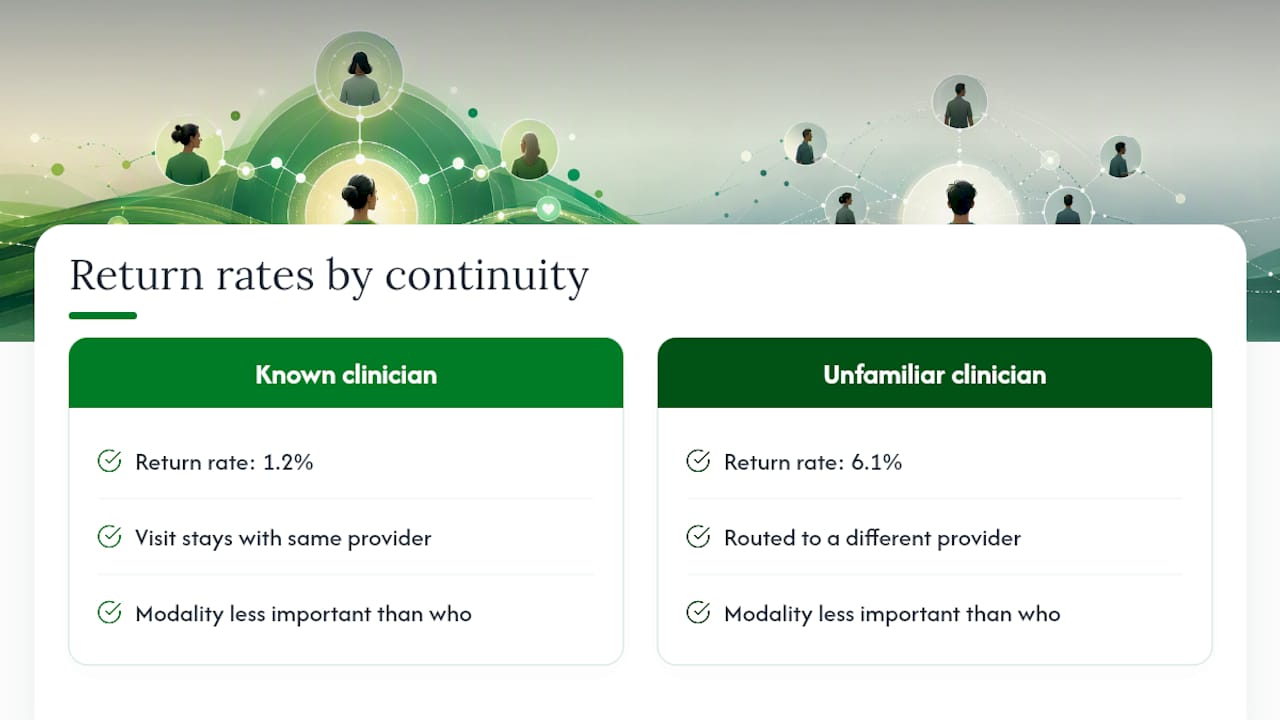
Return office visit rates, meaning the patient had to come back for an additional visit shortly after the index appointment, varied sharply by both modality and provider familiarity. When patients saw their own primary care provider, return visit rates were 1.2% for in-person care, 5.3% for video, and 6.1% for audio-only visits.
What that data actually shows:
- Modality matters, but it’s a secondary factor
- Continuity with your own provider is the stronger predictor of not needing a repeat visit
- Audio-only visits consistently trail video and in-person care on this measure
- The gap between “own PCP” and “another provider” is often larger than the gap between visit formats
That second point deserves more attention than it usually gets. A lot of coverage of telehealth outcomes focuses on video versus phone versus in-person, as if the screen is the whole story. This dataset suggests the relationship matters more than the tool.
The picture gets more complicated when you look at short-interval follow-ups. One study found that expanded telehealth access was associated with higher rates and earlier occurrence of short-interval follow-up visits in some settings, meaning patients were getting called back sooner and more often after a telehealth index visit than after an in-person one. The likely explanation isn’t that telehealth care is worse. It’s that rapid rollout during rushed circumstances left workflows underbuilt: unclear escalation criteria, inconsistent scheduling, and clinicians erring toward “let’s just check again soon” when they couldn’t do a physical exam.
Both studies come from observational data inside large, integrated health systems, not randomized trials, so the findings describe association, not proof of cause. Results from a tightly coordinated system with shared electronic records may not generalize to a fragmented, multi-vendor telehealth setup. That caveat matters if you’re trying to apply these numbers to a different kind of clinic.
Which Telehealth Modality Fits Your Follow-Up Need?
Not every follow-up question needs the same tool. Telehealth for follow-up care commonly relies on four formats: synchronous video, audio-only calls, asynchronous messaging or email, and remote patient monitoring (RPM) that transmits vitals or device data between visits.
Matching modality to clinical need:
- Video works best when a clinician needs to see something: a wound, a rash, movement, or general appearance.
- Audio-only suits simple medication checks, lab result discussions, or brief symptom reviews where nothing visual is required.
- Asynchronous messaging fits routine questions and low-urgency updates that don’t need real-time back-and-forth.
- RPM supports ongoing monitoring, blood pressure trends, glucose readings, or weight tracking, where the pattern over time matters more than any single reading.
A typical workflow assigns scheduling to front-desk or care-coordination staff, documentation to the clinician conducting the visit, and escalation to a defined on-call protocol if something looks off. Patients considering a virtual visit like same-day telehealth should expect a quick tech check, a confirmed call window, and clear instructions about what to do if the call doesn’t come through as scheduled.
Before your appointment:
- Confirm your device has a working camera and microphone if it’s a video visit
- Save the clinic’s phone number so an incoming call doesn’t look like spam
- Have your medication list and any relevant readings ready before the call starts
When Should Telehealth Follow-Up Happen After a Visit?
Timing decides whether follow-up prevents a problem or just documents one after it’s already happened.
Much of the research on this uses a 7-day window as the benchmark for early follow-up, particularly after ED discharge or hospitalization, because complications tend to surface within that first week. Some studies also track a broader 0 to 15-day short-interval follow-up period to capture patients who get called back sooner than expected, which, as covered above, happened more often after telehealth visits in certain systems.
What clinics can do to hit that window without overloading follow-up demand:
- Schedule the follow-up appointment before the patient leaves the discharge conversation, not after.
- Reserve a set number of follow-up slots each week so scheduling staff aren’t scrambling to find openings.
- Send a reminder message the day before with the exact time and the phone number that will show up on caller ID.
- Build in a no-show recovery step, one follow-up attempt within 24 hours if the patient misses the first call.
That first point isn’t a minor logistics detail. Scheduling follow-up before or during discharge measurably increases completion rates, largely because patients are far more likely to answer a call they’re expecting than one from an unfamiliar number days later.
If you’re the patient and no call comes during your scheduled window, don’t assume it fell through the cracks silently. Call the clinic directly. A short-interval follow-up call missed at day 5 can turn into an avoidable ED visit at day 9.
What Should You Expect From a Telehealth Follow-Up Visit?
Patient satisfaction with telehealth follow-up runs high, especially when the visit is with a provider the patient already trusts. That’s consistent with the continuity finding from the integrated-system data: familiarity reduces friction and reduces the odds you’ll need to come back again.
The most common barriers aren’t clinical, they’re practical. Spotty internet, a dead phone battery, an unfamiliar caller ID that gets ignored, or a lack of privacy at home to discuss a health issue candidly.
A short prep checklist:
- Test your internet connection and charge your device the night before
- Keep your current medication list within reach
- Have a caregiver present if you’re managing multiple conditions or memory concerns
- Find a quiet, private space, even a parked car works if home isn’t private
Pro Tip: Save your clinic’s outgoing caller ID as a contact before your appointment window opens. Missed calls from “unknown number” are one of the most common reasons scheduled follow-ups turn into missed follow-ups.
Caregivers supporting an older adult or someone managing several health conditions should plan to sit in on the call, take notes, and confirm next steps out loud before hanging up.
What Clinical Best Practices Support Effective Telehealth Follow-Up?
Clinics face a real design choice: route follow-up back to the patient’s own PCP, or assign it to a designated telehealth follow-up clinician. Each has trade-offs.
Keeping follow-up with the patient’s own provider preserves the continuity that the outcomes data favors, but it can strain scheduling if that provider’s calendar is already full. A designated telehealth clinician can absorb volume and often delivers high patient satisfaction with efficient, protocol-driven visits, but that clinician may not know the patient’s history as well, which is exactly the factor tied to higher return-visit rates.
Operational practices that reduce risk either way:
- Use standardized visit templates so nothing gets skipped when a new clinician handles the call
- Define clear escalation criteria in advance (what symptoms trigger an immediate in-person referral)
- Track quality metrics: time-to-follow-up, short-interval follow-up rate, and patient satisfaction scores
- Document informed consent and confirm the patient understands next steps before ending the call
Pro Tip: If your clinic uses a designated telehealth follow-up clinician, build a fast-access summary of the patient’s recent history into that clinician’s workflow. It closes most of the continuity gap without adding staff.
Clear communication about what happens next, another call, an in-person referral, a prescription change, closes the loop that most avoidable repeat visits fall through.
What Technology Do You Need for Reliable Telehealth Follow-Up?
A follow-up program is only as reliable as the systems behind it. The baseline technical checklist is short but non-negotiable: secure video conferencing, integrated scheduling, automated reminders, and a connection to the clinic’s electronic health record so the visit note doesn’t live in a separate silo.
What actually moves the needle on outcomes:
- RPM devices that transmit blood pressure, glucose, or weight data between visits, catching drift before it becomes a crisis
- Two-way messaging that lets patients flag a concern without waiting for the next scheduled call
- Documentation templates that carry forward the last visit’s plan so nothing gets re-explained from scratch
- Authentication steps (patient ID verification, secure login) that protect the visit without adding friction
RPM in particular shifts follow-up from reactive to proactive. A patient managing hypertension who logs readings daily gives their clinician a trend line instead of a single data point, which can flag a problem days before symptoms would prompt a call. Programs like FlorVA Health’s wellness check-in structure show how a consistent, recurring check-in cadence keeps monitoring data useful instead of sporadic.
How Does Insurance and Regulation Affect Telehealth Follow-Up?
Reimbursement isn’t uniform across payers, and that inconsistency shapes which modality a clinic offers first. Some insurers reimburse video visits at parity with in-person care; others still pay less for audio-only calls, which pushes clinics toward video even when a phone call would clinically suffice.
Licensure adds another layer. A clinician generally needs to be licensed in the state where the patient is physically located during the visit, which matters for telehealth follow-up across state lines, especially for patients who travel or split time between states.
What to keep in mind:
- Reimbursement rules vary by payer and by state, so confirm coverage before assuming a visit is covered
- Cross-state licensure restrictions can limit which provider is legally allowed to see you during follow-up
- Rules around telehealth prescribing, particularly for controlled substances, have specific compliance requirements that shift periodically
- HHS and CMS remain the most reliable sources for current federal telehealth policy
If a rule changes mid-year, and telehealth policy has a habit of doing exactly that, confirm current requirements with your provider or your state medical board rather than relying on last year’s guidance.
Why Continuity Should Drive Telehealth Follow-Up Design
The data on return-visit rates makes a case that most telehealth coverage undersells: the format of the visit matters less than who’s on the other end of it. A video call with your own doctor outperforms an audio call with a stranger, and it outperforms a video call with a stranger too. That’s not a minor footnote. It’s arguably the single most actionable finding in the research.
Follow-up scheduling can be built around that principle. Same-day booking and integrated services across weight loss, primary care, and mental health mean a patient’s follow-up visit can stay with a provider who already has their history, rather than routing to whoever has the next open slot.;.
None of this replaces clinical judgment, and no platform eliminates the need for in-person care when a physical exam is required. But the evidence is clear enough to act on: continuity first, modality second…
— Bryan
Get Ongoing Virtual Follow-Up Without Starting Over Every Time
Continuity is the one variable the research keeps flagging as the strongest predictor of a smooth follow-up, and it’s the one most virtual care setups handle worst. Topweightlossmed is built to keep you with providers who already know your case across weight loss, primary care, mental health, and more, so a follow-up call doesn’t start with a stranger reading your chart for the first time.
Same-day booking means you’re not waiting a week for a check-in slot to open, and integrated services mean your weight-loss provider, your primary care visit, and your prescription refills live on one platform instead of three disconnected logins. If a medication adjustment comes out of your follow-up, medication delivery can be arranged so you’re not making a separate pharmacy trip on top of everything else. Start by reviewing the weight loss FAQ to see how the follow-up process works, or go straight to checking if a weight loss program fits your situation and book your first visit today.
Sources
The clinical and operational claims in this article draw on the following primary sources:
- Primary Care Telemedicine and Care Continuity: Implications for Timeliness and Short-term Follow-up Healthcare - PMC
- Telehealth
- Association of Telehealth with Short-Interval Follow-Up | JABFM
- Telehealth interventions to improve chronic disease — CDC
This article is general information, not a substitute for advice from a qualified doctor. Consult a qualified healthcare professional about your own circumstances before acting on anything here.
FAQ
What is the 7-day rule for telehealth follow-up?
It refers to the practice of scheduling follow-up contact within seven days of discharge or an index visit, a window research associates with catching early complications before they require an ED visit.
Did Congress extend telehealth flexibilities into 2026?
Telehealth reimbursement flexibilities have been subject to repeated short-term extensions in recent years, and rules can change with little notice, so confirm current status directly through Telehealth.HHS.gov or CMS before assuming coverage.
What are the four P’s of telehealth?
Definitions of this framework vary by source, and no single authoritative version appears consistently across major telehealth guidance, so treat any specific “four P’s” claim with caution until you confirm the source.
How long do you typically wait for a doctor on a telehealth follow-up call?
Wait times vary by clinic, but best practice calls for a confirmed, scheduled call window rather than an open-ended wait, which is part of why scheduling follow-up before discharge improves both punctuality and completion rates.
Is telehealth follow-up as effective as an in-person visit?
It depends heavily on the clinical question and who conducts the visit. Data from one large integrated health system shows return visit rates as low as 1.2% for in-person care with your own PCP versus 5.3% to 8.1% for virtual formats, so telehealth follow-up works best for defined issues with a provider who already knows your case, Topweightlossmed included.