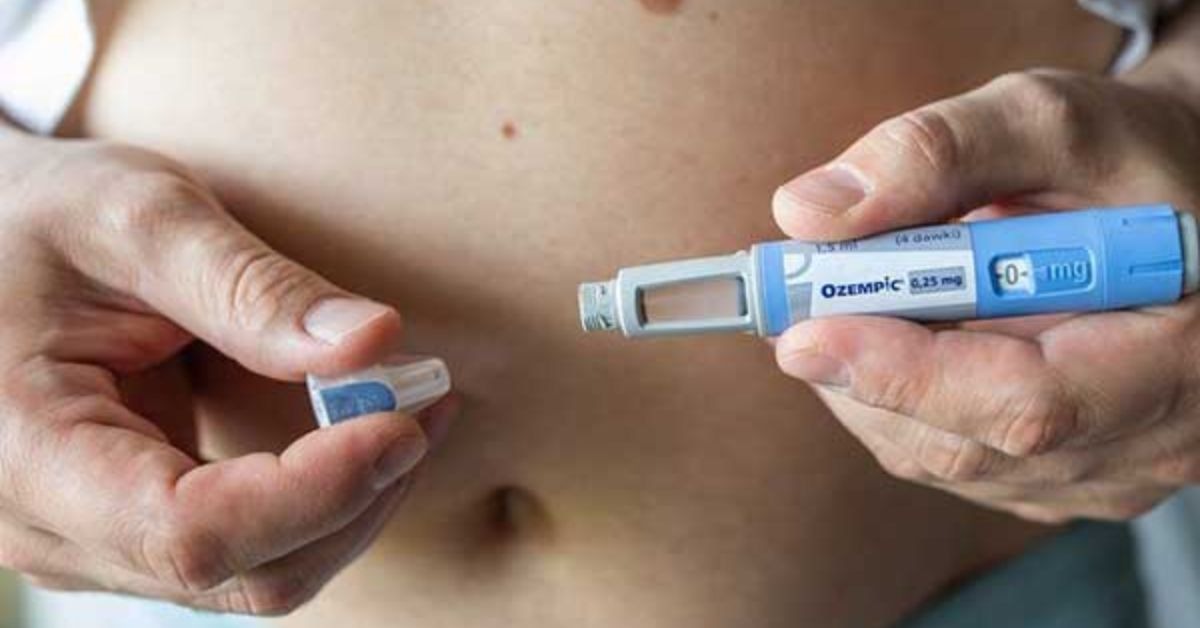
Yes, a licensed clinician can prescribe semaglutide via telehealth in most U.S. states — legally and without an in-person visit — when you meet the clinical criteria. Getting a semaglutide prescription online is straightforward through a legitimate telehealth service, but it is not a rubber stamp. Expect a real medical evaluation before any prescription is issued.
Here is what the process involves at a minimum:
- Eligibility review required. A clinician will assess your BMI, medical history, current medications, and any contraindications before prescribing.
- State-licensed pharmacy fulfillment. Your prescription must go to an accredited, state-licensed pharmacy — not a random online storefront.
- Ongoing safety screening. You will be asked for baseline health information and expected to check in as your dose is adjusted.
If you are ready to start, a telehealth consult with Topweightlossmed takes the guesswork out of the process. Or keep reading for the full breakdown.
Key Takeaways
Getting a semaglutide prescription online in the U.S. is legal and accessible through legitimate telehealth services, but it requires a documented clinical evaluation, a licensed prescriber, and a verified pharmacy — no exceptions.
| Point | Details |
|---|---|
| Prescription is always required | Semaglutide is a prescription-only medication; no U.S. telehealth service can legally dispense it without a clinician evaluation. |
| Eligibility centers on BMI and diagnosis | You typically need a BMI ≥30, or BMI ≥27 with a weight-related condition, or a type 2 diabetes diagnosis. |
| Branded vs compounded matters | FDA-approved products (Wegovy, Ozempic) carry full regulatory review; compounded versions do not — verify what you are being offered. |
| Verify the provider and pharmacy | Confirm prescriber licensure through your state medical board and pharmacy accreditation through NABP before paying. |
| Topweightlossmed | Offers licensed-provider evaluations, verified pharmacy fulfillment, insurance support, and ongoing follow-up care for semaglutide patients. |
What semaglutide is and which branded products use it in the U.S.
Semaglutide is a GLP-1 receptor agonist, a class of medication that mimics the glucagon-like peptide-1 hormone your gut naturally releases after eating. It slows gastric emptying, reduces appetite, and helps regulate blood sugar. Clinicians use it for two primary purposes: managing type 2 diabetes and producing clinically meaningful weight loss.
The FDA has approved three branded semaglutide products in the United States:
- Wegovy® (semaglutide 2.4 mg injection) — FDA-approved for chronic weight management in adults with obesity (BMI ≥30) or overweight (BMI ≥27) with at least one weight-related condition.
- Ozempic® (semaglutide 0.5 mg, 1 mg, 2 mg injection) — FDA-approved for type 2 diabetes management; widely prescribed off-label for weight loss.
- Rybelsus® (semaglutide 3 mg, 7 mg, 14 mg oral tablet) — FDA-approved for type 2 diabetes; the only oral semaglutide formulation currently available.
Pro Tip: The brand name on the label matters. Wegovy and Ozempic both contain semaglutide but are approved for different indications at different doses. A clinician prescribing Ozempic for weight loss is making an off-label decision, which is legal but worth discussing openly during your consult.
Compounded semaglutide sits in a separate regulatory category entirely. It is not the same as any of the three branded products above, and the FDA has not reviewed it for safety or effectiveness the way it reviewed Wegovy or Ozempic.
Who qualifies for a semaglutide prescription online?
Telehealth clinicians follow the same clinical standards as in-person providers. The eligibility criteria below reflect what most U.S. prescribers apply, drawn from FDA-approved labeling and standard clinical practice.
You will likely qualify if you meet one of these criteria:
Eligibility commonly includes having obesity, or overweight with at least one weight-related health condition, or diagnosed type 2 diabetes needing further glycemic control (for Ozempic or Rybelsus).
Absolute contraindications — a clinician cannot prescribe semaglutide if you have:
- Personal or family history of medullary thyroid carcinoma (MTC)
- Multiple Endocrine Neoplasia syndrome type 2 (MEN2)
- Known hypersensitivity to semaglutide or any product ingredient
- Current pregnancy or active plans to become pregnant
Relative contraindications and cautions that require close evaluation:
- History of pancreatitis
- Severe gastrointestinal disease
- Concurrent insulin use (hypoglycemia risk requires careful management)
- Diabetic retinopathy (rapid glucose changes can worsen it)
- Kidney or liver impairment
A clinician’s job is to rule out harm, not just confirm eligibility. Even if your BMI qualifies you on paper, a provider can and should decline to prescribe semaglutide if your full medical history raises a concern. Providers may request recent lab results, a medication list, or prior medical records before making that call. This is not a barrier — it is the standard of care.
How does a telehealth semaglutide prescription actually work?
The process is faster than most people expect, but it has distinct steps that every legitimate provider follows. Healthline’s clinical guide confirms that U.S. telehealth providers are required by law to conduct a medical evaluation before issuing any semaglutide prescription.
Step-by-step process:
- Complete the intake form. You fill out a detailed health questionnaire covering your weight history, current medications, diagnoses, and any relevant symptoms. Most platforms do this asynchronously — no appointment needed to start.
- Submit supporting documents. Have your photo ID, a current medication list, recent weight or vitals, and any relevant lab results ready. Uploading these upfront cuts review time significantly.
- Clinician medical review. A licensed, board-certified provider reviews your intake and documents. Depending on the platform and your state’s telehealth rules, this may be asynchronous or require a brief video visit.
- Prescribing decision. The clinician approves, requests more information, or declines. If approved, an electronic prescription is sent directly to a licensed pharmacy.
- Pharmacy fulfillment and delivery. The pharmacy dispenses the medication and ships it to your address or prepares it for pickup. Shipping timelines vary by pharmacy and location.
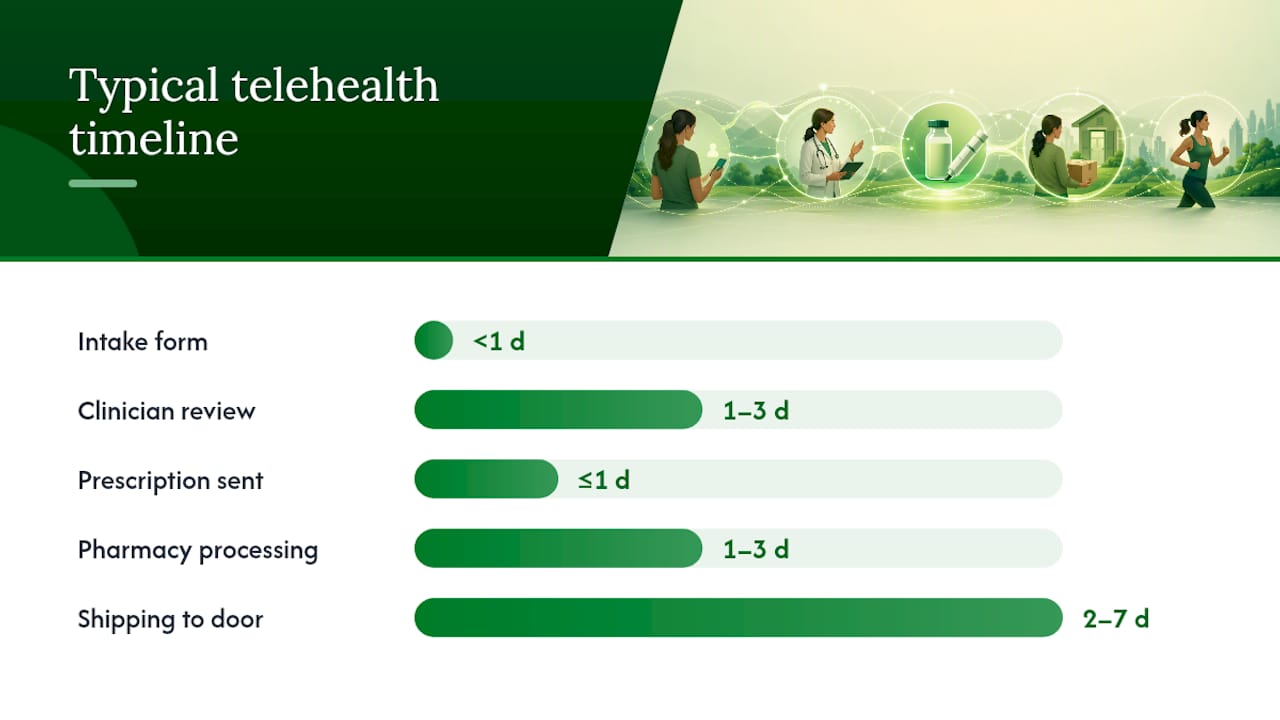
Typical timeline:
| Stage | Typical Timeframe |
|---|---|
| Intake form completion | Few minutes |
| Clinician review | Same day to a few days |
| Prescription sent to pharmacy | Within a day of approval |
| Pharmacy processing | 1–3 business days |
| Shipping to your door | 2–7 business days (varies) |
Note that state telemedicine regulations vary. A handful of states may require an initial in-person exam before a telehealth provider can prescribe certain medications remotely. Check your provider’s state-license disclosures or your state medical board’s website if you are unsure about your state’s rules.

To speed up your approval: submit labs and your medication list with the intake form rather than waiting to be asked. Incomplete records are the single most common reason for delays.
What are the safety risks and monitoring requirements?
Semaglutide has a well-documented safety profile, but it carries real risks that require active monitoring. Peer-reviewed clinical literature on GLP-1 therapies describes both the common adverse effects and the serious signals clinicians watch for.
Common side effects (most frequent in the first 4–8 weeks):
- Nausea — the most reported effect, usually improves as your body adjusts
- Vomiting and diarrhea
- Constipation
- Decreased appetite (expected and part of the mechanism)
- Fatigue, particularly early in treatment
- Injection-site reactions (redness, bruising, mild pain)
Most of these ease with slow dose titration. Starting at the lowest dose and increasing gradually over weeks is standard practice precisely because it reduces GI side effects.
Serious risks that require immediate medical attention:
- Pancreatitis: Severe, persistent abdominal pain radiating to the back — stop the medication and seek care immediately.
- Gallbladder disease: Rapid weight loss increases gallstone risk; report right-sided abdominal pain.
- Thyroid tumors: Semaglutide carries a black-box warning for thyroid C-cell tumors in animal studies; the human risk is not fully established, but the MTC contraindication is firm.
- Hypoglycemia: Particularly when combined with insulin or sulfonylureas; blood sugar monitoring is critical.
- Vision changes: Worsening diabetic retinopathy has been reported with rapid glucose improvement.
- Pregnancy: Semaglutide must be discontinued at least two months before a planned pregnancy.
Monitoring your clinician will typically request:
- Baseline HbA1c, fasting glucose, kidney function, and lipid panel
- Weight and blood pressure at each follow-up
- Dose-titration check-ins (usually every 4 weeks during the escalation phase)
- Ongoing labs at 3- and 6-month intervals for patients with diabetes or cardiovascular risk
Topweightlossmed provides GLP-1 safety information specifically for patients in its weight-loss program, so you know exactly what to watch for between visits.
Branded vs compounded semaglutide: what is the real difference?
This is where many online programs diverge, and the distinction carries genuine clinical weight. NPR’s reporting on compounding pharmacies makes the regulatory gap clear: compounded semaglutide is not reviewed by the FDA for safety, effectiveness, or manufacturing quality the way Wegovy and Ozempic are.
Key differences at a glance:
- FDA oversight: Branded products (Wegovy, Ozempic) went through full FDA clinical trials and manufacturing review. Compounded versions are regulated at the state level by pharmacy boards, with no equivalent federal efficacy review.
- Evidence base: The clinical trial data supporting semaglutide’s weight-loss and glycemic benefits was generated using the branded formulations. Compounded versions may use the same active pharmaceutical ingredient (API), but the finished product has not been independently tested for bioequivalence.
- Manufacturing standards: FDA-approved manufacturers follow Current Good Manufacturing Practice (cGMP) standards. Compounding pharmacies follow USP standards, which vary in stringency, and sterility testing is not uniformly required.
- Cost: Compounded semaglutide is typically less expensive than branded products, which is why it attracts attention. The lower price reflects the absence of the clinical development and regulatory costs, not necessarily lower quality — but it does mean less oversight.
Questions to ask before you pay:
- Is this an FDA-approved product (Wegovy, Ozempic, or Rybelsus), or a compounded formulation?
- Which specific pharmacy will dispense my medication, and is it state-licensed?
- If compounded, is the API sourced from an FDA-registered facility?
- Is sterility and stability documentation available for the compounded product?
- What happens if I have an adverse reaction — who do I contact, and how quickly?
Pro Tip: Before paying anything, ask for the dispensing pharmacy’s name and license number. Then verify it on your state pharmacy board’s website or through the NABP database. A legitimate program will give you this information without hesitation.
How much does semaglutide cost, and does insurance cover it?
Cost is one of the most common questions, and the honest answer is that it varies considerably depending on whether you are getting a branded or compounded product, whether your insurance covers it, and which telehealth program you use.
Typical price ranges to expect:
- Wegovy (branded): List price runs high without insurance. Manufacturer savings programs (Novo Nordisk’s savings card) can reduce out-of-pocket costs for eligible commercially insured patients, though coverage varies by plan.
- Ozempic (branded): Similar list-price dynamics; often covered for type 2 diabetes but less consistently for weight loss.
- Compounded semaglutide programs: Advertised starting prices in marketplace summaries vary widely by provider and dose, as documented in consumer-facing program guides. Monthly costs depend on dose strength, subscription structure, and whether the clinician visit fee is bundled or billed separately.
Insurance coverage checklist:
- Call your insurer before starting and ask specifically whether Wegovy or Ozempic is on your formulary for your diagnosis (weight loss vs. diabetes coverage differ).
- Ask whether prior authorization is required — most plans that cover GLP-1 medications do require it, and the documentation burden is real.
- Find out what clinical criteria your insurer uses (BMI threshold, comorbidity documentation, prior weight-loss program attempts).
- Confirm whether your telehealth provider’s clinician visit fee is billed separately and whether that visit is covered.
Pro Tip: Ask your telehealth provider whether they assist with prior authorization paperwork. Many legitimate programs handle this on your behalf — it is a meaningful time-saver and a good signal that the program is set up for long-term patient management, not just a one-time prescription.
The CDC’s weight-management guidance is worth reviewing alongside your cost planning: semaglutide works best as part of a broader lifestyle program, and some insurers require documented behavioral counseling before approving coverage.
How do you choose a legitimate telehealth semaglutide provider?
The market for online semaglutide programs expanded rapidly, and not every platform operates to the same standard. Here is a practical verification checklist.
What a legitimate provider will always have:
- Licensed, board-certified prescribers with active state medical licenses in your state
- A documented clinical evaluation process (not just a checkbox form)
- A named, verifiable dispensing pharmacy partner
- A clear HIPAA privacy policy and telehealth consent process
- Transparent pricing that separates clinician fees from medication costs
- Ongoing follow-up care and dose-titration support — not just a one-time prescription
Red flags that should stop you immediately:
- Any site claiming to sell semaglutide without a prescription or “no doctor required”
- Vague or missing information about which pharmacy will dispense your medication
- No mention of a clinical evaluation or medical history review
- Pressure to prepay for three or six months of medication before a clinician has reviewed your case
- No licensed provider name or credentials listed anywhere on the site
- Claims that their product is “just as good as Wegovy” without disclosing it is compounded
How to verify a provider in three steps:
- Look up the prescriber’s name on your state medical board’s license verification tool (every state has one, searchable online).
- Ask for the dispensing pharmacy’s name and check it against the NABP database or your state pharmacy board.
- Confirm the platform has a published telehealth consent form and a HIPAA notice — both are legal requirements for any U.S. telehealth service.
What to expect during your first telehealth consult
Preparation makes a real difference in how quickly your consult moves. Most delays happen because a patient submits incomplete information and the clinician has to follow up before making a prescribing decision.
Have these ready before you start:
- Government-issued photo ID
- Current medication list (including supplements and over-the-counter medications)
- Recent weight and blood pressure readings (within the last few weeks if possible)
- Any recent lab results (HbA1c, metabolic panel, lipids)
- A pregnancy test result if you are of childbearing age and your status is uncertain
Typical consult flow:
- Intake review. The platform reviews your submitted health questionnaire and documents.
- Medication discussion. The clinician (or intake system) flags any medications that interact with semaglutide and asks clarifying questions.
- Medical history review. Your weight history, prior weight-loss attempts, diagnoses, and family history are assessed against the contraindication list.
- Clinical plan. The clinician either approves a prescription, requests additional labs before prescribing, or recommends an alternative approach.
- Follow-up scheduling. A check-in is scheduled for 4 weeks out (or sooner if you are starting at a new dose) to assess tolerability and adjust the titration plan.
For ongoing care: dose titration for Wegovy, for example, follows a standard escalation schedule over several months. Refills are typically handled through the same platform, and most legitimate programs build check-in visits into the subscription or program fee. If a program offers unlimited refills with no follow-up requirement, that is a red flag, not a convenience.
Why a real clinical relationship matters more than a fast prescription
The fastest prescription is not always the safest one. Semaglutide produces real physiological changes — appetite suppression, slowed gastric emptying, blood sugar shifts — and those changes interact with other medications, existing conditions, and lifestyle factors in ways a one-time intake form cannot fully capture.
A documented clinical relationship means a prescriber knows your baseline. When your blood pressure drops, your kidney function shifts, or you develop a new symptom, there is a provider who already has your history and can respond quickly rather than starting from scratch. That continuity is especially important for patients managing both weight and a chronic condition like type 2 diabetes or hypertension, where semaglutide’s effects ripple across multiple systems.
Telehealth done well replicates the continuity of in-person care — it does not replace the clinical relationship with a transaction. The programs worth choosing are the ones that build that relationship in from the start, with follow-up visits, dose reviews, and a named provider you can reach when something changes.
Topweightlossmed makes legitimate semaglutide access straightforward
Getting a semaglutide prescription through a compliant telehealth program should not feel like navigating a maze. Topweightlossmed cuts through the friction without cutting corners.
The platform connects you with licensed, board-certified providers who conduct a full clinical evaluation before any prescription is issued. Pharmacy fulfillment goes through verified, state-licensed partners. HIPAA-compliant telehealth visits, transparent pricing, and insurance integration are built into the program — not add-ons you have to ask about. Topweightlossmed also supports patients through the prior authorization process, which is one of the most common sticking points with branded GLP-1 medications.
If you are ready to find out whether you qualify, check your eligibility for weight-loss injections or review the weight-loss program details to see how the process works. A clinician will determine medical appropriateness during your evaluation — the first step is simply starting.
Sources
Authoritative references for verifying rules, safety notices, and clinical evidence:
- How to Get Semaglutide: Eligibility, Cost, Insurance, and More — Healthline
- Buying semaglutide online? Here’s what to know about compounding pharmacies — NPR
- Medications containing semaglutide marketed for type 2 diabetes or weight loss — FDA
- Peer-reviewed review article on GLP-1 therapies — PMC/NCBI
This article is general information, not a substitute for advice from a qualified doctor. Consult a qualified healthcare professional about your own circumstances before acting on anything here.
FAQ
Can you get semaglutide online without an in-person visit?
Yes, in most U.S. states. A licensed telehealth clinician can prescribe semaglutide after a documented remote evaluation — asynchronous or via video — without requiring an in-person appointment, though a small number of states have additional requirements.
Can I get a semaglutide prescription specifically for weight loss?
Yes. Wegovy is FDA-approved for chronic weight management, and Ozempic is commonly prescribed off-label for weight loss. A clinician will confirm whether your BMI and health history meet the prescribing criteria during your evaluation.
How much does semaglutide cost per month in the United States?
Cost varies significantly by product type and coverage. Branded products like Wegovy carry a high list price without insurance, though manufacturer savings programs can reduce costs for eligible patients. Compounded semaglutide programs advertise lower monthly costs, but pricing depends on dose, provider fees, and subscription structure. Ask your telehealth provider for an itemized breakdown before enrolling.
How much does one month of Wegovy cost?
Wegovy’s list price without insurance is substantial, but most commercially insured patients who qualify can access manufacturer savings programs through Novo Nordisk that reduce out-of-pocket costs. The actual amount you pay depends on your insurance plan, formulary tier, and whether prior authorization is approved. Topweightlossmed’s team can walk you through the weight-loss FAQ and help navigate insurance paperwork.
What are the biggest red flags when buying semaglutide online?
Any site that claims to sell semaglutide without a prescription, does not disclose the dispensing pharmacy, or pressures you to prepay months of medication before a clinical review is a serious warning sign. Legitimate providers always name their prescribers, verify your medical history, and give you the pharmacy’s license information on request.