Yes, a single integrated telehealth platform can coordinate primary care, mental health, weight loss, ED treatment, and prescriptions for most non-emergency adult needs. The catch: it works through video visits, secure messaging, and e-prescribing, not physical exams or imaging. For evidence, sign-up steps, and how to vet a provider, keep reading.
TL;DR:
- Integrated telehealth platforms typically improve medication adherence by 18 percent and reduce emergency hospital visits by 12 percent over six months.
- True integration means shared records and screening tools across specialties, not just multiple services under one account, to ensure coordinated care.
- Most care processes, including intake, scheduling, and prescriptions, usually take a few days, with urgent appointments available for primary care and ED needs on the same day.
- The approach is most suitable for chronic condition management, mild to moderate mental health issues, and ongoing weight-loss programs, but not for emergencies or severe psychiatric crises.
- When selecting a platform, verify that all specialties share a single chart, use licensed clinicians, offer transparent pricing, and ensure HIPAA compliance for privacy.
Table of Contents
- What Integrated Telehealth Services Actually Include
- How Coordinated Care Actually Works Behind the Scenes
- Does Integrated Telehealth Actually Improve Outcomes?
- What Happens After You Sign Up
- Who Is This a Good Fit For (and When to Skip It)
- How to Choose an Integrated Telehealth Provider
- Why Consolidation Beats a Patchwork of Apps
- Get Started With Top Weight Loss Med’s Integrated Care
- Sources
- FAQ
What Integrated Telehealth Services Actually Include
The term “integrated telehealth services” covers a specific model: one login, one medical record, several specialties working off the same chart. A platform built this way typically bundles:
- Primary care for acute visits (sinus infections, UTIs), chronic condition management (blood pressure, cholesterol), and preventive screening, delivered by video or phone.
- Behavioral health, including therapy and medication management for anxiety and depression, scheduled by video or handled through asynchronous check-ins between sessions.
- Weight-loss programs combining a medical assessment, GLP-1 prescribing when clinically appropriate, coaching, and sometimes live telehealth fitness sessions under a provider’s oversight.
- ED treatment and birth control, plus common add-ons like hair loss and skincare, run through similar intake-to-prescription workflows.
- Prescription fulfillment, either mailed directly from the platform’s pharmacy partner or e-prescribed to a local pharmacy for same-day pickup.
That range is what separates a real integrated platform from a single-issue app that only does one of these things well.
How Coordinated Care Actually Works Behind the Scenes
Integration isn’t a marketing word. It’s a specific set of mechanics that keep a prescriber, a therapist, and a primary care clinician looking at the same chart instead of three disconnected ones.
- Shared records and messaging. Every clinician on the account sees prior visit notes, active medications, and lab results before the appointment starts, which cuts down on repeating your history at every visit.
- Standardized screening. Many platforms use validated tools like the PHQ-9 and GAD-7 during intake, and a high score can automatically trigger a referral to behavioral health.
- Warm handoffs. Instead of a printed referral you have to chase down yourself, your primary care provider can loop in a therapist or weight-loss coordinator directly, often inside the same visit window.
- Defined roles. A prescriber handles medication decisions, a behavioral specialist manages therapy, and a care coordinator often manages scheduling and follow-up messages so nothing falls through the cracks.
Pro Tip: Ask any platform you’re considering whether your primary care and mental health notes live in one chart or two separate systems. If the answer is “two,” you’re not getting true integration, just two apps under one billing account.
This structure also cuts down on duplicate documentation, which implementation research links to real efficiency gains for the clinicians running the platform, not just a smoother experience for you.

Does Integrated Telehealth Actually Improve Outcomes?
The evidence is more specific than most marketing pages let on, and it’s worth knowing the numbers before you commit to a program.
Integrated digital health systems that unify mental and physical health records were associated with an 18% improvement in medication adherence and a 12% reduction in emergency admissions over six months, compared with care delivered through separate, disconnected systems.
That finding tracks with what you’d expect: when a prescriber can see that you missed a refill and a coordinator follows up by message, fewer people quietly fall off their treatment plan.
On the mental health side, the PROVIDE trial tested a model built around biweekly video consultations integrated with a patient’s broader care, and found reduced depression and anxiety symptoms at both six and twelve months compared with usual care. The effect sizes were small to moderate, not dramatic, but durable over a full year.
A few practical caveats:
- These gains typically manifest in improved adherence and follow-through, though faster diagnosis of new conditions is less clearly affected.
- Evidence on weight-loss specific integration (coaching plus GLP-1 management plus fitness coaching in one program) is newer and less studied than the mental health and primary care integration research.
- Results depend on the platform actually using shared records and structured screening, not just offering multiple services under one roof.
What Happens After You Sign Up
The sign-up process is where most people misjudge the timeline, expecting either instant same-day care for everything or a multi-week wait that never materializes.
- Intake. You’ll complete a medical history, upload photos if relevant (skin, hair loss), and fill out screening forms like the PHQ-9. Most intakes take 10 to 20 minutes.
- Booking. Same-day video slots are common for urgent primary care and ED consults; therapy and ongoing weight-loss check-ins are usually scheduled a few days out, with async messaging available between visits for quick questions.
- The visit. A clinician can assess symptoms, review your history, and prescribe when appropriate, but anything requiring a physical exam, bloodwork, or imaging gets referred out to a local lab or in-person provider.
- Prescriptions. You’ll typically choose between e-prescribing to a pharmacy near you for same-day pickup or platform mail order, which usually arrives within a few business days.
- Follow-up. Most platforms set messaging and check-in windows around 30 to 90 days after your visit, and weight-loss programs often build in a recurring cadence, such as three fitness sessions a week under medical oversight.
Who Is This a Good Fit For (and When to Skip It)
Integrated telehealth works best when your need is ongoing, non-urgent, and manageable through conversation, observation, and prescribing.
Good fit:
- Adults managing chronic conditions like hypertension or high cholesterol who need regular check-ins, not constant testing.
- Mild to moderate anxiety or depression that responds to medication management and talk therapy.
- Ongoing weight-loss supervision, including GLP-1 prescribing with regular coaching touchpoints.
- ED and birth control care, both of which rely heavily on history and symptom review rather than hands-on exams.
Not a fit:
- Chest pain, difficulty breathing, severe allergic reactions, or any symptom that could signal a medical emergency. Call 911 or go to an emergency room.
- Signs of a severe psychiatric crisis, including suicidal ideation with a plan or intent, which needs immediate in-person or crisis-line intervention.
- Conditions that require a hands-on physical exam, imaging, or in-person labs before a diagnosis can be made safely.
How to Choose an Integrated Telehealth Provider
Not every platform that lists multiple services actually integrates them. Before you enroll and pay for a consultation or program, check these four things.
- One account, one chart. Confirm that your primary care, mental health, and weight-loss visits feed into a single record, with continuity toward an assigned clinician rather than a random provider each time.
- Clinical quality signals. Look for licensed clinicians, documented use of screening tools like the PHQ-9, and the ability to order labs or refer out when something needs in-person follow-up.
- Operational transparency. Same-day booking availability, clear prescription delivery timelines, insurance partnerships, and pricing you can see before you book, not just after intake.
- Privacy practices. Confirm the platform runs on a HIPAA-compliant system and ask directly how your records are shared between the specialties you’re using.
Pro Tip: Before your first visit, ask how the platform handles a lab result or referral if something outside its scope turns up. A platform with a clear answer already has the infrastructure; one that hesitates probably doesn’t.
Why Consolidation Beats a Patchwork of Apps
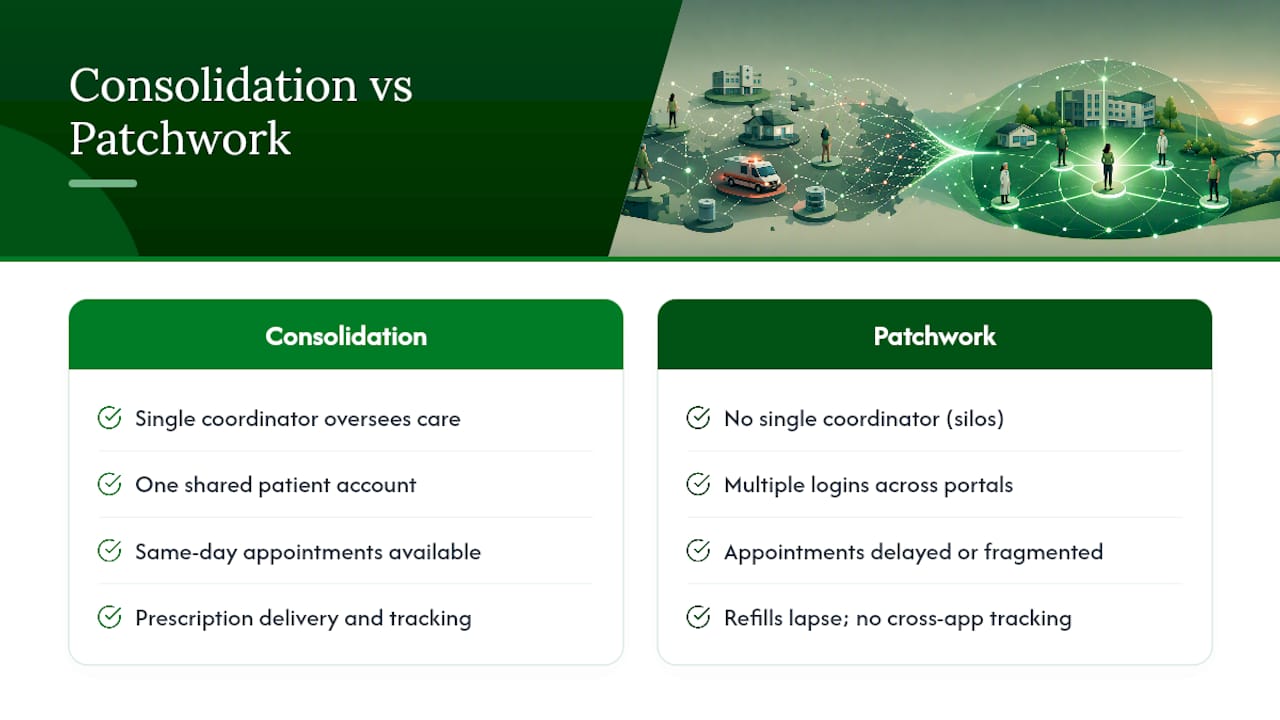
The biggest failure point in most people’s health care isn’t bad advice, it’s dropped follow-through. You get a referral, and it sits in an inbox. You get a prescription, and the refill lapses because nobody’s tracking it across three separate portals. Consolidating primary care, mental health, and weight-loss management into one chart removes that friction almost by accident, simply because the same coordinator sees all of it.
A reasonable example of what that looks like in practice: same-day appointments, prescription delivery, and services that share a single account instead of forcing you to juggle logins. It’s not a cure for every gap in American health care, but it is a genuinely better structure than the single-issue apps most people default to.
— Bryan
Get Started With Top Weight Loss Med’s Integrated Care
Most single-issue apps make you juggle separate logins for your primary care doctor, your therapist, and your weight-loss coach, then hope someone eventually compares notes. Top Weight Loss Med is built around the opposite idea: one account, one provider team, same-day appointments across weight loss, primary care, mental health, and ED treatment.
The Weight Loss Program pairs medical assessment and prescribing with weight-loss coaching and three weekly telehealth fitness sessions under provider oversight. If mental health support fits your situation, Anxiety & Depression care runs through the same platform, and ED treatment starts from $20 per month with prescriptions delivered to your door. The platform also partners with insurance companies to keep costs manageable. If you’re ready to consolidate your care instead of managing it across three different apps, book a consult on the weight-loss program page and get matched with a provider today.
Sources
Claims in this article draw on the PROVIDE trial, integrated digital health outcomes research, HHS telehealth behavioral health guidance, and telehealth billing compliance resources.
This article is general information, not a substitute for advice from a qualified doctor. Consult a qualified healthcare professional about your own circumstances before acting on anything here.
- Integrating digital health informatics to improve mental and physical health outcomes: A cross-sectional evaluation of ICT-enabled care pathways | Human-Intelligent Systems Integration | Springer Nature Link
- Telehealth: Integrate behavioral health into primary care | HHS Telehealth
- PROVIDE trial: integrated mental health video consultation model trial (depression/anxiety) — PMC
- How Does Telehealth Work in 2026? Step-by-Step Patient Guide
FAQ
Can one telehealth platform treat both physical and mental health?
Yes. Integrated platforms combine primary care and behavioral health using shared records and standardized screening tools like the PHQ-9 and GAD-7 to trigger referrals between the two.
How fast can I get a prescription through integrated telehealth?
E-prescriptions sent to a local pharmacy can often be filled the same day, while platform mail-order delivery typically takes a few business days depending on the medication.
What does Top Weight Loss Med charge for ED treatment?
ED treatment through Topweightlossmed starts from $20 per month, with other program pricing available directly on the site.
Is integrated telehealth safe for chronic condition management?
It works well for ongoing management of stable chronic conditions like hypertension, but it isn’t a substitute for in-person exams, imaging, or emergency care when symptoms escalate.
What happens if my telehealth provider needs to refer me for in-person care?
A well-run integrated platform will flag the need for labs, imaging, or a physical exam during your visit and coordinate a referral rather than leaving you to figure it out alone.