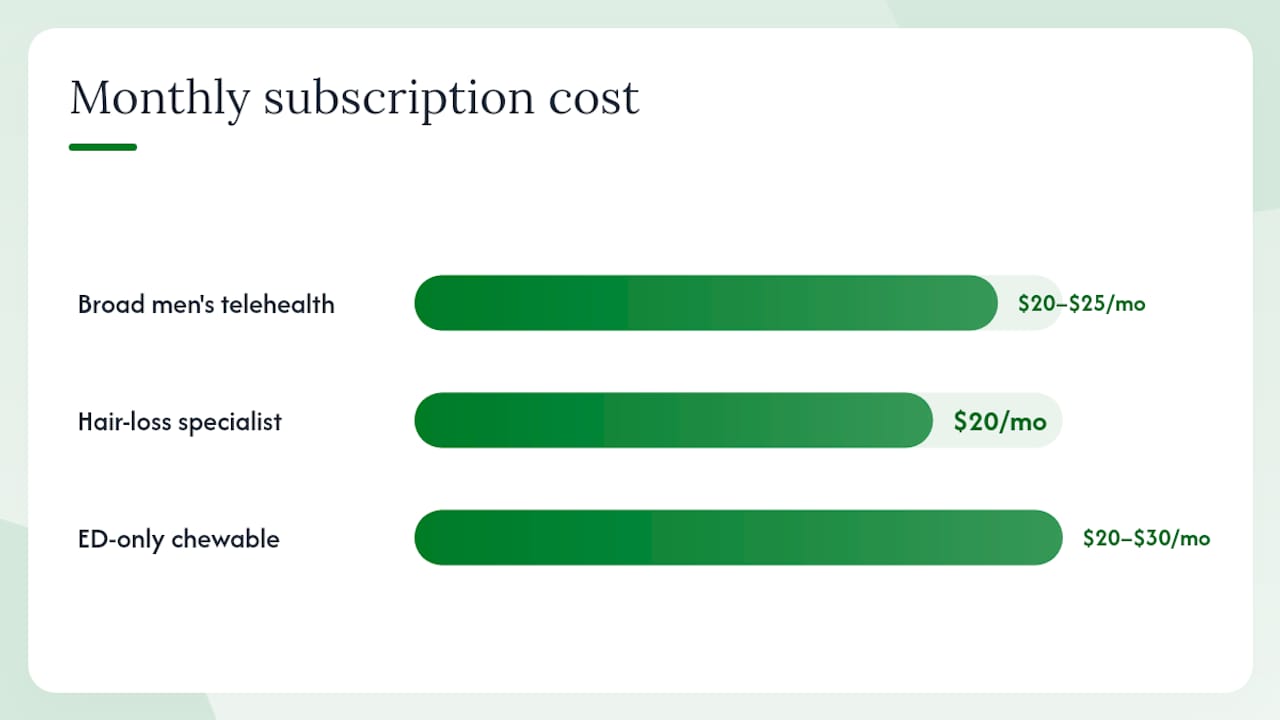
Yes, you can get a finasteride prescription online in the United States. A licensed clinician can evaluate you remotely, prescribe the medication the same day if you qualify, and send it directly to a pharmacy or your door. The FDA label confirms finasteride as a prescription treatment for male pattern hair loss at 1 mg daily, so the prescription requirement is real, but the barrier to getting one has dropped significantly with telehealth.
Finasteride is FDA-indicated for men only. Women who are or may become pregnant must not handle crushed or broken finasteride tablets, due to the risk of harm to a male fetus. It can also cause sexual side effects (reduced libido, erectile dysfunction) in a minority of men, which usually resolve after stopping treatment. Discuss these risks with a physician before starting.
Here is what to do right now:
- Choose your route: a telehealth platform (fastest), your primary care physician, or a dermatologist.
- Complete a medical history questionnaire covering current medications, any prostate issues, and sexual health baseline.
- Confirm whether your insurance covers the visit and whether you want mail delivery or local pharmacy pickup.
- If approved, start treatment and schedule a follow-up within the first three months.
Platforms like Topweightlossmed offer same-day evaluations with licensed clinicians, making the online finasteride purchase process as close to frictionless as it gets under U.S. law.
Key Takeaways
Getting finasteride online in the U.S. is legal, fast through telehealth, and affordable with generic pricing, but sustained daily use and proper clinical oversight are what determine whether it actually works for you.
| Point | Details |
|---|---|
| Prescription is required | Finasteride is FDA-approved for male pattern hair loss and requires a licensed clinician’s prescription in the U.S. |
| Telehealth is fastest | Same-day evaluations and e-prescriptions are available through licensed telehealth platforms. |
| Results take time | Expect stabilization by 3–6 months and visible regrowth by 12 months; stopping treatment reverses gains. |
| Side effects are real but minority | Sexual side effects occur in a minority of men; document your baseline before starting and follow up at 3 months. |
| Topweightlossmed | Offers same-day hair loss evaluations, licensed clinicians, integrated pharmacy options, and insurance verification. |
How can you get a finasteride prescription online?
Three routes exist, and each suits a different situation.
Telehealth platforms
You fill out a structured medical questionnaire, upload photos if requested, and a licensed clinician reviews your case, often the same day. If you qualify, an e-prescription goes to a partner pharmacy or a mail-order service. Speed is the main advantage. Most men with straightforward male pattern baldness and no complicating conditions are approved quickly.

Primary care physician
Your PCP already knows your medical history, which matters if you take other medications or have a prostate history. Insurance coverage is more predictable through a PCP visit, and continuity of care is easier to manage. The tradeoff is scheduling: a PCP appointment can take days to weeks, and not every PCP is comfortable prescribing for hair loss.
Dermatologist
A dermatologist brings specialist-level assessment, including the ability to rule out other causes of hair loss before prescribing. That depth is worth it if your hair loss pattern is unusual or if previous treatments have not worked. Expect longer wait times and higher out-of-pocket costs without specialist insurance coverage.
Comparison by route:
When to choose each route:
- Telehealth: you are a healthy adult male with a clear male pattern hair loss presentation and want to start quickly.
- PCP: you have a complex medication list, a prostate history, or want everything under one insurance claim.
- Dermatologist: your hair loss does not fit the typical androgenetic pattern, or a PCP has already declined to prescribe.
How to get finasteride online step by step
The process through a telehealth platform takes less than an hour from sign-up to prescription.
- Create your account. Register on the platform, verify your identity, and review the telehealth consent process, which covers how your information is stored and shared.
- Complete the medical questionnaire. Answer questions about your hair loss pattern, duration, family history, current medications, allergies, and any prior hair loss treatments.
- Upload photos if requested. Most platforms ask for photos of your hairline, crown, and temples. Good lighting and a consistent angle help the clinician assess your pattern accurately.
- Have your medication list ready. Include supplements and over-the-counter products. Drug interactions are rare with finasteride but clinicians need the full picture.
- Clinician review. A licensed provider reads your intake, may send a follow-up question through the platform’s messaging system, and makes a prescribing decision.
- Prescription sent. If approved, the e-prescription goes to a partner mail-order pharmacy or a local pharmacy of your choice.
- Medication ships or is ready for pickup. Mail-order typically arrives within a few business days. Same-day local pickup is available when the platform routes to a nearby pharmacy.
What to prepare before your visit:
- Full medication list, including supplements
- Known allergies and prior adverse drug reactions
- Any previous hair loss treatments (topical minoxidil, supplements, procedures)
- A brief sexual health baseline (libido, erectile function) so the clinician can document it before treatment starts
- Any recent PSA results if you are over 50 or have a prostate history
Pro Tip: State your hair loss timeline and family history in the first free-text field. Clinicians flag incomplete intakes for follow-up, which delays the decision. A clear, concise history moves your case to the top.
What do clinicians screen for during an online evaluation?
Clinicians are not just checking a box. They are assessing whether finasteride is safe and appropriate for you specifically.
Core screening topics:
- Hair loss pattern: androgenetic alopecia (male pattern) is the labeled indication. Diffuse or patchy loss may prompt a referral.
- Age: finasteride is indicated for adult men. Younger patients may receive additional counseling about long-term use.
- Current medications: particularly other 5-alpha-reductase inhibitors or medications affecting liver metabolism.
- Liver function history: finasteride is metabolized hepatically; known liver disease warrants caution.
- Prostate history and PSA: for men over 50 or those with prostate concerns, clinical guidance recommends discussing PSA baseline before starting, since finasteride lowers PSA values and can affect prostate cancer screening interpretation.
- Sexual function baseline: because sexual side effects are the most commonly reported adverse events, documenting baseline function before treatment is best practice per clinical literature.
- Partner pregnancy status: finasteride is teratogenic to a male fetus. Clinicians will ask about this.
Common disqualifiers:
- Women of childbearing potential (finasteride is contraindicated)
- Known hypersensitivity to finasteride or any component of the formulation
- Pediatric patients
- Active liver disease without specialist oversight
Pro Tip: If you have had any sexual side effects from other medications in the past, mention it upfront. Clinicians use that context to counsel you more precisely and to set the right follow-up cadence.
What does finasteride cost, and how is it delivered?
Generic finasteride is one of the more affordable prescription hair loss treatments available. Branded Propecia carries a substantially higher price tag for the same active ingredient at the same dose.
Typical out-of-pocket pricing for generic finasteride (1 mg):
- Monthly supply (30 tablets): available at low cost at most U.S. pharmacies using discount programs like GoodRx.
- 90-day supply: available at a lower per-unit cost through some discount programs.
- Branded Propecia: significantly higher price without insurance coverage.
Fulfillment options:
- E-prescription to a local pharmacy: you pick it up same day or next day.
- Mail-order pharmacy: 90-day supplies shipped to your door, usually at a lower per-pill cost.
- Integrated telehealth + mail-order workflow: the platform issues the e-prescription directly to a partner pharmacy, which ships discreetly. This is the fastest path to starting treatment and reduces the steps between approval and first dose.
Insurance considerations:
Most commercial insurance plans do not cover finasteride for hair loss because it is considered cosmetic. Coverage is more likely when finasteride is prescribed for benign prostatic hyperplasia (BPH), a separate indication at a higher dose. If your plan does cover it, a telehealth e-prescription is treated the same as one from an in-person visit for pharmacy processing purposes. When insurance does not cover it, generic pricing through discount programs makes the monthly cost manageable for most men.
When will you see results from finasteride?
Clinical evidence shows that finasteride works gradually, and patience is not optional here.
| Milestone | What typically happens |
|---|---|
| Month 1–3 | Shedding may temporarily increase as the hair cycle resets; no visible regrowth yet |
| Month 3–6 | Hair loss stabilizes for most men; some notice reduced shedding |
| Month 6–12 | Visible regrowth begins for many patients; density improves in responsive areas |
| 12 months+ | Maximum benefit is usually reached; ongoing daily use required to maintain it |
| Stopping treatment | Benefits reverse gradually within months of discontinuation |
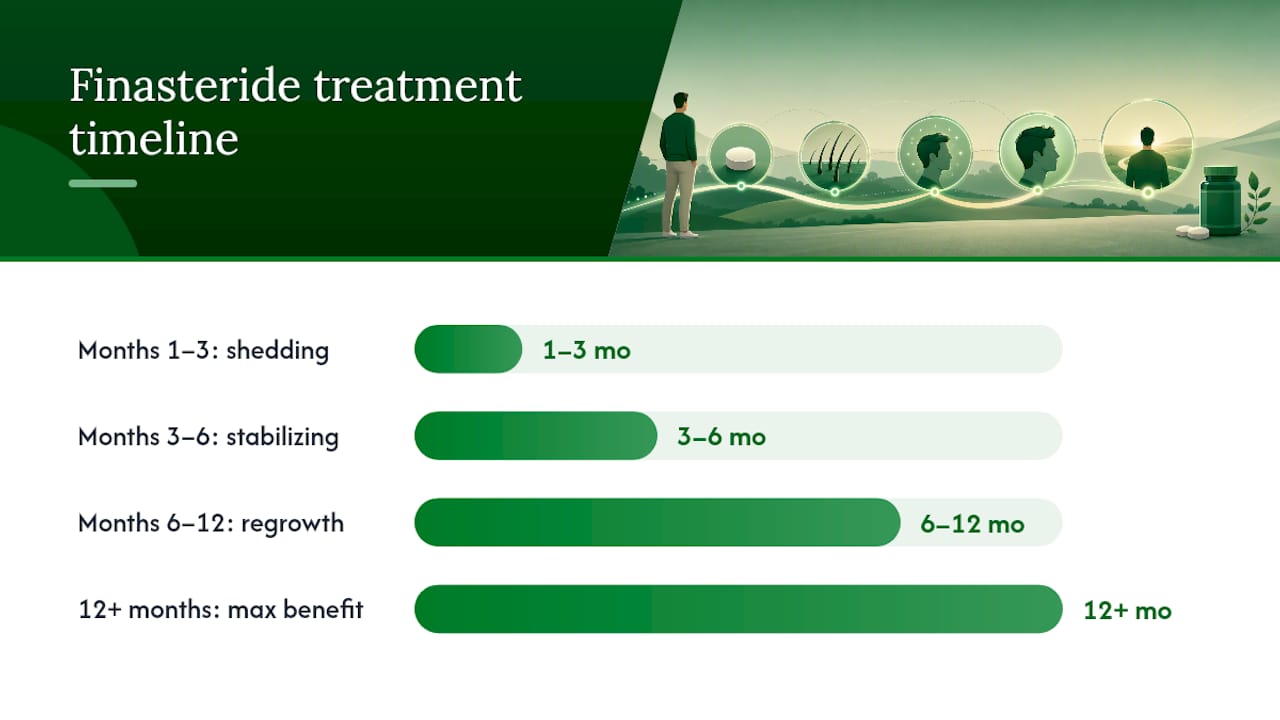
Clinicians typically reassess at the three-month mark, often using baseline and follow-up photos to track change. If no stabilization is evident by 12 months, the treatment plan is worth revisiting. The key number to hold onto: sustained daily use is what separates men who maintain their results from those who lose them.
What are the side effects and safety risks of finasteride?
The FDA label and DailyMed entry list the following adverse reactions for finasteride 1 mg:
Common adverse events (sexual in nature):
- Decreased libido
- Erectile dysfunction
- Ejaculation disorders
Peer-reviewed studies report these sexual side effects in a minority of men, and research continues to evaluate how often they persist after stopping the medication. Less commonly, mood changes including depression have been reported, and men who experience mood symptoms should contact their clinician promptly.
Drug interactions and medical cautions:
- Avoid combining with other 5-alpha-reductase inhibitors (dutasteride).
- Use with caution in men with known liver disease; finasteride is hepatically metabolized.
- Finasteride lowers PSA values by roughly half, which must be accounted for in prostate cancer screening.
Safety warning: Finasteride is teratogenic. It must not be handled by women who are pregnant or may become pregnant, as absorption through skin contact can harm a male fetus. Crushed or broken tablets pose the highest risk. If your partner is pregnant or trying to conceive, discuss handling precautions with your clinician immediately. Contact your provider right away for any serious adverse event, including persistent sexual dysfunction or mood changes.
What other hair loss options should you consider?
Finasteride is not the only tool, and for some men it is not the right first step.
Evidence-based alternatives and complements:
- Minoxidil (OTC topical): Available without a prescription in 2% and 5% formulations. Clinical trial data supports its use as a standalone treatment and in combination with finasteride, where the two agents work through different mechanisms and can produce additive benefit. Clinicians frequently recommend this combination for men with moderate to significant loss.
- Topical finasteride: Compounded formulations apply the same active ingredient directly to the scalp, potentially reducing systemic exposure. Evidence is growing but less extensive than for oral finasteride.
- Low-level laser therapy (LLLT): FDA-cleared devices (combs, caps) show modest benefit in some trials. Best suited as an adjunct rather than a primary treatment.
- Platelet-rich plasma (PRP): Injections of concentrated growth factors from your own blood. Evidence is promising but not yet as robust as for finasteride or minoxidil. Requires in-office sessions.
- Hair transplant surgery: A permanent option for men with stable, well-defined loss patterns. Cost is significant and results depend heavily on donor hair density.
- Scalp micropigmentation (SMP): A non-surgical cosmetic option that creates the appearance of a shaved head or denser hair using pigment deposits. No medical prescription needed.
Quick comparison of common options:
| Treatment | Prescription needed | Evidence level | Best combined with |
|---|---|---|---|
| Oral finasteride | Yes | Strong (FDA-approved) | Minoxidil |
| Minoxidil (topical) | No | Strong (FDA-approved) | Finasteride |
| Topical finasteride | Yes (compounded) | Moderate, growing | Minoxidil |
| LLLT devices | No | Modest | Either medication |
| PRP | No (procedure) | Moderate | Finasteride |
| Hair transplant | No (surgical) | Strong for right candidates | Post-op finasteride |
On supplements: Biotin, saw palmetto, and similar OTC products are widely marketed for hair loss. Evidence for most of them is thin. If you are considering non-surgical hair loss alternatives, prioritize treatments with clinical trial data behind them before spending money on supplements.
The part most guides get wrong about getting finasteride online
Most articles on this topic spend their energy comparing telehealth platforms by price per pill. That is the wrong variable to optimize for.
The real question is whether the platform’s clinical process is rigorous enough to catch the men who should not be on finasteride, and thorough enough to document baseline sexual function before prescribing. A platform that skips the baseline sexual health assessment is not doing you a favor by moving faster. It is setting you up for a dispute later about whether a side effect was pre-existing.
The other thing most guides understate: stopping finasteride is not a neutral act. Men who discontinue after a year or two of successful treatment typically lose the gains they made within months. That is not a scare tactic; it is the clinical reality documented in longitudinal trial data. Before you start, decide whether you are prepared for an ongoing commitment, not a six-month experiment.
Telehealth is genuinely the right first move for most men. The convenience is real, the cost is lower than a specialist visit, and the clinical quality at reputable platforms is comparable to an in-person visit for a straightforward case. But “reputable” matters. Use a platform that employs licensed U.S. clinicians, routes prescriptions through licensed U.S. pharmacies, and schedules a follow-up within the first three months.
Topweightlossmed makes getting finasteride online straightforward
Skipping the waiting room is one thing. Getting a same-day evaluation from a licensed clinician who actually reviews your history, documents your baseline, and routes your prescription through a licensed pharmacy is another.
Topweightlossmed offers exactly that for hair loss. Same-day telehealth appointments, licensed providers, e-prescriptions sent to a pharmacy of your choice or through an integrated mail-order option, and follow-up care built into the process. The platform also handles insurance verification, so you know your coverage situation before you pay.
What you get with Topweightlossmed’s hair loss service:
- Licensed U.S. clinicians conducting thorough evaluations
- E-prescriptions routed to local pharmacies or mail-order delivery
- Insurance integration with major carriers
- Confidential, HIPAA-compliant consultations
- Ongoing follow-up care, not just a one-time prescription
If you are ready to start, book your evaluation at Topweightlossmed today. The intake takes minutes, and a clinician can review your case the same day.
Sources
This article is general information, not a substitute for advice from a qualified doctor. Consult a qualified healthcare professional about your own circumstances before acting on anything here.
FAQ
Does finasteride require a prescription in the U.S.?
Yes. Finasteride is a prescription-only medication under U.S. law, regardless of whether you obtain it online or in person. A licensed clinician must evaluate and prescribe it.
How long does an online finasteride consultation take?
Telehealth intake questionnaires complete quickly, and clinician review and prescribing decisions often happen the same day for straightforward cases.
Can I use insurance to cover finasteride prescribed through telehealth?
Most plans do not cover finasteride for hair loss since it is classified as cosmetic. Generic finasteride is inexpensive through discount programs, making out-of-pocket cost manageable for most men.
Is it safe to buy finasteride from an online pharmacy?
It is safe when you use a licensed U.S. telehealth provider and a licensed U.S. pharmacy. Avoid sources that do not require a prescription, as counterfeit or mislabeled products are a documented risk with unverified online sources.
Can women take finasteride for hair loss?
Finasteride is contraindicated in women of childbearing potential due to teratogenic risk to a male fetus. Women who are pregnant or may become pregnant must not handle crushed or broken tablets. Consult a clinician about alternative treatments for female pattern hair loss.