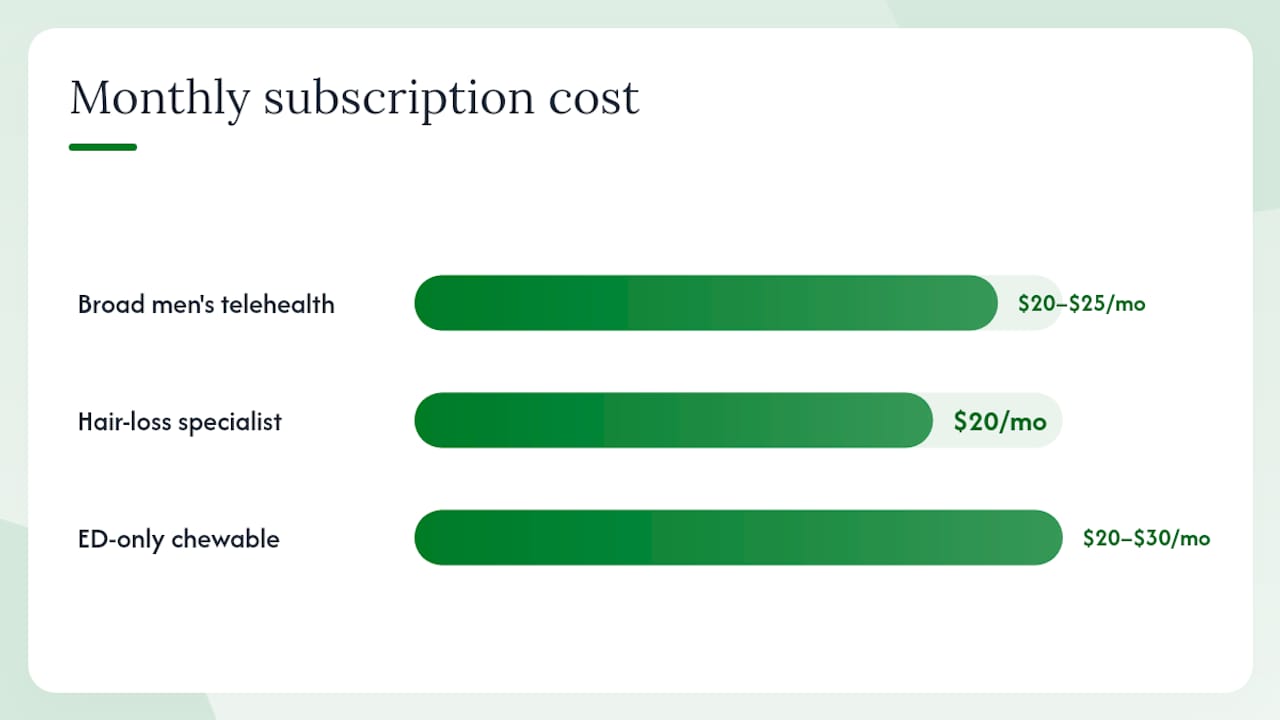
Yes, you can get prescription hair loss treatment online from a licensed provider, with medication shipped directly to your door. The process is faster and more accessible than most people expect.
Here’s what a legitimate online hair loss treatment service should include:
- A telehealth consultation or asynchronous clinician review
- Prescription options such as finasteride, topical finasteride, minoxidil, or oral minoxidil
- Safety screening for contraindications before any prescription is issued
- Ongoing medication delivery on a refill or subscription schedule
Low-dose oral minoxidil requires medical supervision: it can cause fluid retention, a faster heart rate, and lowered blood pressure, so clinicians typically monitor blood pressure and ask about heart conditions before prescribing. It is not recommended during pregnancy or breastfeeding. Discuss these risks with a physician before starting.
Finasteride is FDA-indicated for men only. Women who are or may become pregnant must not handle crushed or broken finasteride tablets, due to the risk of harm to a male fetus. It can also cause sexual side effects (reduced libido, erectile dysfunction) in a minority of men, which usually resolve after stopping treatment. Discuss these risks with a physician before starting.
Topweightlossmed offers all of these through its virtual care platform, with licensed providers, same-day scheduling, and medication delivery for both men and women.
Key Takeaways
Prescription hair loss treatment online is legitimate, effective, and accessible when you use a licensed telehealth provider with real clinical oversight and FDA-recognized medications.
| Point | Details |
|---|---|
| Prescription treatment is available online | Licensed providers can prescribe finasteride, minoxidil, and oral minoxidil through telehealth. |
| Safety screening is non-negotiable | Any credible platform screens for contraindications before issuing a prescription. |
| Results take 3–12 months | Expect the first signals at 3 months; full assessment at 12 months. |
| Women have specific pathways | Female patients need sex-specific dosing and a provider experienced with female hair loss. |
| Topweightlossmed covers the full workflow | TWL offers licensed clinicians, same-day scheduling, and medication delivery for men and women. |
This article is general information, not a substitute for advice from a qualified doctor. Consult a qualified healthcare professional about your own circumstances before acting on anything here.
How does online hair loss treatment work, step by step?
The workflow at most reputable telehealth platforms follows a consistent pattern, though the details vary slightly between synchronous (live video) and asynchronous (provider review) models.
- Sign up and complete an intake form. You answer questions about your health history, current medications, and hair loss pattern. Most platforms also ask about family history of hair loss.
- Upload photos. Clear photos of your scalp (top, crown, and hairline) let the clinician assess the type and extent of loss before the visit.
- Clinician review or live telehealth appointment. Some platforms route your intake to a provider who reviews it asynchronously and responds within hours. Others schedule a live video visit. Both are valid; live visits allow real-time questions.
- Prescription issued (if eligible). If the clinician determines treatment is appropriate, a prescription is sent to a pharmacy partner or fulfilled in-house.
- Medication shipped on a refill schedule. Most services automate refills monthly or every 90 days. You can typically pause, adjust, or cancel through the patient portal.
The main practical difference between the two models: asynchronous review is faster to start (often same day), while a live visit gives you more time to discuss concerns directly.
What documentation to have ready:
- A list of current medications and supplements
- Any prior hair loss treatments you’ve tried
- A rough timeline of when shedding started and how it has progressed
- Family history of androgenetic alopecia on either side
Pro Tip: Take your intake photos in natural light, standing directly under a window. Wet or styled hair obscures the scalp. Take one shot straight down at the crown, one of the hairline, and one of each temple. These four angles give a clinician the clearest picture of your loss pattern.
What prescription treatments can you get online?
Online providers can prescribe several well-studied medications for hair loss. The right one depends on your sex, the type of hair loss, and your medical history.
Finasteride (oral)
Finasteride is a 5-alpha reductase inhibitor that reduces DHT, the hormone primarily responsible for androgenetic alopecia in men. The FDA label for finasteride approves it specifically for male pattern hair loss at 1 mg daily. Clinical data associated with the drug suggests visible improvement typically begins around 3–6 months, with fuller assessment at 12 months. It is not approved for women of childbearing potential due to teratogenic risk.

Topical finasteride
A compounded topical version delivers the same DHT-blocking mechanism with potentially lower systemic absorption. Some providers prescribe it for men who want to minimize the risk of systemic side effects, and it is also used off-label in certain female patients under close supervision.
Topical minoxidil
It prolongs the hair growth phase and is suitable for both sexes. Some providers combine it with finasteride or other actives in a single topical formula.

Oral minoxidil
Low-dose oral minoxidil (typically 0.25–2.5 mg for women, 2.5–5 mg for men) has gained traction as an off-label option for patients who struggle with topical application. Blood pressure monitoring is recommended, especially at the start of treatment.
Ketoconazole shampoo
It is not a standalone treatment but can improve scalp health and may modestly reduce DHT at the follicle level.
| Treatment | Best for | Prescription required | Male / Female | Typical cost/month | Evidence level / timeline |
|---|---|---|---|---|---|
| Oral finasteride | Male pattern baldness (AGA) | Yes | Men only | $15–$40 generic | Strong; 3–6 months for initial signal |
| Topical finasteride | Men seeking lower systemic exposure | Yes (compounded) | Primarily men | $40–$80 | Emerging; similar timeline |
| Topical minoxidil | AGA in men and women | Rx for higher strengths | Both | $20–$50 | Strong; 3–6 months |
| Oral minoxidil | Patients who prefer oral; women with AGA | Yes | Both (dose varies) | $20–$60 | Growing; 3–6 months |
| Ketoconazole shampoo | Scalp inflammation adjunct | Rx for 2% | Both | $15–$40 | Moderate; adjunct only |
Women dealing with hair loss have distinct pathways. Topweightlossmed’s female hair loss page outlines tailored prescription options and care pathways specific to women, including postmenopausal patients who may tolerate finasteride under supervision.
Statistic callout: The FDA label for finasteride notes that in clinical trials, men using 1 mg daily showed statistically significant increases in hair count versus placebo at 12 months, with improvement visible as early as 3 months in some participants.
Who can safely use these treatments?
Not everyone is a candidate for every medication. A good online provider will screen for these before issuing any prescription.
Common contraindications and precautions:
- Finasteride: Contraindicated in women who are pregnant or may become pregnant (teratogenic risk to male fetuses); not recommended for women of childbearing potential without reliable contraception; caution with liver impairment
- Oral minoxidil: Caution with cardiac conditions, low blood pressure, or concurrent antihypertensive medications; baseline blood pressure check recommended
- Topical minoxidil: Generally well tolerated; avoid with known hypersensitivity to propylene glycol (common vehicle)
- Ketoconazole shampoo: Avoid with known azole antifungal allergy; not for use on broken or inflamed skin
Sex-specific notes: Finasteride is FDA-approved for men only. Women of childbearing potential should not handle crushed or broken finasteride tablets. Postmenopausal women may be considered for off-label use under close provider supervision. Oral minoxidil dosing for women is substantially lower than for men, and the prescribing clinician should confirm there are no cardiovascular contraindications first.
Topweightlossmed’s hair loss services include safety screening as part of the intake process, and the platform’s clinicians can refer patients for in-person labs or blood pressure checks when oral minoxidil warrants baseline monitoring.
When to seek in-person care: Sudden or patchy hair loss, scalp pain or lesions, or hair loss accompanied by systemic symptoms (fatigue, weight changes) should be evaluated in person before starting any online treatment. These patterns may indicate alopecia areata, scarring alopecia, or an underlying condition that requires labs and a physical exam.
What happens at your first online hair loss consultation?
Preparation makes the difference between a productive first visit and a generic prescription.
What to prepare before your appointment:
- Four clear scalp photos (crown, top, hairline, both temples) taken in natural light
- A complete list of current medications, including supplements and topicals
- Your family history of hair loss (maternal and paternal sides)
- A timeline: when did shedding increase, has it been gradual or sudden, any recent stressors or illnesses?
- Prior treatments tried, including OTC products, and your assessment of whether they helped
What to expect during the visit:
- Asynchronous review: the provider reads your intake and photos, then sends a treatment plan or follow-up questions within a few hours to one business day
- Live telehealth visit: 15–20 minutes; the clinician will ask about your timeline, examine your photos, discuss options, and explain what to expect
Both formats end with either a prescription sent to pharmacy, a request for additional information, or a recommendation for in-person evaluation if the presentation warrants it. Topweightlossmed’s telehealth consent page explains what the platform covers and what patients agree to before the visit begins.
How much does online hair loss treatment cost?
Pricing across telehealth hair loss platforms follows a few common structures.
Pricing models you’ll encounter:
- Per-prescription: Pay for each medication order; no commitment, but typically higher per-unit cost
- Monthly subscription: Bundled cost covering the consultation, prescription, and shipping; usually the lowest per-month cost for ongoing users
- Bundled program: Includes follow-up visits, medication adjustments, and sometimes combination formulas; higher upfront but more comprehensive
Realistic cost ranges (generic options):
- Generic oral finasteride: roughly $15–$40/month
- Topical minoxidil (prescription strength): roughly $20–$50/month
- Oral minoxidil: roughly $20–$60/month
- Compounded topical finasteride or combination formulas: $40–$80+/month
Shipping cadence is typically monthly or every 90 days. Auto-refill is standard; most platforms let you pause or cancel through the patient portal without a phone call. Refund policies vary: some providers offer a refund on unused medication within a set window; others credit toward a future order. Read the terms before subscribing.
Pro Tip: Generic finasteride and generic topical minoxidil are the most cost-effective entry points. If your clinician recommends a compounded combination formula, ask whether starting with generics first is appropriate for your case. Many patients achieve solid results without the premium-priced custom blends.
Insurance coverage for hair loss medications is limited but not impossible. Some plans cover minoxidil when prescribed for a documented medical indication. A discount card like GoodRx can reduce out-of-pocket costs on generic finasteride significantly at most major pharmacies.
How long does it take to see results?
Hair grows slowly, and the treatments that work best require patience. Most patients who quit before six months never find out whether the medication was working.
Typical milestones:
- Weeks 2–8: Some patients notice increased shedding. This is a normal, temporary phase as the hair cycle resets. It is not a sign the treatment is failing.
- Month 3: The first signals of regrowth or reduced shedding become noticeable for many patients. Hair may feel thicker at the scalp even before visible length changes.
- Month 6: A clearer picture of response emerges. Most clinical assessments use this point as the first meaningful checkpoint.
- Month 12: Full assessment of treatment response. Patients who respond well typically see meaningful density improvement by this point.
Variability is real. Age, the extent of loss at baseline, adherence to the dosing schedule, and whether you are using a single agent or a combination all affect outcomes. A clinician may add or adjust a second medication at the 6-month review if the initial response is modest.
Callout: Patients who start treatment earlier in the hair loss process tend to see better outcomes. Finasteride and minoxidil are more effective at preserving existing hair than regrowing hair that has been lost for years.
Tracking progress with photos taken under the same lighting conditions every 8–12 weeks is the most reliable way to see gradual change. Patient-reported outcomes (how much shedding you notice on your pillow or in the shower) are useful but less objective.
How do you pick a trustworthy telehealth provider for hair loss?
The telehealth hair loss space has grown fast, and not every platform meets the same standard. Here’s what separates a credible provider from a checkout-first operation.
What to look for:
- Licensed clinicians in your state (check that the provider is licensed to prescribe in your state of residence)
- Clear safety screening before any prescription is issued
- Transparent pricing with no hidden subscription fees
- A defined follow-up cadence (not just a one-time prescription and silence)
- A pharmacy partner or in-house dispensing with trackable shipping
- Accessible patient support (not just a chatbot)
- Clear refund and cancellation policies published before you pay
Red flags:
- No clinician review at all (algorithm-only prescribing)
- Promises of guaranteed regrowth or miracle results
- No mention of contraindications or safety screening
- Refund policy buried or absent
- No way to contact a human for clinical questions
Third-party trust signals matter too. A BBB-listed telehealth provider with documented patient reviews gives you an independent data point beyond the company’s own marketing.
Pro Tip: Before you sign up, search the provider’s name plus your state and “license” or “complaint.” State medical boards publish disciplinary actions publicly. Two minutes of searching can confirm whether the prescribing clinicians are in good standing.
Why Topweightlossmed is a strong choice for online hair loss care
Topweightlossmed’s hair loss service covers the full prescription workflow: intake, clinician review, prescription, and medication delivery, all within one platform. A few features stand out for patients who want more than a one-size-fits-all prescription.
What TWL offers:
- Licensed clinicians with same-day appointment availability
- Prescription options for both men and women, including sex-specific dosing and pathways
- Dedicated female hair loss care with tailored treatment options for women
- Integrated virtual care that lets you address hair loss alongside other health concerns (primary care, weight, skin) without switching platforms
- Medication delivery with ongoing follow-up built into the care model
- Insurance partnerships that can reduce out-of-pocket costs for eligible patients
TWL’s approach is straightforward: complete the intake, get a clinician review, and receive a personalized treatment plan. The platform is built for adults who want professional oversight without the wait of a traditional dermatology appointment.
What I’d tell anyone starting hair loss treatment online
The biggest mistake patients make is treating the first prescription as the finish line. Getting the medication is step one. What actually determines whether treatment works is consistency over 6–12 months, honest communication with your provider when something feels off, and a willingness to adjust the plan if the initial response is modest.
A few things worth knowing before you start: the early shedding phase is real and it catches people off guard. If you stop the medication at week six because you’re losing more hair than before, you’ll never know whether month four would have been different. Set a calendar reminder for your 3-month photo check-in and compare it to your baseline shots before drawing any conclusions.
On side effects: most patients on oral finasteride tolerate it without issue, but sexual side effects are documented and worth discussing with your clinician upfront rather than after the fact. If you’re on any antihypertensive or cardiac medication, make sure your provider knows before oral minoxidil is added. These aren’t reasons to avoid treatment; they’re reasons to have a real clinical conversation rather than a checkbox intake.
The strongest argument for using a licensed telehealth provider over buying hair restoration products online without a prescription is exactly this: a clinician who knows your full picture can catch interactions and adjust dosing. That’s not a bureaucratic formality. It’s the part that makes the treatment safe.
Start your hair loss consultation with Topweightlossmed
Prescription hair loss treatment is more accessible than a dermatology waitlist. Topweightlossmed connects you with a licensed clinician who can review your case, issue a prescription if appropriate, and ship medication directly to you, with follow-up built in.
Here’s how to get started:
- Visit the Topweightlossmed hair loss page and complete the intake form
- Upload your scalp photos and submit your medical history
- A licensed clinician will review your case and issue a treatment plan, often same day
Topweightlossmed accepts major insurance plans and offers self-pay options, so cost is rarely a barrier to getting started. Book your consultation today and get a treatment plan from a licensed provider, not a generic product recommendation.
Sources
- Accessdata
FAQ
Can you really get prescription finasteride online?
Yes. Licensed telehealth providers can prescribe finasteride after a clinical review. The FDA label approves it for male pattern hair loss at 1 mg daily, and most online platforms follow that labeling.
Does blocking DHT actually stop hair loss?
Finasteride reduces DHT levels and has shown statistically significant improvement in hair count versus placebo in clinical trials, with results typically visible by month 3–6. It slows or halts progression in most men who respond to it; it does not reverse years of established loss.
What are the best products for hair loss?
The most evidence-backed options are oral finasteride, topical or oral minoxidil, and ketoconazole shampoo as an adjunct. Topweightlossmed’s licensed clinicians can recommend the right combination based on your specific pattern and history.
How do you regrow hair naturally?
No natural remedy matches the clinical evidence behind finasteride or minoxidil. Scalp massage, a nutrient-sufficient diet, and reducing mechanical stress on hair can support scalp health, but they do not address the hormonal or genetic drivers of androgenetic alopecia.
Does Nutrafol really work for hair loss?
Nutrafol is a supplement, not a prescription medication. Some users report reduced shedding, but its evidence base is far thinner than that of finasteride or minoxidil. For patients with androgenetic alopecia, a prescription treatment from a licensed provider is the more clinically supported starting point.